Understanding opposites is one of the most powerful ways to sharpen your writing. When you learn antonyms, you don’t just expand vocabulary—you gain control over tone, precision, and emotional impact.
Writers who master opposites can shift meaning effortlessly, avoid repetition, and communicate with clarity.
In academic and professional communication, this skill becomes even more valuable. Whether you’re crafting essays, reports, or persuasive content, knowing the right opposite word allows you to express contrast, critique ideas, and present balanced arguments.
This article explores the antonyms of “aura” in depth, helping you elevate both your language and expression.
What Does “Aura” Mean?
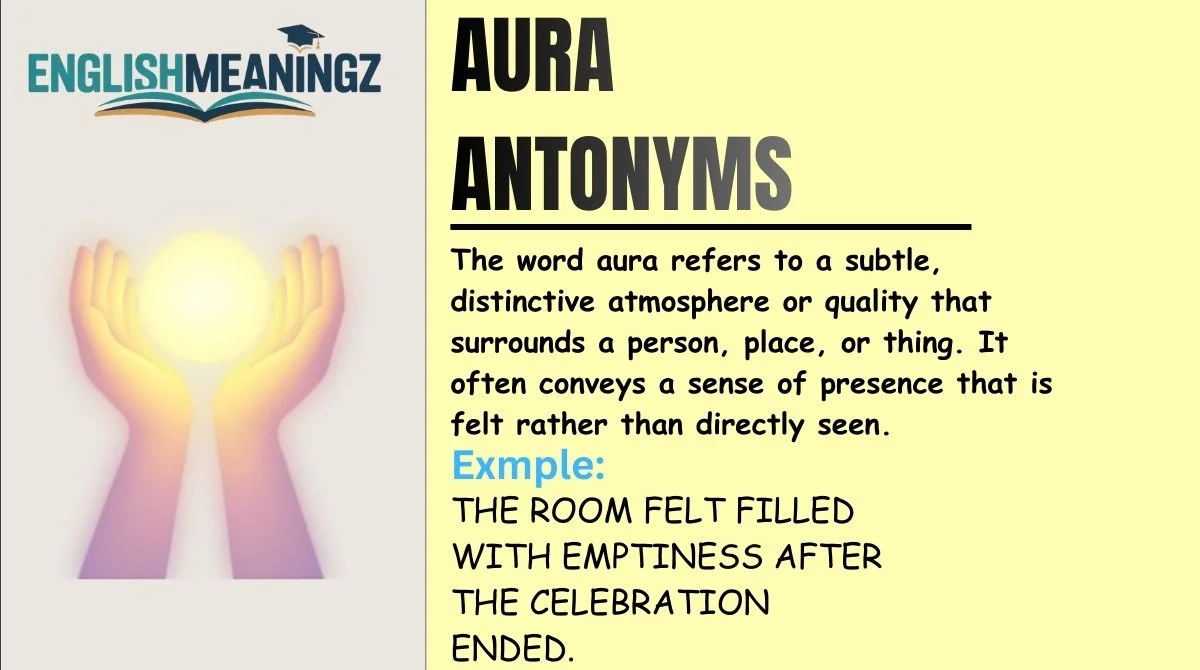
The word aura refers to a subtle, distinctive atmosphere or quality that surrounds a person, place, or thing. It often conveys a sense of presence that is felt rather than directly seen.
Tone Explanation:
“Aura” usually carries a positive or mysterious tone. It suggests charm, energy, or an invisible influence.
Emotional or Action Intensity:
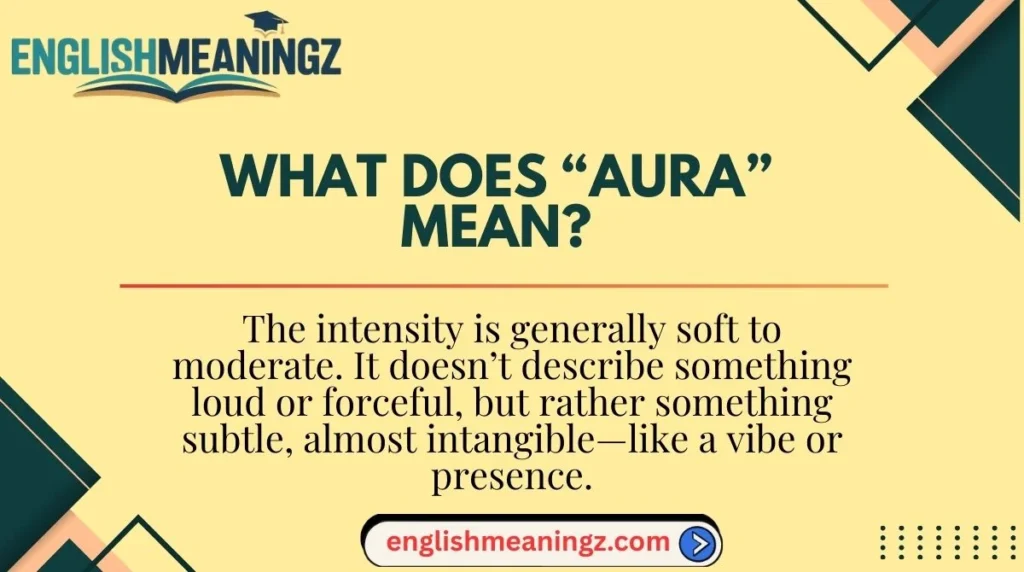
The intensity is generally soft to moderate. It doesn’t describe something loud or forceful, but rather something subtle, almost intangible—like a vibe or presence.
25 Best Antonyms for “Aura”
1. Emptiness
Meaning: Complete lack of presence or energy
Tone: Emotional
Example: The room felt filled with emptiness after the celebration ended.
Why Opposite: Aura suggests presence; emptiness suggests absence.
2. Void
Meaning: A completely empty space
Tone: Academic
Example: His words echoed into a void with no response.
Why Opposite: Aura adds atmosphere, while void removes it entirely.
3. Nothingness
Meaning: Total absence of existence
Tone: Formal
Example: The abandoned building radiated nothingness.
Why Opposite: Aura implies something is felt; nothingness implies nothing exists.
4. Plainness
Meaning: Lack of distinctive features
Tone: Neutral
Example: Her outfit had a sense of plainness that went unnoticed.
Why Opposite: Aura is distinctive; plainness is ordinary.
5. Dullness
Meaning: Lack of excitement or interest
Tone: Informal
Example: The lecture was marked by dullness throughout.
Why Opposite: Aura attracts attention; dullness repels it.
6. Lifelessness
Meaning: Absence of vitality
Tone: Emotional
Example: The painting had a strange lifelessness.
Why Opposite: Aura implies energy; lifelessness removes it.
7. Blandness
Meaning: Lack of strong characteristics
Tone: Informal
Example: The food’s blandness disappointed everyone.
Why Opposite: Aura is vivid; blandness is neutral.
8. Absence
Meaning: State of being not present
Tone: Formal
Example: There was an absence of excitement at the event.
Why Opposite: Aura implies presence; absence negates it.
9. Invisibility
Meaning: State of being unseen
Tone: Academic
Example: He preferred invisibility in social gatherings.
Why Opposite: Aura is subtly noticeable; invisibility is not perceived.
10. Coldness
Meaning: Lack of warmth or emotion
Tone: Emotional
Example: Her response carried a tone of coldness.
Why Opposite: Aura often feels warm; coldness feels distant.
11. Harshness
Meaning: Severe or unpleasant quality
Tone: Emotional
Example: The environment was filled with harshness.
Why Opposite: Aura is usually soft; harshness is intense.
12. Darkness
Meaning: Absence of light or positivity
Tone: Emotional
Example: The story had a sense of darkness.
Why Opposite: Aura can be uplifting; darkness is heavy.
13. Disorder
Meaning: Lack of organization
Tone: Academic
Example: The workspace reflected complete disorder.
Why Opposite: Aura suggests harmony; disorder disrupts it.
14. Chaos
Meaning: Complete confusion
Tone: Informal
Example: The meeting turned into chaos quickly.
Why Opposite: Aura is calm and composed; chaos is unstable.
15. Roughness
Meaning: Lack of smoothness or refinement
Tone: Neutral
Example: The surface had a roughness to it.
Why Opposite: Aura feels refined; roughness feels raw.
16. Neutrality
Meaning: Lack of strong feeling
Tone: Formal
Example: His tone showed complete neutrality.
Why Opposite: Aura carries character; neutrality lacks it.
17. Weakness
Meaning: Lack of strength or influence
Tone: Emotional
Example: The argument revealed its weakness.
Why Opposite: Aura suggests influence; weakness does not.
18. Faintness
Meaning: Barely noticeable presence
Tone: Academic
Example: There was a faintness in her voice.
Why Opposite: Aura is perceptible; faintness is minimal.
19. Simplicity
Meaning: Lack of complexity
Tone: Neutral
Example: The design embraced simplicity.
Why Opposite: Aura often adds depth; simplicity reduces layers.
20. Transparency
Meaning: Complete clarity or openness
Tone: Formal
Example: The policy emphasized transparency.
Why Opposite: Aura is subtle and hidden; transparency is clear.
21. Rigidity
Meaning: Lack of flexibility
Tone: Academic
Example: His thinking showed rigidity.
Why Opposite: Aura flows; rigidity restricts.
22. Silence
Meaning: Absence of sound or activity
Tone: Emotional
Example: The silence in the hall was overwhelming.
Why Opposite: Aura suggests presence; silence can suggest absence.
23. Vacancy
Meaning: Empty space or position
Tone: Formal
Example: The vacancy was noticeable.
Why Opposite: Aura fills space; vacancy empties it.
24. Flatness
Meaning: Lack of variation or depth
Tone: Informal
Example: The performance had a sense of flatness.
Why Opposite: Aura adds dimension; flatness removes it.
25. Insignificance
Meaning: Lack of importance
Tone: Academic
Example: His role faded into insignificance.
Why Opposite: Aura gives importance; insignificance diminishes it.
Strong vs Mild Opposites
Not all antonyms carry the same intensity. Some completely negate the idea of aura, while others only soften it.
Strong Opposites:
Void, nothingness, emptiness, chaos — These completely remove the concept of presence or atmosphere.
Moderate Opposites:
Dullness, blandness, plainness — These reduce impact but don’t eliminate it entirely.
Mild Opposites:
Neutrality, faintness, simplicity — These suggest a weaker or less noticeable version rather than total absence.
Understanding this scale helps you choose the right word depending on how strong a contrast you want to create.
Context-Based Opposites
The best antonym depends on context. “Aura” can mean different things depending on usage:
- Spiritual context: Opposite could be void or darkness
- Personality context: Opposite could be blandness or neutrality
- Atmosphere context: Opposite could be emptiness or silence
- Energy context: Opposite could be lifelessness or weakness
Choosing contextually appropriate antonyms ensures clarity and accuracy in communication.
Common Mistakes When Using Opposites
1. Using unrelated words
Incorrect: Aura → noise
Correct: Use words that remove presence, not just change it.
2. Ignoring tone
Using chaos instead of neutrality in formal writing can sound exaggerated.
3. Overusing strong antonyms
Not every situation needs extreme contrast like void.
4. Confusing synonyms with antonyms
Words like vibe or energy are similar, not opposite.
Sentence Transformation Examples
Original: She had a calming aura.
Rewritten: She had a sense of dullness that went unnoticed.
Original: The room carried a warm aura.
Rewritten: The room felt filled with coldness.
Original: His presence created a powerful aura.
Rewritten: His presence reflected weakness.
Original: The place had a magical aura.
Rewritten: The place felt like a void.
Original: Her aura attracted attention.
Rewritten: Her blandness made her easy to overlook.
FAQs
What is the simplest antonym of aura?
The simplest antonym is emptiness, as it directly contrasts presence.
Can aura have negative opposites?
Yes, words like darkness or harshness provide negative contrasts.
Is “silence” a true antonym of aura?
In certain contexts, yes—especially when aura implies presence or activity.
Are all antonyms exact opposites?
No, some are contextual and depend on usage.
Which antonym is best for formal writing?
Words like absence, neutrality, and void work well in formal contexts.
Can aura be used in academic writing?
Yes, but often replaced with terms like atmosphere or presence.
How can I improve using antonyms?
Practice rewriting sentences and understanding tone differences.
Conclusion
Mastering antonyms of “aura” allows you to express contrast with precision and sophistication.
Whether you’re writing creatively or academically, knowing how to replace a subtle presence with emptiness, dullness, or neutrality gives you greater control over meaning and tone.
By understanding intensity, context, and proper usage, you can elevate your vocabulary and communicate more effectively in every situation.