A rich vocabulary is one of the most powerful tools in effective communication. Writers, students, and professionals often focus on learning advanced words, but understanding opposite words (antonyms) is just as important.
Antonyms help clarify meaning, strengthen arguments, and add contrast that makes writing more precise and persuasive.
When you know the opposite of a word, you gain deeper insight into its emotional tone, context, and intensity. This awareness improves everything from academic essays to business communication and even everyday conversation.
For example, the word aspiration carries a strong sense of ambition and forward-looking desire. Knowing the opposite terms allows writers to express lack of motivation, indifference, or resignation with accuracy.
In this guide, you will learn the best antonyms for aspiration, how they differ in tone and intensity, and how to use them correctly in real sentences. By the end, you will be able to use these opposites naturally in academic, professional, and creative writing.
What Does “Aspiration” Mean?
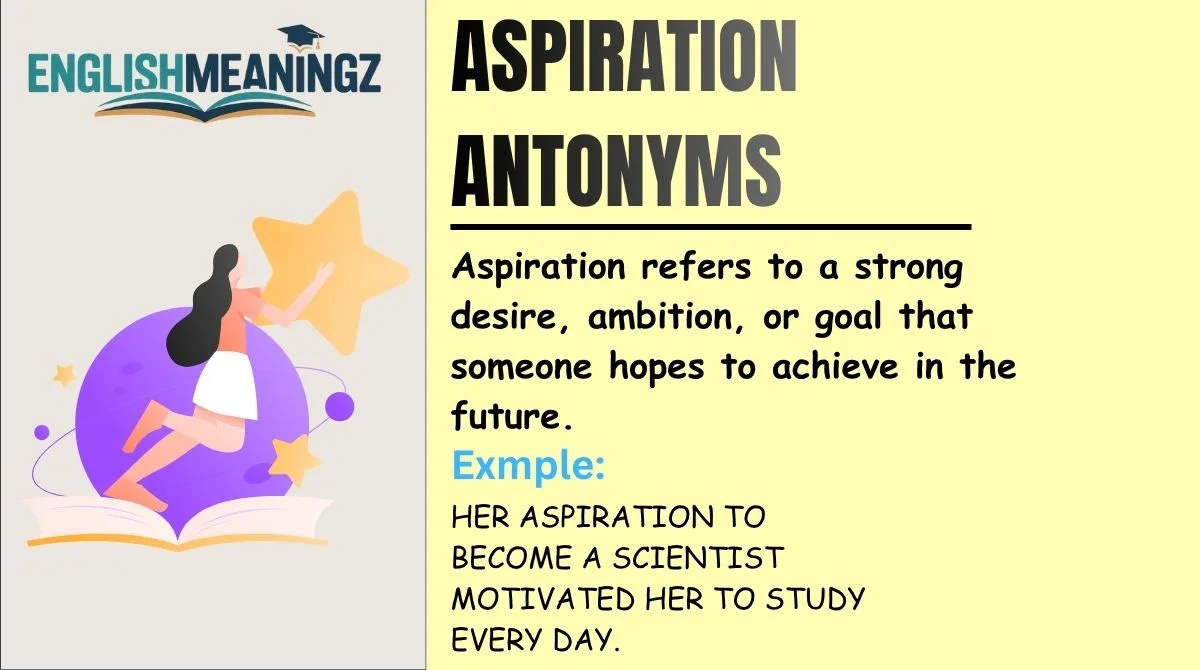
Aspiration refers to a strong desire, ambition, or goal that someone hopes to achieve in the future. It is often associated with personal growth, career objectives, and long-term dreams.
In professional or academic contexts, aspiration usually implies positive motivation and determination.
Example:
Her aspiration to become a scientist motivated her to study every day.
Tone Explanation
The tone of aspiration is generally:
- Positive
- Motivational
- Forward-looking
- Ambitious
It suggests someone who is driven by purpose and goals.
Emotional or Action Intensity
Aspiration carries high emotional and motivational intensity. It implies that someone is actively striving toward improvement or achievement.
Therefore, the antonyms of aspiration typically describe:
- Lack of ambition
- Absence of goals
- Passive acceptance
- Indifference toward success
12 Best Antonyms for “Aspiration”
Below are some of the strongest and most useful antonyms of aspiration. Each word represents a different degree of contrast, from mild disinterest to complete lack of ambition.
Indifference
Meaning: Lack of interest, concern, or enthusiasm.
Tone: Neutral / Formal
Example Sentence:
The manager noticed his indifference toward career advancement.
Why It Is an Opposite:
Aspiration involves a strong desire to achieve something, while indifference reflects no emotional investment or motivation at all.
Apathy
Meaning: Absence of interest, enthusiasm, or concern.
Tone: Academic / Psychological
Example Sentence:
Student apathy often leads to poor academic performance.
Why It Is an Opposite:
Aspiration drives action and effort, whereas apathy represents complete emotional disengagement.
Complacency
Meaning: Self-satisfaction that prevents improvement.
Tone: Formal / Professional
Example Sentence:
Complacency in the workplace can stop innovation.
Why It Is an Opposite:
Aspiration pushes people to grow, but complacency makes individuals content with stagnation.
Resignation
Meaning: Acceptance of something undesirable without trying to change it.
Tone: Emotional / Formal
Example Sentence:
He accepted the situation with quiet resignation.
Why It Is an Opposite:
Aspiration involves striving for a better future, while resignation reflects giving up on change or improvement.
Aimlessness
Meaning: Lack of direction or goals.
Tone: Neutral / Descriptive
Example Sentence:
Without clear plans, the project drifted into aimlessness.
Why It Is an Opposite:
Aspiration is goal-oriented, whereas aimlessness indicates absence of direction or purpose.
Contentment
Meaning: A state of satisfaction with what one already has.
Tone: Emotional / Neutral
Example Sentence:
She felt contentment living a simple life without career ambitions.
Why It Is an Opposite:
Aspiration encourages seeking more, while contentment often implies no desire for further advancement.
Laziness
Meaning: Unwillingness to work or make an effort.
Tone: Informal / Critical
Example Sentence:
Laziness prevented him from pursuing his dreams.
Why It Is an Opposite:
Aspiration demands effort and dedication, but laziness reflects avoidance of effort.
Passivity
Meaning: Acceptance of situations without active response.
Tone: Academic / Formal
Example Sentence:
Passivity in leadership can weaken an organization.
Why It Is an Opposite:
Aspiration encourages proactive behavior, whereas passivity represents lack of initiative.
Disinterest
Meaning: Lack of curiosity or engagement.
Tone: Neutral
Example Sentence:
Her disinterest in promotions surprised her colleagues.
Why It Is an Opposite:
Aspiration shows excitement for growth, while disinterest shows absence of motivation.
Hopelessness
Meaning: Feeling that improvement or success is impossible.
Tone: Emotional / Psychological
Example Sentence:
Economic struggles created a sense of hopelessness in the community.
Why It Is an Opposite:
Aspiration relies on hope and ambition, but hopelessness eliminates belief in positive change.
Surrender
Meaning: Giving up effort or resistance.
Tone: Emotional / Dramatic
Example Sentence:
His surrender to failure ended his entrepreneurial journey.
Why It Is an Opposite:
Aspiration fuels persistence, while surrender reflects abandoning goals entirely.
Defeatism
Meaning: Expectation or acceptance of failure.
Tone: Academic / Psychological
Example Sentence:
Defeatism can destroy motivation in competitive environments.
Why It Is an Opposite:
Aspiration is rooted in optimism and ambition, whereas defeatism assumes success is impossible.
Strong vs Mild Opposites
Not all antonyms represent the same level of contrast. Some express a mild absence of ambition, while others indicate complete loss of hope or motivation.
Mild Opposites
These words simply show reduced ambition rather than total lack of motivation.
Examples:
- Contentment
- Disinterest
- Indifference
They suggest that a person is not actively striving for more, but they are not necessarily pessimistic or defeated.
Moderate Opposites
These indicate clear absence of ambition or effort.
Examples:
- Aimlessness
- Passivity
- Laziness
- Complacency
These terms imply stagnation or lack of progress.
Strong Opposites
These represent extreme psychological contrast to aspiration.
Examples:
- Hopelessness
- Defeatism
- Resignation
- Surrender
- Apathy
Such words often appear in emotional or serious contexts because they suggest loss of belief in improvement.
Understanding this scale helps writers choose the most accurate word depending on the emotional intensity they want to convey.
Context-Based Opposites
Some antonyms only function as opposites in specific contexts. The meaning of aspiration changes depending on whether it refers to career goals, personal dreams, or emotional motivation.
Career Context
Opposites may include:
- Complacency
- Laziness
- Passivity
Example:
Corporate complacency replaced the company’s earlier aspirations.
Emotional Context
Opposites may include:
- Hopelessness
- Resignation
- Apathy
Example:
Years of failure turned his aspiration into hopelessness.
Direction or Purpose Context
Opposites may include:
- Aimlessness
- Disinterest
Example:
Without clear guidance, the team drifted into aimlessness instead of shared aspiration.
Recognizing context prevents vocabulary mistakes and ensures accurate communication.
Common Mistakes When Using Opposites
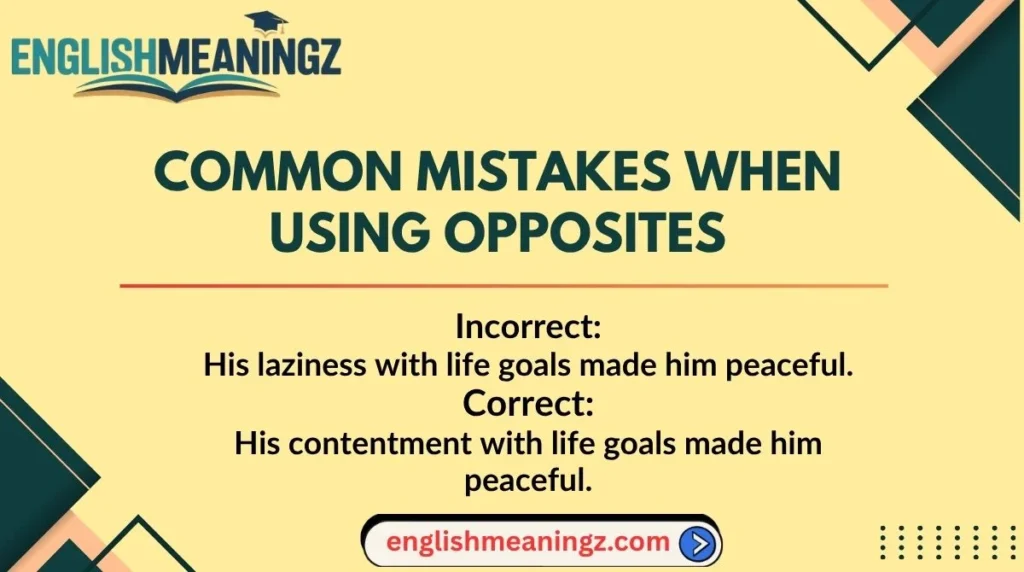
Even advanced writers sometimes misuse antonyms of aspiration. Below are common errors and how to avoid them.
Mistake 1: Confusing Contentment With Laziness
Incorrect:
His laziness with life goals made him peaceful.
Correct:
His contentment with life goals made him peaceful.
Explanation:
Contentment is satisfaction, not lack of effort.
Mistake 2: Using Indifference Instead of Hopelessness
Incorrect:
After losing everything, he felt indifferent.
Correct:
After losing everything, he felt hopeless.
Explanation:
Indifference shows lack of interest, while hopelessness reflects deep emotional despair.
Mistake 3: Treating Complacency as Neutral
Incorrect:
Complacency helped the company grow steadily.
Correct:
Aspiration helped the company grow steadily.
Explanation:
Complacency usually prevents progress rather than encouraging it.
Mistake 4: Overusing Laziness
Writers often default to laziness when other words are more precise.
Better alternatives may include:
- Apathy
- Passivity
- Aimlessness
Each word describes a different psychological state.
Sentence Transformation Examples
Below are examples showing how sentences change when aspiration is replaced with an antonym.
Original Sentence:
Her aspiration pushed her toward leadership.
Rewritten:
Her complacency kept her from pursuing leadership.
Original Sentence:
His aspiration inspired others to work harder.
Rewritten:
His apathy discouraged others from making an effort.
Original Sentence:
The team’s aspiration drove innovation.
Rewritten:
The team’s complacency slowed innovation.
Original Sentence:
Aspiration helped her overcome challenges.
Rewritten:
Hopelessness made challenges seem impossible.
Original Sentence:
His aspiration defined his career path.
Rewritten:
Aimlessness left his career path uncertain.
These transformations demonstrate how antonyms can drastically shift tone and meaning.
FAQs
What is the direct opposite of aspiration?
The most common opposites include apathy, indifference, and complacency, depending on context.
Is contentment always the opposite of aspiration?
Not necessarily. Contentment can be positive, while aspiration relates to seeking improvement or growth.
What is the strongest antonym for aspiration?
Words like hopelessness, surrender, and defeatism represent the strongest psychological opposites.
Can laziness be an antonym of aspiration?
Yes. Aspiration requires effort and dedication, while laziness reflects avoidance of work or ambition.
Which antonym is most common in academic writing?
Apathy, complacency, and passivity frequently appear in academic discussions about motivation.
Are aspiration antonyms always negative?
Most are negative because aspiration represents a positive motivational state.
Why is learning antonyms important for vocabulary?
Antonyms help writers:
- Clarify meaning
- Strengthen contrasts
- Improve precision
- Enhance persuasive writing
Conclusion
Understanding the antonyms of aspiration provides deeper insight into how motivation, ambition, and emotional drive function in language.
Words such as apathy, complacency, aimlessness, and hopelessness illustrate different ways ambition can disappear or weaken.
For writers, mastering these opposites improves vocabulary accuracy and allows more nuanced expression.
Instead of simply saying someone lacks ambition, you can choose a precise word that reflects the exact emotional or behavioral state.
Whether you are writing academic essays, professional reports, or creative content, knowing the right antonym helps you communicate with clarity and impact.
Expanding your vocabulary with carefully chosen opposites ultimately strengthens your writing, making it more persuasive, expressive, and intellectually precise.