Words shape the tone, clarity, and persuasive power of writing. One of the most effective ways to strengthen vocabulary is by understanding opposites.
Antonyms reveal the full spectrum of meaning behind a word, helping writers express subtle emotional differences, adjust tone, and communicate ideas more precisely.
Learning opposites is especially valuable in academic, professional, and creative writing. When a writer understands both a word and its opposite, they gain control over intensity and nuance.
For example, a writer describing enthusiasm in a motivational essay might choose the word zeal, while a report discussing employee disengagement may require the opposite concept.
Understanding antonyms also prevents repetitive language. Instead of constantly using the same descriptive terms, writers can vary tone and depth by selecting the most appropriate opposite expression.
This article explores the most effective antonyms for zeal, explains how they differ in tone and intensity, and demonstrates how to apply them correctly in real sentences.
By the end, you will have a stronger vocabulary toolkit for both academic and professional communication.
What Does “Zeal” Mean?
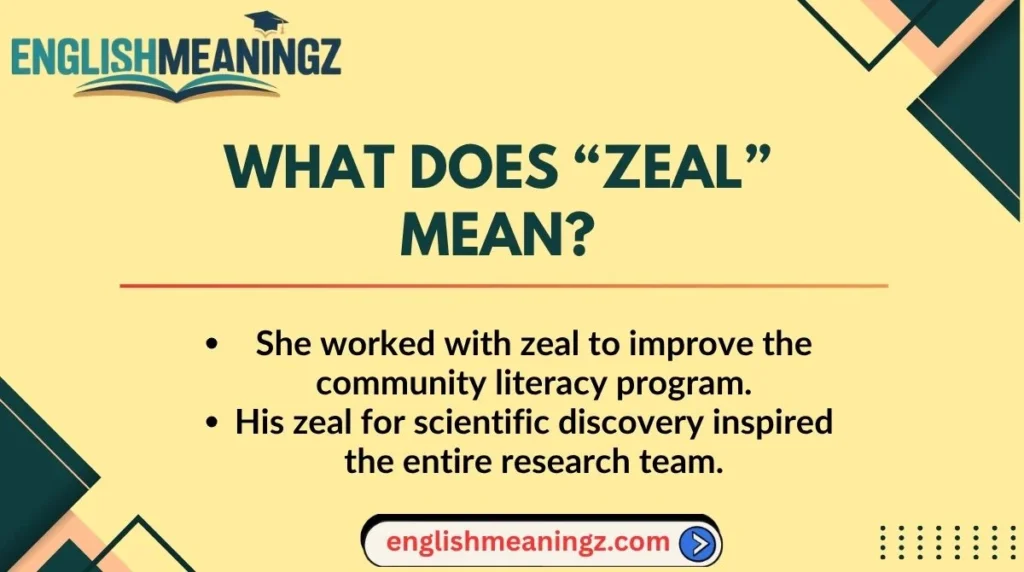
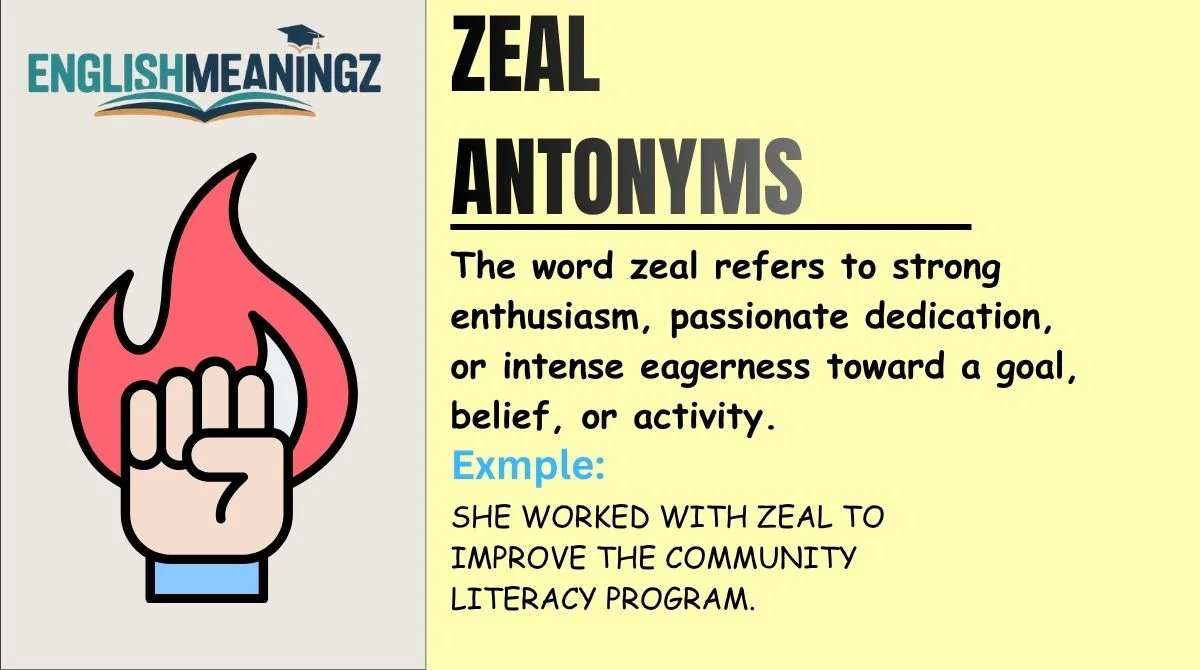
The word zeal refers to strong enthusiasm, passionate dedication, or intense eagerness toward a goal, belief, or activity. It describes a level of motivation that goes beyond simple interest. Someone with zeal approaches tasks with energy, commitment, and determination.
In communication, zeal often carries a positive emotional tone. It suggests devotion, excitement, and proactive effort. Writers frequently use it when describing leadership, activism, career ambition, or creative passion.
From an emotional perspective, zeal exists at the high end of the motivation spectrum. It represents energetic engagement and powerful drive.
For example:
- She worked with zeal to improve the community literacy program.
- His zeal for scientific discovery inspired the entire research team.
Because zeal reflects intense enthusiasm, its opposites typically express reduced motivation, emotional distance, or lack of interest.
12 Best Antonyms for “Zeal”
Apathy
Meaning: Lack of interest, enthusiasm, or concern.
Tone: Academic / Formal
Example Sentence:
The team’s apathy toward the project caused several deadlines to be missed.
Why It Is an Opposite:
Zeal represents passionate commitment, while apathy reflects complete emotional disengagement.
Indifference
Meaning: A neutral attitude where someone does not care strongly either way.
Tone: Formal
Example Sentence:
The manager noticed a troubling indifference among employees during the new initiative.
Why It Is an Opposite:
Zeal involves deep emotional involvement, whereas indifference indicates emotional neutrality.
Disinterest
Meaning: Absence of curiosity or motivation toward something.
Tone: Academic
Example Sentence:
Students showed clear disinterest in the outdated teaching material.
Why It Is an Opposite:
Zeal motivates action and engagement; disinterest discourages participation.
Reluctance
Meaning: Unwillingness or hesitation to do something.
Tone: Neutral / Formal
Example Sentence:
He accepted the leadership role with visible reluctance.
Why It Is an Opposite:
Zeal drives someone eagerly forward, while reluctance slows them down.
Laziness
Meaning: Lack of willingness to exert effort or energy.
Tone: Informal
Example Sentence:
The project failed because of consistent laziness within the team.
Why It Is an Opposite:
Zeal requires active effort; laziness avoids effort entirely.
Passivity
Meaning: A state of inactivity or lack of initiative.
Tone: Academic
Example Sentence:
Passivity in decision-making can weaken organizational progress.
Why It Is an Opposite:
Zeal encourages proactive behavior, while passivity results in inactivity.
Listlessness
Meaning: Lack of energy, enthusiasm, or vitality.
Tone: Literary / Formal
Example Sentence:
The athlete trained with unusual listlessness after the disappointing loss.
Why It Is an Opposite:
Zeal reflects energetic dedication; listlessness signals drained motivation.
Unenthusiasm
Meaning: Absence of excitement or eagerness.
Tone: Informal
Example Sentence:
The audience responded with noticeable unenthusiasm to the proposal.
Why It Is an Opposite:
Zeal represents heightened excitement, while unenthusiasm removes emotional intensity.
Disengagement
Meaning: Withdrawal from participation or emotional involvement.
Tone: Professional / Academic
Example Sentence:
Employee disengagement often leads to reduced productivity.
Why It Is an Opposite:
Zeal connects people to their goals; disengagement separates them from their work.
Halfheartedness
Meaning: Weak effort without genuine passion.
Tone: Neutral
Example Sentence:
His halfheartedness during training prevented significant improvement.
Why It Is an Opposite:
Zeal involves full commitment, while halfheartedness reflects minimal effort.
Detachment
Meaning: Emotional distance from a situation.
Tone: Formal
Example Sentence:
The consultant approached the crisis with professional detachment.
Why It Is an Opposite:
Zeal is emotionally invested; detachment intentionally removes emotion.
Weariness
Meaning: Physical or mental exhaustion that reduces motivation.
Tone: Literary / Neutral
Example Sentence:
After months of intense work, weariness replaced the team’s early excitement.
Why It Is an Opposite:
Zeal fuels energy and persistence, whereas weariness drains it.
Strong vs Mild Opposites
Not all antonyms represent the same level of contrast. Some opposites strongly contradict the meaning of zeal, while others describe milder emotional shifts.
Strong opposites indicate almost complete absence of motivation. Examples include:
- Apathy
- Laziness
- Disengagement
These words suggest that a person has no enthusiasm at all.
Moderate opposites describe reduced enthusiasm rather than total absence. These include:
- Reluctance
- Indifference
- Disinterest
In these cases, the person may still participate but without passion.
Mild opposites often describe emotional distance or lowered energy:
- Detachment
- Weariness
- Listlessness
Understanding these levels helps writers choose precise vocabulary depending on context.
Context-Based Opposites
Opposites are not always fixed. The best antonym for a word often depends on the situation.
For example, in a workplace context, the opposite of zeal might be:
- Disengagement
- Passivity
- Apathy
In a personal motivation context, suitable opposites could include:
- Laziness
- Halfheartedness
- Reluctance
In an emotional context, writers might choose:
- Detachment
- Indifference
Because language changes according to situation, writers should focus on the underlying meaning rather than selecting antonyms mechanically.
Common Mistakes When Using Opposites
Confusing neutrality with negativity
Some writers assume that every opposite must express negativity. However, indifference is neutral rather than negative.
Incorrect:
She responded with hatred instead of zeal.
Better:
She responded with indifference instead of zeal.
Choosing words with different contexts
Some words appear opposite but belong to unrelated situations.
Incorrect:
The scientist showed laziness in research.
Better:
The scientist displayed disengagement during the project.
Ignoring tone differences
Certain antonyms are informal and may not suit academic writing.
For example:
- Laziness is informal.
- Apathy is more academic.
Choosing the correct tone improves credibility.
Sentence Transformation Examples
Understanding antonyms becomes easier when sentences are rewritten using opposite meanings.
Original Sentence:
The volunteers worked with zeal to organize the charity event.
Transformed Sentence:
The volunteers approached the charity event with noticeable apathy.
Original Sentence:
Her zeal for innovation impressed the leadership team.
Transformed Sentence:
Her lack of enthusiasm disappointed the leadership team.
Original Sentence:
The students showed zeal during the science competition.
Transformed Sentence:
The students displayed indifference toward the science competition.
Original Sentence:
His zeal for learning made him a top performer.
Transformed Sentence:
His disinterest in learning limited his academic progress.
Original Sentence:
The new manager approached the project with remarkable zeal.
Transformed Sentence:
The new manager handled the project with reluctance.
FAQs
What is the most accurate antonym of zeal?
The most accurate antonym is apathy because it directly represents the absence of enthusiasm or passion.
Is indifference the same as apathy?
Not exactly. Indifference means emotional neutrality, while apathy suggests a deeper lack of motivation.
Can laziness be considered an opposite of zeal?
Yes, in many contexts laziness contrasts with zeal because it reflects unwillingness to exert effort.
Are antonyms always exact opposites?
No. Some antonyms represent different levels of contrast rather than complete opposites.
Why do writers need to learn antonyms?
Understanding opposites improves vocabulary flexibility, writing clarity, and emotional precision.
Is zeal always used positively?
Usually yes, though extreme zeal can sometimes imply excessive enthusiasm or fanatic dedication.
What is the difference between disengagement and disinterest?
Disinterest refers to lack of curiosity, while disengagement describes withdrawal from active participation.
Conclusion
Understanding antonyms expands vocabulary depth and strengthens writing precision. The word zeal represents intense enthusiasm, commitment, and energetic motivation. Its opposites reveal varying levels of emotional distance, hesitation, and lack of engagement.
Words such as apathy, indifference, disengagement, reluctance, and laziness provide different shades of contrast depending on context.
By recognizing these differences, writers can select the most accurate term for academic papers, professional reports, or creative narratives.
Learning antonyms is not only a vocabulary exercise but also a strategy for better communication. When writers understand both a concept and its opposite, they gain greater control over tone, intensity, and clarity. Mastering these opposites ensures that ideas are expressed with precision and impact.