Strong vocabulary is one of the most important elements of effective communication.
Whether someone is writing an academic essay, a blog post, a professional report, or preparing for language exams, word variety significantly improves clarity and writing quality.
Overusing the same word repeatedly can weaken a piece of writing, while well-chosen synonyms can make it more engaging, precise, and sophisticated.
One commonly used descriptive word in English is “lavish.” It frequently appears in contexts describing luxury, generosity, expensive lifestyles, or grand events.
However, repeating the same word throughout a piece of writing can reduce its impact. This is why learning synonyms is essential.
Students preparing for exams such as IELTS, TOEFL, or university assignments benefit greatly from synonym variety.
Bloggers and content creators rely on alternative vocabulary to improve readability and SEO performance.
Professionals writing reports, marketing materials, or presentations also use synonyms to maintain a polished tone.
This article explores 12 carefully selected synonyms for “lavish.” Each synonym is explained with meaning, context, and example sentences.
In addition, you will find comparison tables, common mistakes, academic writing examples, and exam tips that help you use these words accurately and confidently.
By the end of this guide, you will not only understand the alternatives to “lavish,” but also know when and how to use them effectively in different writing contexts.
Definition and Core Meaning of “Lavish”
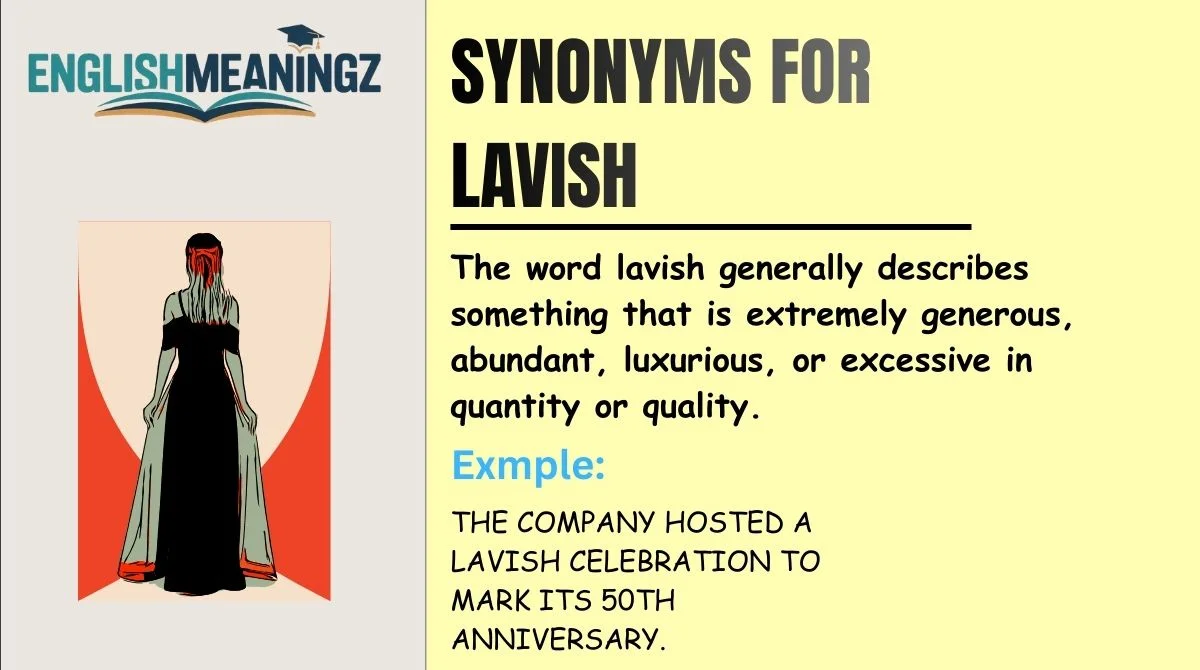
The word lavish generally describes something that is extremely generous, abundant, luxurious, or excessive in quantity or quality. It is commonly used to refer to expensive lifestyles, grand celebrations, generous spending, or elaborate decorations.
At its core, the term suggests more than what is ordinary or necessary. It often implies richness, luxury, or generosity beyond moderation.
In everyday language, “lavish” can describe:
- A luxurious lifestyle
- A grand wedding celebration
- Generous praise or gifts
- Excessive spending
For example:
The company hosted a lavish celebration to mark its 50th anniversary.
Here, “lavish” suggests that the celebration was expensive, elaborate, and impressive.
In academic and professional writing, the word may also describe abundant resources, extensive attention, or detailed investment in something.
Understanding this core meaning helps writers select the most accurate synonym depending on context.
12 Synonyms Grouped by Context
General Use
These synonyms work in many everyday contexts where “lavish” describes abundance or luxury.
1. Luxurious
Meaning: Extremely comfortable, elegant, or expensive.
Context Explanation:
“Luxurious” is one of the closest synonyms to “lavish.” It is commonly used when describing high-end lifestyles, hotels, homes, and travel experiences.
Example Sentence:
The guests stayed in a luxurious resort overlooking the ocean.
2. Extravagant
Meaning: Excessively elaborate or expensive.
Context Explanation:
This word often implies spending more money or effort than necessary. It can sometimes carry a slightly negative tone if the spending seems wasteful.
Example Sentence:
The celebrity hosted an extravagant birthday party with hundreds of guests.
3. Opulent
Meaning: Richly luxurious or grand in appearance.
Context Explanation:
“Opulent” is frequently used when describing architecture, interior design, or décor that appears rich and impressive.
Example Sentence:
The palace featured opulent halls decorated with gold and marble.
Formal & Academic Writing
These synonyms are suitable for essays, academic papers, and formal descriptions.
4. Sumptuous
Meaning: Rich, luxurious, and impressive.
Context Explanation:
“Sumptuous” is often used to describe meals, decorations, or environments that appear highly luxurious and elegant.
Example Sentence:
The guests enjoyed a sumptuous dinner prepared by a renowned chef.
5. Magnificent
Meaning: Extremely impressive and grand.
Context Explanation:
While not always related to money, “magnificent” describes something large, impressive, or extraordinary.
Example Sentence:
The museum displayed magnificent works of art from the Renaissance period.
6. Grand
Meaning: Large, impressive, and elaborate.
Context Explanation:
“Grand” is commonly used to describe ceremonies, events, or buildings that appear significant and impressive.
Example Sentence:
The university organized a grand ceremony to celebrate its centennial anniversary.
Informal Usage
These alternatives are more common in conversational or casual writing.
7. Fancy
Meaning: Stylish, decorative, or expensive in appearance.
Context Explanation:
“Fancy” is an informal way to describe something that looks impressive or luxurious, but it is less formal than “lavish.”
Example Sentence:
They went to a fancy restaurant to celebrate their engagement.
8. Over-the-top
Meaning: Excessively elaborate or exaggerated.
Context Explanation:
This phrase suggests that something is far more elaborate than necessary. It often carries humor or criticism.
Example Sentence:
The decorations were completely over-the-top for a small family gathering.
Technical or Subject-Specific Use
These words appear frequently in descriptive writing, journalism, or professional analysis.
9. Elaborate
Meaning: Highly detailed, complex, or carefully designed.
Context Explanation:
“Elaborate” emphasizes the level of detail and planning involved rather than cost alone.
Example Sentence:
The architect designed an elaborate structure with intricate patterns.
10. Generous
Meaning: Giving or providing more than expected.
Context Explanation:
When describing praise, rewards, or donations, “generous” can replace “lavish.”
Example Sentence:
The professor offered generous feedback on the students’ research papers.
11. Profuse
Meaning: Given in large amounts.
Context Explanation:
This synonym is often used when describing praise, apologies, or expressions rather than material objects.
Example Sentence:
She received profuse compliments after delivering her presentation.
12. Abundant
Meaning: Existing in very large quantities.
Context Explanation:
“Abundant” focuses on quantity rather than luxury. It works well in academic and scientific writing.
Example Sentence:
The region has abundant natural resources that support its economy.
Word Intensity & Tone Comparison Table
| Synonym | Formal Level | Emotional Strength | Typical Context |
|---|---|---|---|
| Luxurious | Medium | Strong | Travel, lifestyle |
| Extravagant | Medium | Strong | Spending, events |
| Opulent | High | Strong | Architecture, décor |
| Sumptuous | High | Strong | Food, luxury settings |
| Magnificent | High | Very Strong | Art, buildings |
| Grand | Medium | Moderate | Ceremonies, events |
| Fancy | Low | Mild | Informal descriptions |
| Elaborate | Medium | Moderate | Design, planning |
| Generous | Medium | Moderate | Praise, gifts |
| Abundant | High | Mild | Academic contexts |
This comparison helps writers choose the most appropriate word depending on tone, audience, and context.
Common Mistakes When Using These Synonyms
Even though these words are similar, they cannot always replace “lavish” directly. Misusing them can create awkward or incorrect sentences.
Mistake 1: Using Informal Words in Academic Writing
Incorrect:
The research center has fancy equipment.
Correct:
The research center has advanced or state-of-the-art equipment.
Explanation:
“Fancy” sounds informal and may not be appropriate in academic writing.
Mistake 2: Confusing “Extravagant” with Positive Luxury
Incorrect:
The hospital received extravagant medical donations.
Correct:
The hospital received generous medical donations.
Explanation:
“Extravagant” suggests unnecessary excess rather than generosity.
Mistake 3: Misusing “Profuse”
Incorrect:
The hotel had profuse decorations.
Correct:
The hotel had lavish or elaborate decorations.
Explanation:
“Profuse” typically describes praise, apologies, or expressions, not physical décor.
Synonyms in Academic Writing
Example Paragraph 1
Luxury tourism has expanded rapidly in recent decades. Many travelers now seek luxurious accommodations and sumptuous dining experiences when visiting international destinations. Hotels compete by offering opulent interiors, personalized services, and exclusive amenities that attract affluent guests.
Example Paragraph 2
Large corporations often invest heavily in marketing campaigns. Some companies organize grand product launches or design elaborate promotional events to capture public attention. While such strategies may appear extravagant, they can significantly strengthen brand recognition.
IELTS & Exam Writing Tips
Students preparing for IELTS or other English exams should learn how to use synonyms carefully.
1. Avoid Repetition
Repeating the same word reduces vocabulary score.
Instead of:
The hotel was lavish. The lavish building impressed tourists.
Try:
The hotel was lavish, and its opulent design impressed tourists.
2. Choose Context-Appropriate Words
Do not replace words blindly.
For example:
Incorrect:
The teacher gave extravagant feedback.
Correct:
The teacher gave detailed or generous feedback.
3. Use Synonyms Naturally
Overusing rare words can sound unnatural. Balance simple vocabulary with advanced alternatives.
4. Maintain Clarity
Clarity is more important than complexity. If a synonym changes meaning, keep the original word.
Similar Words vs True Synonyms
Many English words appear similar to “lavish” but are not exact synonyms.
Luxury vs Lavish
“Luxury” refers to comfort or expensive living, while “lavish” emphasizes excessive abundance or generosity.
Elegant vs Lavish
“Elegant” focuses on style and beauty rather than quantity or expense.
Rich vs Lavish
“Rich” may describe wealth, flavor, or color. “Lavish” specifically suggests abundance or extravagance.
Abundant vs Lavish
“Abundant” refers mainly to large quantity, while “lavish” often implies luxury or extravagance.
Understanding these subtle differences improves vocabulary precision.
Practice Sentences
Complete the sentences using appropriate synonyms.
- The royal palace featured _________ interiors decorated with gold and crystal.
- The company hosted an _________ celebration for its anniversary.
- The chef prepared a _________ dinner for the visiting diplomats.
- The charity organization received _________ donations from supporters.
- The architect created an _________ design with detailed patterns.
Possible answers include: opulent, extravagant, sumptuous, generous, elaborate.
Practicing these sentences helps reinforce vocabulary usage.
FAQs
What are the best synonyms for “lavish”?
Some of the strongest alternatives include luxurious, extravagant, opulent, sumptuous, and magnificent, depending on context.
Is “extravagant” always negative?
Not always. It can describe impressive luxury, but sometimes it suggests unnecessary or wasteful spending.
Which synonym works best in academic writing?
Words like elaborate, abundant, magnificent, and generous are generally more suitable for formal writing.
Can “fancy” replace “lavish”?
Yes, but mainly in informal conversations. It is rarely appropriate for academic or professional documents.
How can I improve vocabulary for exams like IELTS?
Read academic articles, practice synonym substitution, and learn contextual usage rather than memorizing word lists.
Conclusion
Expanding vocabulary is one of the most effective ways to improve writing quality. The word “lavish” is useful for describing luxury, abundance, and generosity, but relying on a single word repeatedly can weaken writing.
By learning alternatives such as luxurious, extravagant, opulent, sumptuous, magnificent, grand, elaborate, generous, and abundant, writers gain greater flexibility and precision.
Each synonym carries slightly different connotations, making it important to consider context before using it.
Students can improve essay scores by using varied vocabulary, bloggers can create more engaging content, and professionals can produce clearer and more persuasive documents.
Developing vocabulary is a gradual process. Regular reading, writing practice, and studying synonyms will steadily strengthen language skills and lead to more confident communication.