Probation is one of those words people hear all the time but often misunderstand. You might see it in a work email, hear it in a court case, read it in a school handbook, or notice someone mentioning it in a text message.
The problem is that probation can mean different things depending on the situation.
Many people search for “probation meaning” because they want a quick and clear answer. Are they talking about a new job? A legal issue? School rules? Or simply using the word in casual conversation?
Understanding the real meaning of probation is important because context changes everything. A person on probation at work is in a very different situation from someone on probation in court. Yet the basic idea remains similar.
This guide explains probation meaning in simple English. You’ll learn the most common definitions, how people use the term in conversations, when it sounds positive or negative, and how to respond when someone mentions probation.
What Does “Probation” Mean in Text?
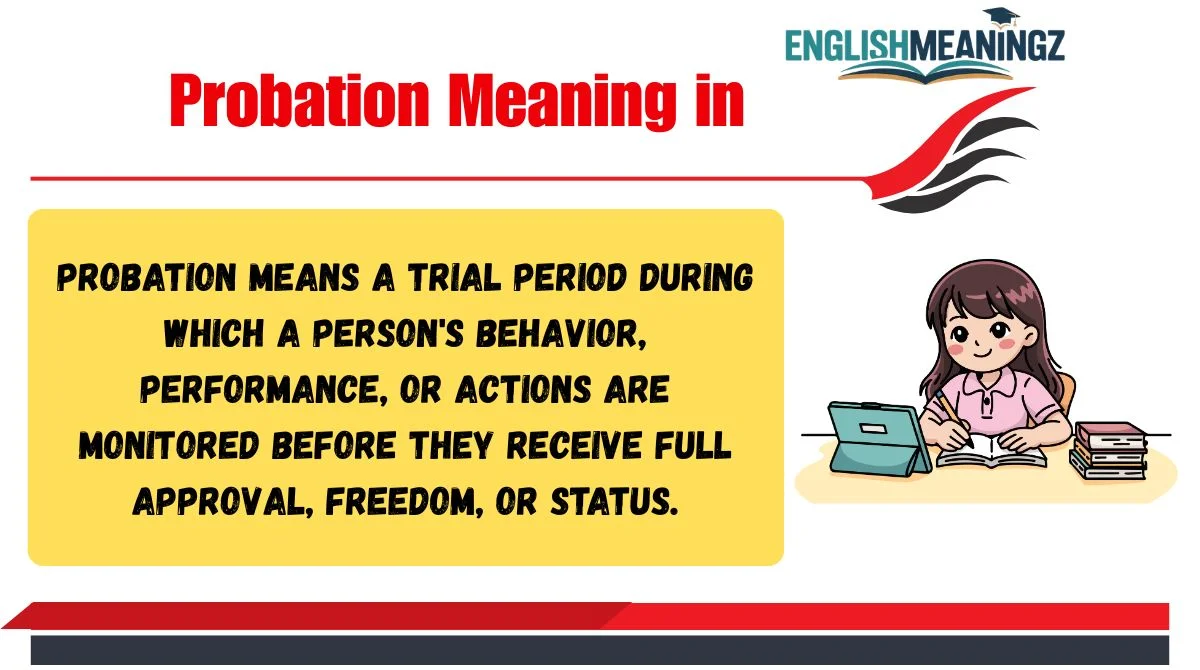
Probation means a trial period during which a person’s behavior, performance, or actions are monitored before they receive full approval, freedom, or status.
The word is commonly used in:
- Work and employment
- Legal situations
- Schools and colleges
- Sports teams
- Everyday conversations
In texts and chats, people usually use probation to describe being under observation or evaluation for a certain period.
The Most Common Meanings of “Probation”
Employment Probation
This is the most common meaning in the workplace.
When a person starts a new job, they may be placed on probation for a specific period, such as 30, 60, or 90 days. During this time, the employer evaluates performance, attendance, and behavior.
Example:
- “I’m still on probation at my new job.”
- “My probation period ends next month.”
In this situation, probation is not necessarily negative. It is often a standard company policy.
Legal Probation
In legal settings, probation is an alternative to serving time in jail or prison.
The individual remains in the community but must follow specific rules established by the court.
Example:
- “He was placed on probation for one year.”
- “She must meet her probation officer every month.”
Breaking probation rules can lead to serious consequences.
Academic Probation
Schools, colleges, and universities often use academic probation when a student’s grades fall below required standards.
The student is given a chance to improve before facing further penalties.
Example:
- “I was put on academic probation after my GPA dropped.”
- “She’s working hard to get off probation.”
This meaning focuses on academic performance rather than punishment.
Sports Probation
Sports teams and organizations may place players on probation for rule violations or disciplinary concerns.
Example:
- “The athlete was on probation for violating team policies.”
- “The club placed several members on probation.”
Organizational or Membership Probation
Some clubs, organizations, and professional groups use probation periods for new members.
Example:
- “New members complete a three-month probation.”
- “Your membership is currently under probation review.”
This allows the organization to assess suitability before granting full membership.
Casual or Figurative Use
People sometimes use probation jokingly in conversations.
Example:
- “I’m on probation with my mom after breaking her favorite vase.”
- “One more mistake and I’m on probation with my girlfriend.”
In these situations, the word is used humorously rather than formally.
How “Probation” Is Used in Real Conversations
Friends & Casual Texting
Friends often use probation jokingly to describe being in temporary trouble.
Examples:
- “I’m on probation with my roommate.”
- “My parents put me on probation after the party.”
- “I missed another deadline, so I’m basically on probation.”
The tone is usually playful and informal.
Instagram & Snapchat
On social media, probation often appears in stories, captions, and comments.
Examples:
- “Still on probation at work.”
- “Phone privileges on probation.”
- “Social media probation starts today.”
Many users employ the term humorously to describe restrictions or consequences.
Dating Apps
People may use probation to discuss relationship issues or dating boundaries.
Examples:
- “You’re on probation after forgetting my birthday.”
- “He’s still on probation after that bad first date.”
In dating conversations, probation often suggests that trust needs to be rebuilt.
Gaming & Online Communities
Gaming groups and online forums sometimes use probation for moderation purposes.
Examples:
- “The player is on probation for toxic behavior.”
- “You’re on chat probation for a week.”
Many online communities use temporary probation before permanent bans.
Work or Professional Chat
Professional environments frequently use probation in its official employment sense.
Examples:
- “Your probation review is scheduled next week.”
- “The probation period lasts three months.”
- “Congratulations on completing probation.”
In workplace communication, the term is typically serious and formal.
Is “Probation” Rude, Flirty, or Offensive?
Probation itself is generally not rude, flirty, or offensive.
Its tone depends entirely on context.
When It Feels Neutral
In workplaces, schools, and legal settings, probation is usually neutral.
Examples:
- “My probation ends in June.”
- “She’s currently on academic probation.”
These statements are factual and carry no emotional tone.
When It Feels Negative
The word may feel negative when associated with punishment, poor performance, or legal trouble.
Examples:
- “He’s on probation because of repeated violations.”
- “She’s on probation at work after multiple warnings.”
The negative feeling comes from the situation, not the word itself.
When It Feels Positive
Sometimes probation can be positive because it offers a second chance.
Examples:
- “I got probation instead of losing my job.”
- “The school gave him probation to improve his grades.”
In these cases, probation represents an opportunity for improvement.
When It Feels Playful
Friends and couples often use probation jokingly.
Examples:
- “You’re on pizza probation after eating my leftovers.”
- “You’re on probation until you buy me coffee.”
The playful tone makes the statement lighthearted rather than serious.
How to Respond When Someone Says “Probation”
Your response should match the situation.
Casual Replies
- “How long does it last?”
- “Hope it goes well.”
- “You’ll get through it.”
- “That sounds manageable.”
Funny Replies
- “Do you get probation snacks too?”
- “Who’s the probation officer?”
- “Need a probation survival guide?”
- “Sounds like you’re under close watch.”
Neutral Replies
- “What happened?”
- “Can you tell me more?”
- “When does it end?”
- “What are the requirements?”
Professional Replies
- “Thank you for the update.”
- “I wish you success during the probation period.”
- “Please let me know if you need assistance.”
- “I hope your review goes well.”
Professional responses work best in workplace discussions.
Common Misunderstandings About “Probation”
Assuming It Always Means Legal Trouble
Many people immediately think of court cases when they hear probation.
In reality, employment probation is extremely common and often routine.
Believing Probation Means Failure
Probation does not always indicate failure.
Many organizations use probation as a normal evaluation process for new employees or members.
Thinking Probation Is Permanent
Probation is usually temporary.
Most probation periods have a clear start date and end date.
Confusing Probation With Suspension
These terms are different.
Probation allows continued participation under supervision.
Suspension temporarily removes participation or privileges.
Assuming Everyone Uses the Same Definition
The meaning changes based on context.
Workplace probation, legal probation, and academic probation all have different purposes.
Misreading Tone in Text Messages
A friend saying, “You’re on probation” may be joking.
Without context, readers sometimes interpret the message too seriously.
Similar Slang Terms You Should Know
Here are related words and phrases that often appear alongside probation:
- Warning – Notice that behavior must improve.
- Strike – A recorded mistake or violation.
- Timeout – Temporary restriction or pause.
- Suspension – Temporary removal of privileges.
- Ban – Complete restriction from participation.
- Second Chance – Opportunity to improve after a mistake.
- Under Review – Being evaluated or assessed.
- Final Warning – Last chance before stronger action.
- Restricted – Limited access or privileges.
- Monitored – Being observed closely.
- Evaluation Period – Time used for assessment.
- Performance Review – Formal assessment of work quality.
Understanding these related terms helps you better understand conversations involving probation.
When You Should Avoid Using “Probation”
Professional Settings
Avoid joking about probation in formal workplaces.
A humorous comment could be misunderstood as criticism or disciplinary action.
Cross-Cultural Chats
People from different countries may associate probation primarily with criminal justice.
Clarify your meaning when necessary.
Sensitive Situations
Avoid making jokes about probation when discussing real legal issues.
Someone may be dealing with a serious personal matter.
Academic Discussions
When talking about academic probation, use the term carefully and respectfully.
Students may feel stressed or embarrassed about their situation.
Serious Workplace Reviews
Do not casually throw around the word probation during employee evaluations unless it is an official designation.
Misuse can create confusion and anxiety.
Final Thoughts
Probation is a simple word with several important meanings. At its core, it refers to a period of observation, evaluation, or supervision. Whether it appears in a workplace, school, courtroom, sports team, or casual conversation, the main idea remains the same: someone is being given time to prove themselves or improve their situation.
The key to understanding probation meaning is paying attention to context. In some cases, it is a routine process. In others, it may involve serious consequences. Sometimes it is even used as a joke among friends.
By understanding the different uses of probation, you can communicate more clearly, avoid misunderstandings, and respond appropriately in both online and real-world conversations.
FAQs
What is the simple meaning of probation?
Probation is a trial period during which a person’s behavior, performance, or actions are monitored and evaluated.
Does probation always mean legal trouble?
No. Probation can refer to work, school, sports, organizations, or legal situations.
What does probation mean at work?
It is a period when a new employee is evaluated before receiving full employment status.
How long does probation usually last?
The length varies, but many probation periods last between 30 and 180 days depending on the organization.
What is academic probation?
Academic probation occurs when a student’s grades fall below required standards and improvement is needed.
Can probation be a positive thing?
Yes. Probation often provides an opportunity to improve performance and demonstrate responsibility.
What does “you’re on probation” mean in texting?
It often means someone is jokingly saying you are being watched or given a second chance after a mistake.
Conclusion
Understanding probation meaning is easier when you focus on context. In most situations, probation refers to a temporary period of observation, evaluation, or supervision.
It may relate to employment, education, legal matters, sports, or even playful conversations between friends.
While the word can sometimes sound serious, it does not always carry a negative meaning. In many cases, probation simply gives a person the chance to prove themselves, improve performance, or regain trust.
Knowing how and where the term is used will help you interpret conversations correctly and communicate with confidence in both personal and professional settings.