People often see the phrase “with prejudice” in legal videos, court clips, TikTok debates, Reddit threads, or even serious text conversations and instantly get confused. It sounds harsh, personal, or even offensive at first glance.
Some people think it means hatred or discrimination. Others assume it is just dramatic internet slang. But the real meaning depends heavily on context.
That is exactly why so many people search for “with prejudice meaning.” The phrase can appear in lawsuits, work emails, online arguments, gaming communities, and social media discussions. In some cases, it has a strict legal meaning. In other situations, people use it casually to sound serious or final.
This guide explains everything in simple English. You will learn what “with prejudice” means in texting, law, online culture, and everyday conversation. You will also see real examples, tone explanations, common misunderstandings, and smart ways to reply when someone says it.
By the end, you will know exactly what the phrase means and when you should — or should not — use it.
What Does “with prejudice meaning” Mean in Text?
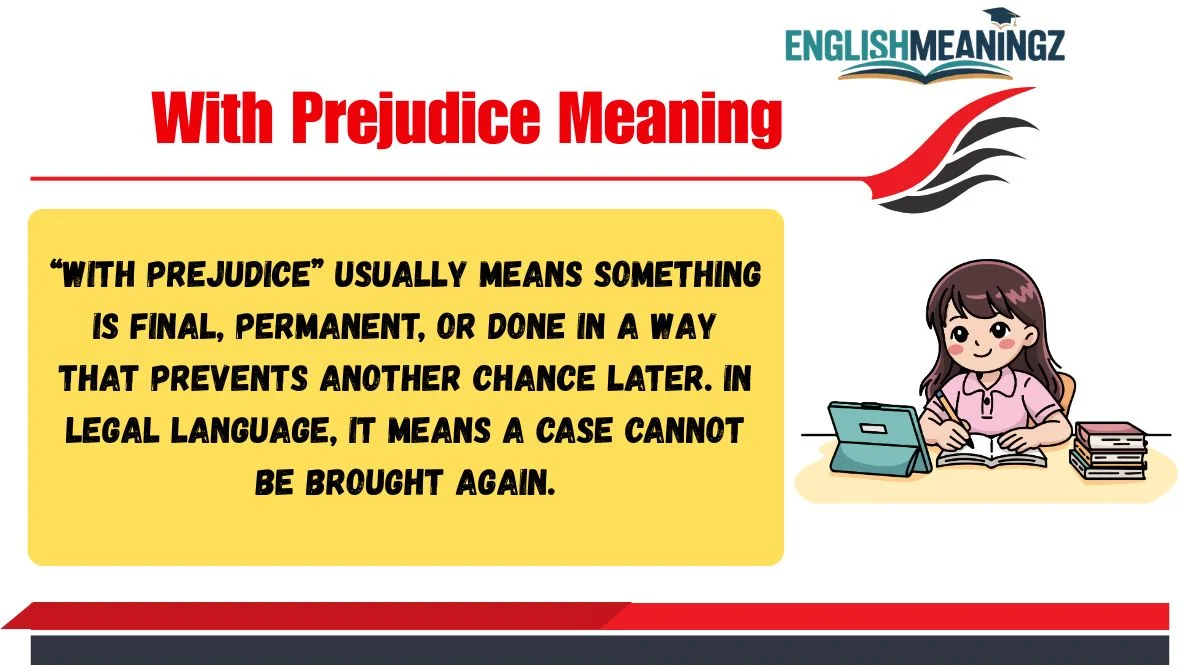
“With prejudice” usually means something is final, permanent, or done in a way that prevents another chance later. In legal language, it means a case cannot be brought again. In texting or online conversations, people may use it to sound serious, firm, sarcastic, or dramatic.
Common interpretations include:
- Final decision
- No second chances
- Serious rejection
- Dramatic internet humor
- Strong disagreement
The meaning changes based on where and how the phrase is used.
The Most Common Meanings of “with prejudice”
Legal Meaning
The most important meaning comes from law.
When a court case is dismissed “with prejudice,” it means the case is permanently closed. The person cannot file the same claim again later.
Example:
- “The lawsuit was dismissed with prejudice.”
This tells everyone the matter is fully finished.
This legal meaning is why the phrase sounds very serious online.
Final or Permanent Decision
Outside legal settings, people use “with prejudice” to mean:
- completely done
- permanently removed
- no retry allowed
Example:
- “I deleted that game with prejudice.”
This means the person never wants to play again.
Dramatic Internet Humor
Gen Z and internet users sometimes say “with prejudice” as exaggerated humor.
It makes a simple action sound extremely official or emotional.
Examples:
- “I unfollowed him with prejudice.”
- “That app got deleted with prejudice.”
The joke comes from using legal-style language for small daily actions.
Strong Rejection
Sometimes the phrase shows strong dislike or refusal.
Example:
- “Her idea was rejected with prejudice.”
This means the rejection was firm and intentional.
Emotional Emphasis
Some people use the phrase to add emotional weight.
Example:
- “I’m leaving this group chat with prejudice.”
This suggests anger, frustration, or finality.
How “with prejudice” Is Used in Real Conversations
Friends & Casual Texting
Friends often use the phrase jokingly.
Examples:
- “I removed pineapple pizza from my life with prejudice.”
- “That movie was deleted from my watchlist with prejudice.”
Here, the phrase adds humor and drama.
The speaker is exaggerating their feelings for comedic effect.
Instagram & Snapchat
On social media, users post the phrase in captions, comments, memes, or reaction videos.
Examples:
- “Blocked with prejudice.”
- “Deleted those photos with prejudice.”
These posts usually mean:
- no regrets
- complete rejection
- emotional closure
It creates a strong, confident tone.
Dating Apps
In dating conversations, the phrase can sound cold, sarcastic, or harsh.
Examples:
- “I unmatched him with prejudice.”
- “That relationship ended with prejudice.”
This suggests:
- zero interest in reconnecting
- emotional finality
- strong disappointment
It can sound funny among friends but rude in direct conversation.
Gaming & Online Communities
Gamers use the phrase when removing players, uninstalling games, or ending rivalries.
Examples:
- “That camper got kicked with prejudice.”
- “I uninstalled the game with prejudice.”
This usage often mixes humor and frustration.
Work or Professional Chat
In professional settings, the phrase should be used carefully because it carries legal weight.
Examples:
- “The proposal was rejected with prejudice.”
This can sound too aggressive in workplace communication.
Most professional environments prefer softer wording like:
- permanently rejected
- fully closed
- no further review
Is “with prejudice” Rude, Flirty, or Offensive?
The phrase is usually not flirty.
It is more serious, dramatic, sarcastic, or cold depending on context.
When It Sounds Positive
Sometimes it sounds funny or playful among close friends.
Examples:
- “I deleted that cursed app with prejudice.”
- “We removed Mondays with prejudice.”
In these cases, the phrase feels humorous and exaggerated.
When It Sounds Negative
The phrase can feel rude when directed at a person.
Examples:
- “I blocked you with prejudice.”
- “Your idea was rejected with prejudice.”
This sounds emotionally harsh because it suggests permanent rejection.
Psychological Tone Behind the Phrase
People often use “with prejudice” to show:
- confidence
- emotional finality
- seriousness
- sarcasm
- frustration
The phrase creates a strong emotional impact because it sounds formal and absolute.
Why It Can Feel Intimidating
Most people first hear the phrase in crime shows, court videos, or legal dramas.
That association makes it sound:
- powerful
- official
- unforgiving
Even in jokes, the phrase carries emotional weight.
How to Respond When Someone Says “with prejudice”
Your reply depends on the tone.
Casual Replies
- “Dang, that serious?”
- “No second chances then.”
- “Fair enough.”
- “That bad, huh?”
These work in friendly conversation.
Funny Replies
- “Court is now in session.”
- “That sounds legally personal.”
- “Objection accepted.”
- “Bro turned into a lawyer.”
These replies keep the mood light.
Neutral Replies
- “Got it.”
- “Understood.”
- “Sounds final.”
- “Okay, noted.”
Best for unclear situations.
Professional Replies
- “Thank you for clarifying.”
- “Understood the matter is closed.”
- “We acknowledge the final decision.”
- “I appreciate the update.”
These are safer in workplace communication.
Common Misunderstandings About “with prejudice”
Thinking It Always Means Discrimination
Many people confuse the word “prejudice” with social bias or discrimination.
But in legal language, “with prejudice” has a different meaning.
It refers to finality, not personal bias.
Assuming It Is Always Angry
Not always.
Online users often say it jokingly.
Example:
- “I removed raisins from my kitchen with prejudice.”
This is playful exaggeration, not actual anger.
Confusing It With “Without Prejudice”
This is a very common mistake.
“Without prejudice” means something can still be discussed again later.
“With prejudice” means the matter is final.
The two phrases mean almost opposite things.
Believing It Is Modern Slang Only
The phrase started in legal language long before internet culture.
Social media simply turned it into a dramatic expression.
Misreading the Tone
Tone changes everything.
The phrase may sound:
- funny
- serious
- sarcastic
- aggressive
- emotional
You must read the situation carefully.
Similar Slang Terms You Should Know
“Hard pass”
Strong rejection of something.
Example:
- “That party? Hard pass.”
“Blocked”
Means someone was removed from communication.
Often emotional or final.
“Dead to me”
Dramatic way to show rejection or disappointment.
“Canceled”
Used online when someone is publicly rejected or criticized.
“Cut off”
Ending contact with someone.
“Ghosted”
Suddenly stopping communication without explanation.
“Benched”
Keeping someone as a backup option in dating.
“Ratioed”
When a social media reply gets more engagement than the original post.
“Muted”
Silencing someone’s content without fully blocking them.
“Unmatched”
Removing a connection on dating apps.
“Cooked”
Internet slang meaning finished, defeated, or ruined.
“It’s over”
A meme phrase showing dramatic failure or defeat.
When You Should Avoid Using “with prejudice”
Professional Settings
The phrase can sound overly aggressive at work.
Avoid saying:
- “Your request was denied with prejudice.”
Instead say:
- “The request was permanently declined.”
This sounds more professional and respectful.
Cross-Cultural Conversations
Non-native English speakers may misunderstand the phrase.
Some may think it refers to racism or discrimination.
Clearer wording is safer.
Sensitive Situations
Avoid using it during emotional conflicts.
Examples include:
- breakups
- family arguments
- workplace tension
The phrase may sound cold or cruel.
Customer Service Communication
Never use the phrase casually with clients or customers.
It can sound hostile or legalistic.
Serious Legal Conversations
If discussing actual law matters, avoid joking with the phrase unless you fully understand the context.
Legal terminology should be used carefully.
Final Thoughts.
The phrase “with prejudice” sounds intense because it comes from legal language where it means something is permanently finished. Online, however, people often use it jokingly to add drama, humor, or emotional emphasis.
In texting and internet culture, the phrase usually means:
- no second chances
- completely done
- emotionally final
- strongly rejected
The tone depends heavily on context. Among friends, it may sound funny. In serious conversations, it can feel harsh or cold.
Understanding the phrase helps you avoid misunderstandings and communicate more clearly online. It also helps you recognize when someone is joking versus when they are being genuinely serious.
Modern internet language changes quickly, but “with prejudice” remains popular because it sounds powerful, dramatic, and memorable.
FAQs
What does “with prejudice” mean in simple words?
It usually means something is final and cannot happen again later.
Is “with prejudice” a legal term?
Yes. In law, it means a case is permanently closed and cannot be refiled.
What does “dismissed with prejudice” mean?
It means the court permanently ended the case.
Can “with prejudice” be used jokingly?
Yes. Online users often use it humorously to sound dramatic.
Is “with prejudice” rude?
It can sound rude if directed at a person because it suggests permanent rejection.
What is the difference between “with prejudice” and “without prejudice”?
“With prejudice” means final. “Without prejudice” means the issue can still be discussed again later.
Why do people use “with prejudice” online?
People use it for humor, drama, sarcasm, or emotional emphasis.
Conclusion
The meaning of “with prejudice” depends on context, but the core idea stays the same: something is considered fully finished with no second chance.
In legal settings, it has a strict official meaning. In texting and internet culture, it is often used for humor, sarcasm, or dramatic emphasis.
Understanding how the phrase works can help you avoid confusion, read tone correctly, and communicate smarter in online conversations, social media posts, and professional situations.