You are texting someone, joking in a group chat, or watching a viral TikTok clip when suddenly somebody says, “I plead the fifth.”
Now you pause.
Are they hiding something? Joking? Refusing to answer? Being sarcastic?
A lot of people search for “plead the fifth meaning” because the phrase shows up everywhere online now — from memes and Snapchat replies to dating apps, gaming chats, and even work conversations. The problem is that the meaning changes slightly depending on tone and context.
Sometimes it means someone does not want to answer a question. Sometimes it is playful. Other times it hints that a person may be guilty, embarrassed, or trying to avoid drama.
This guide explains exactly what “plead the fifth” means in texting and modern online culture. You will learn how people use it, when it sounds funny or rude, how to respond naturally, and when you should avoid saying it completely.
By the end, the phrase will make perfect sense in any conversation.
What Does “Plead the Fifth Meaning” Mean in Text?
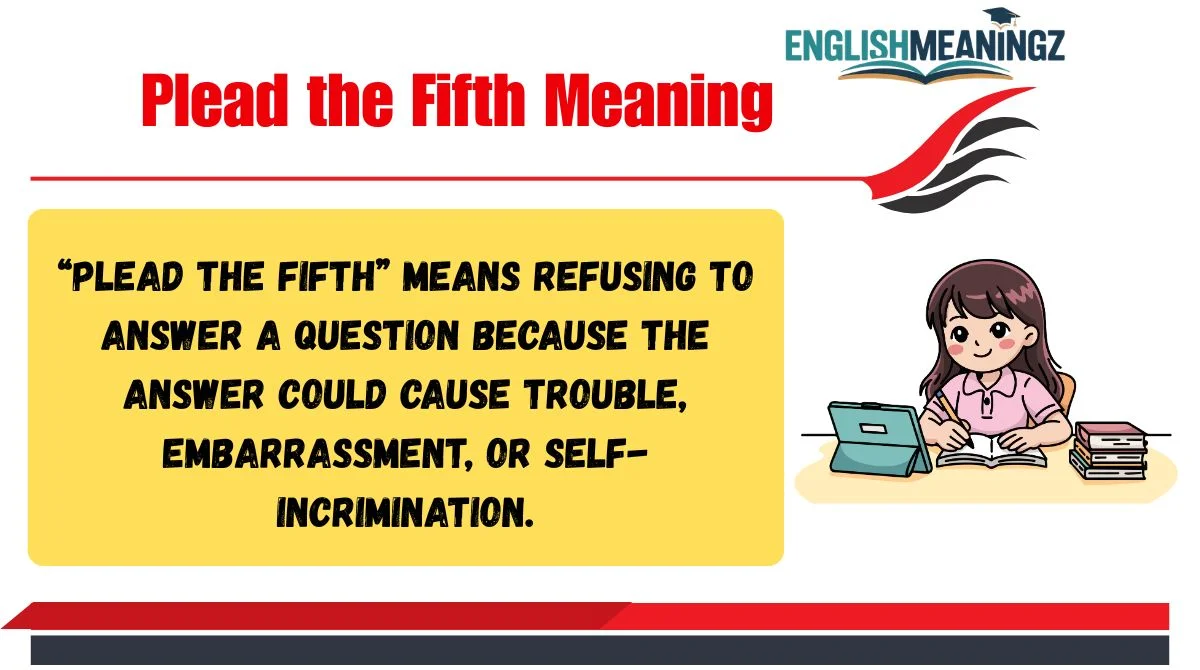
“Plead the fifth” means refusing to answer a question because the answer could cause trouble, embarrassment, or self-incrimination.
In texting and online slang, people usually say it jokingly when they want to avoid revealing information.
Common interpretations include:
- “I’m not answering that.”
- “That’s private.”
- “You caught me.”
- “I don’t want drama.”
Example:
“Did you eat the last slice of pizza?”
“I plead the fifth.”
The Most Common Meanings of “Plead the Fifth”
Refusing to Answer a Question
This is the most common meaning.
A person says it when they do not want to respond.
Example:
“Who told her the secret?”
“I plead the fifth.”
It usually means:
- “I know the answer.”
- “But I’m not saying it.”
Admitting Guilt Without Fully Admitting It
Sometimes the phrase jokingly hints that the person is guilty.
Example:
“Did you stalk your crush’s Instagram again?”
“I plead the fifth.”
The reply suggests:
- “Maybe.”
- “Probably yes.”
- “But I won’t confirm it.”
This playful guilt is common on social media.
Avoiding Embarrassment
People also use it when a question feels awkward.
Example:
“How many hours did you spend gaming today?”
“I plead the fifth.”
The person likely feels embarrassed and avoids giving the real number.
Keeping Something Private
Sometimes it simply means:
- “That’s personal.”
- “None of your business.”
Example:
“Who are you texting every night?”
“I plead the fifth.”
This usage is common in dating conversations.
Using It as a Meme or Joke
Online culture often turns serious phrases into jokes.
Many Gen Z users say “I plead the fifth” dramatically for funny situations.
Example:
“Who finished the snacks?”
“I plead the fifth your honor.”
This exaggerated style is popular on TikTok, Discord, and meme pages.
How “Plead the Fifth” Is Used in Real Conversations
Friends & Casual Texting
Friends use the phrase mostly as humor.
It creates mystery while keeping the conversation playful.
Example:
“Did you talk about me behind my back?”
“I plead the fifth.”
In friend groups, it rarely sounds serious.
It usually means:
- teasing
- playful guilt
- avoiding embarrassment
Instagram & Snapchat
On social media, the phrase often appears:
- in captions
- reply stories
- comment sections
- confession posts
Example Snapchat reply:
“Who was at your house last night?”
“Pleading the fifth.”
People use it because it sounds dramatic and funny at the same time.
It also increases curiosity, which fits social media culture perfectly.
Dating Apps
In dating chats, “I plead the fifth” can sound:
- flirty
- mysterious
- teasing
Example:
“How many people are you talking to?”
“I plead the fifth.”
This creates playful tension.
But overusing it may make someone seem dishonest or avoidant.
Tone matters a lot in dating conversations.
Gaming & Online Communities
Gamers often use the phrase after mistakes or suspicious behavior.
Example:
“Who accidentally team-killed us?”
“I plead the fifth.”
It works because gaming culture loves sarcasm and mock courtroom humor.
Discord servers especially use this phrase often.
Work or Professional Chat
In work settings, the phrase can be risky.
Sometimes coworkers use it jokingly.
Example:
“Who forgot to attach the file?”
“I plead the fifth.”
But in professional communication, it may sound:
- defensive
- immature
- unprofessional
Use it carefully around managers or clients.
Is “Plead the Fifth” Rude, Flirty, or Offensive?
Usually Not Rude
Most of the time, the phrase sounds playful rather than rude.
It softens refusal with humor.
Instead of saying:
- “I’m not telling you.”
People say:
- “I plead the fifth.”
That makes the conversation lighter.
It Can Feel Flirty
In dating chats, the phrase can create mystery.
Example:
“Do you already miss me?”
“I plead the fifth.”
This avoids direct honesty while keeping romantic tension alive.
Many people use it as playful teasing.
It Can Sound Defensive
If the topic is serious, the phrase may feel suspicious.
Example:
“Did you leak the screenshots?”
“I plead the fifth.”
Now the response sounds less funny and more guilty.
Context changes everything.
Tone Depends on Relationship
The phrase works best when:
- people know each other well
- the topic is lighthearted
- humor is expected
It works poorly when:
- trust is low
- emotions are high
- the issue is serious
Can It Be Offensive?
Usually no.
But some people may dislike it because it avoids accountability.
If someone asks an important question and receives:
“I plead the fifth.”
They may feel ignored or dismissed.
How to Respond When Someone Says “Plead the Fifth”
Casual Replies
These work in everyday chats.
- “That means yes.”
- “I knew it.”
- “Suspicious.”
- “Caught in 4K.”
- “Okay then.”
These responses keep the mood relaxed.
Funny Replies
Humor works especially well.
Examples:
- “The court will remember this.”
- “You need a lawyer now.”
- “Case closed.”
- “The jury disagrees.”
- “Very guilty behavior.”
Mock courtroom jokes are extremely common online.
Neutral Replies
Sometimes you may want calm responses.
Examples:
- “Fair enough.”
- “You don’t have to answer.”
- “Got it.”
- “Understood.”
These avoid pressure.
Professional Replies
In workplace chats, stay polite.
Examples:
- “No worries.”
- “We can discuss it later.”
- “Understood.”
- “Let’s move on.”
Avoid sarcastic replies in professional settings.
Common Misunderstandings About “Plead the Fifth”
Thinking It Always Means Guilt
One major misunderstanding is assuming the person is automatically guilty.
In internet slang, people often say it jokingly.
Sometimes it only means:
- embarrassment
- privacy
- teasing
Not actual wrongdoing.
Confusing It With Lying
Refusing to answer is not the same as lying.
Someone may simply:
- not want drama
- avoid awkwardness
- keep something private
Online conversations often blur this difference.
Missing the Joke
Older users or non-native English speakers may take the phrase too seriously.
But Gen Z users frequently use dramatic legal language as humor.
Examples include:
- “Objection.”
- “Your honor.”
- “Evidence.”
- “Case dismissed.”
“Plead the fifth” fits this meme style.
Misreading Tone in Text
Text messages lack facial expressions and voice tone.
That means:
- a joke may sound defensive
- teasing may sound rude
- sarcasm may seem serious
Always look at the conversation context before reacting strongly.
Similar Slang Terms You Should Know
“No comment”
A direct way to avoid answering.
“That’s classified”
A joking way to say something is secret.
“Mind your business”
A stronger, more aggressive version.
“Can neither confirm nor deny”
A sarcastic government-style response.
“Sus”
Short for suspicious.
“Caught in 4K”
Means someone got exposed clearly.
“Red-handed”
Being caught doing something wrong.
“Tea”
Gossip or drama.
“Spill the tea”
Tell the gossip or secret.
“Lowkey”
Something subtle or partly true.
“Highkey”
Something obvious or strongly true.
“Cap”
A lie or false statement.
When You Should Avoid Using “Plead the Fifth”
Professional Settings
Avoid using it:
- with clients
- during meetings
- in formal emails
- during serious workplace discussions
It may appear evasive or childish.
Better alternatives:
- “I’d rather not discuss that.”
- “I’m unable to comment.”
Cross-Cultural Chats
Not everyone understands American legal expressions.
International users may feel confused.
Simple wording often works better in global conversations.
Serious Situations
Avoid joking phrases during:
- conflicts
- accusations
- emotional discussions
- trust issues
Example:
“Did you lie to me?”
“I plead the fifth.”
This could increase anger instead of reducing tension.
Sensitive Topics
Do not use it around:
- trauma
- personal pain
- legal trouble
- family conflict
Humor can feel disrespectful in serious moments.
When Clarity Matters
Sometimes direct communication is better.
If honesty is important, avoiding answers may damage trust.
Final Thoughts.
The phrase “plead the fifth” has become a huge part of online slang and texting culture. While its original meaning relates to refusing to answer questions, modern internet use is usually more playful than serious.
Most people use it to:
- avoid awkward questions
- joke about guilt
- create mystery
- tease friends
- dodge embarrassment
In casual chats, it often sounds funny and harmless. In dating conversations, it can even feel flirty or playful. But in serious discussions or professional settings, it may sound evasive or immature.
The key is context.
Understanding tone, relationship dynamics, and the platform helps you read the phrase correctly every time.
Once you know how it works, you will instantly recognize when someone is joking, hiding something, or simply trying to keep the conversation fun.
FAQs
What does “plead the fifth” mean in slang?
In slang, it means refusing to answer a question, usually in a funny or suspicious way.
Is “plead the fifth” a joke?
Often yes. Online users commonly say it jokingly to avoid awkward questions.
Does “plead the fifth” mean guilty?
Not always. Sometimes it only means someone wants privacy or feels embarrassed.
Can “plead the fifth” be flirty?
Yes. In dating chats, it can create playful mystery and teasing energy.
Why do Gen Z users say “plead the fifth”?
Gen Z internet culture loves dramatic humor, sarcasm, and mock courtroom language.
Is it rude to say “I plead the fifth”?
Usually no, but it can sound dismissive in serious conversations.
Can you use “plead the fifth” at work?
You can jokingly use it with close coworkers, but avoid it in formal situations.
Conclusion
“Plead the fifth” is one of those phrases that sounds serious but is often used casually online. In most modern conversations, it simply means, “I’m not answering that.”
Whether it appears in texting, dating apps, gaming chats, or social media comments, the phrase usually adds humor, mystery, or playful avoidance. Still, context matters. Used at the wrong time, it can sound defensive or rude.
Understanding the tone behind the phrase helps you respond naturally and avoid misunderstandings in digital conversations.