You saw the word “tapestry” in a text, TikTok comment, Instagram caption, or random online post and paused for a second. Was it deep? Sarcastic? A joke? Or did someone literally mean wall art?
That confusion is exactly why people search for “tapestry meaning.” The word has both a real dictionary meaning and a growing internet vibe-based meaning.
Online, people often use it to describe emotions, life stories, aesthetics, relationships, creativity, or chaotic situations mixed together.
In modern texting culture, words are no longer used in only one way. Gen Z and internet users love turning normal words into emotional slang, ironic comments, or poetic expressions. “Tapestry” is one of those words.
This guide breaks everything down in simple English. You’ll learn what tapestry means in texts, social media captions, dating apps, gaming chats, and everyday conversations. You’ll also see how tone changes the meaning, how to reply naturally, and when you should avoid using it.
By the end, you’ll fully understand the tapestry meaning without overthinking every message you read online.
What Does “Tapestry” Mean in Text?
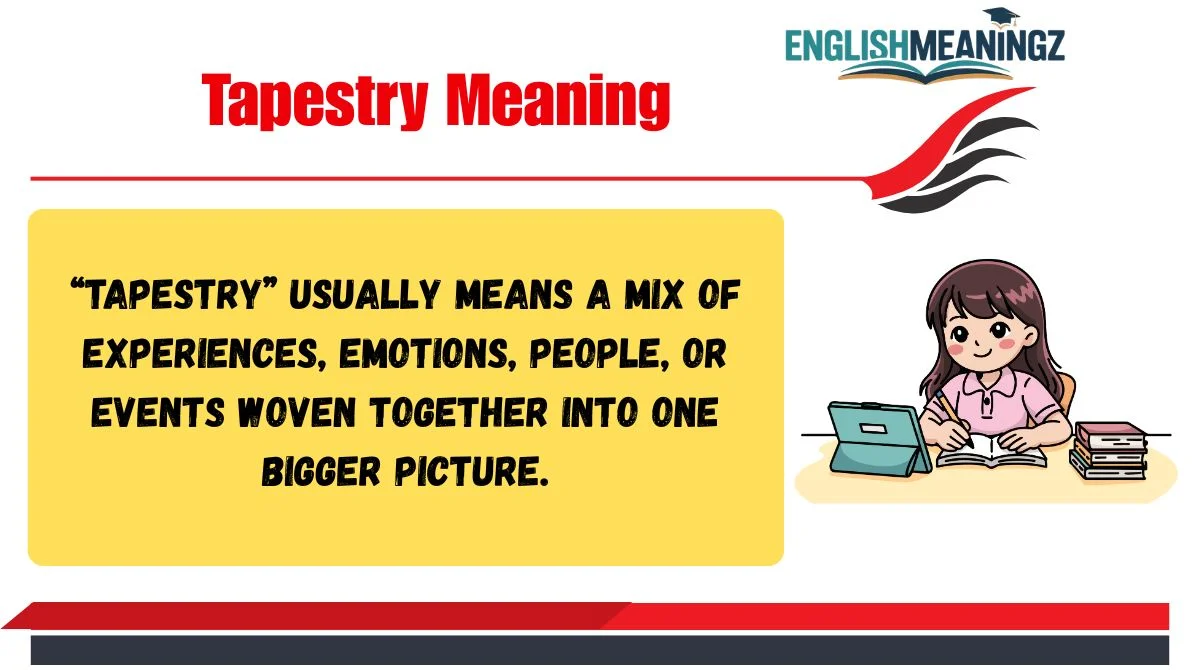
“Tapestry” usually means a mix of experiences, emotions, people, or events woven together into one bigger picture.
In texting and online slang, people use it to describe:
- A complicated life story
- Emotional chaos or beauty
- Aesthetic or artistic vibes
- Different personalities or experiences connected together
Sometimes it sounds serious and deep. Other times it’s used jokingly or dramatically.
The Most Common Meanings of “Tapestry”
A Complex Mix of Life Experiences
This is the most common modern meaning.
People use “tapestry” to describe life as a combination of memories, struggles, wins, relationships, and emotions.
Example:
- “College was a whole tapestry of chaos and growth.”
Meaning:
Life during college had many connected experiences.
Emotional or Deep Expression
Online users sometimes use “tapestry” in emotional posts to sound thoughtful or poetic.
Example:
- “Our friendship became part of my life’s tapestry.”
Meaning:
The friendship became an important part of life.
This style is common on:
- Instagram captions
- TikTok edits
- Tumblr-style posts
- Emotional tweets
Artistic or Aesthetic Meaning
The original meaning of tapestry is a decorative woven fabric or wall hanging. That meaning still matters today.
Example:
- “I bought a moon tapestry for my room.”
Meaning:
A fabric decoration for a wall.
This is common in:
- Home decor content
- Pinterest posts
- Online shopping
- Dorm room setups
Internet Irony or Dramatic Humor
Some Gen Z users use “tapestry” in an exaggerated way to sound fake-deep on purpose.
Example:
- “This situationship is becoming a rich emotional tapestry.”
Meaning:
The relationship is messy and dramatic.
This tone is often sarcastic or playful.
Symbol of Connection
Sometimes “tapestry” means many people or ideas connected together.
Example:
- “Gaming communities create a tapestry of different personalities.”
Meaning:
Different types of people come together in one space.
How “Tapestry” Is Used in Real Conversations
Friends & Casual Texting
Friends often use “tapestry” jokingly when talking about chaotic experiences.
Examples:
- “Our group chat is a tapestry of bad decisions.”
- “This vacation turned into an emotional tapestry.”
Usually, this tone is:
- Funny
- Dramatic
- Slightly sarcastic
- Creative
Sometimes people use it seriously, especially during emotional conversations.
Example:
- “Everything we went through became part of our tapestry.”
That sounds warm and sentimental.
Instagram & Snapchat
On Instagram, “tapestry” is heavily connected to aesthetics and emotional storytelling.
You may see captions like:
- “Life is a beautiful tapestry.”
- “Threads of memories.”
- “A tapestry of moments.”
These posts often include:
- Photo dumps
- Travel pictures
- Emotional edits
- Vintage-style content
On Snapchat, the word is less common but still appears in dramatic captions or private story posts.
Example:
- “Today was a chaotic tapestry.”
Meaning:
The day was messy and random.
Dating Apps
On dating apps, “tapestry” can sound intellectual, romantic, or overly dramatic depending on context.
Examples:
- “Looking for someone to add to my life’s tapestry.”
- “Every connection becomes part of the story.”
This can come across as:
- Deep
- Creative
- Flirty
- Pretentious if overused
Some users genuinely like poetic language. Others use it ironically.
Gaming & Online Communities
Gaming communities sometimes use “tapestry” humorously.
Example:
- “This raid was a tapestry of failure.”
Meaning:
Everything went wrong in a funny way.
Online forums also use it to describe mixed experiences.
Example:
- “Reddit is a tapestry of opinions.”
Meaning:
There are many different viewpoints.
In gaming culture, the word usually sounds:
- Nerdy
- Funny
- Dramatic
- Smart in a joking way
Work or Professional Chat
In professional settings, “tapestry” is usually used formally.
Example:
- “The company culture is a tapestry of diverse ideas.”
This sounds polished and professional.
However, using it too much in work chats can feel overly fancy or unnatural.
Avoid messages like:
- “Our meeting created a tapestry of productivity.”
That sounds forced.
Is “Tapestry” Rude, Flirty, or Offensive?
“Tapestry” is generally not rude or offensive.
But the tone changes depending on context.
When It Feels Positive
It usually feels positive when talking about:
- Memories
- Relationships
- Creativity
- Growth
- Community
Examples:
- “Your support became part of my tapestry.”
- “Life is a beautiful tapestry.”
This sounds emotional and thoughtful.
When It Feels Funny or Sarcastic
Gen Z users often use “tapestry” dramatically as a joke.
Example:
- “This friend group is a toxic tapestry.”
The humor comes from sounding overly poetic about something messy.
When It Feels Flirty
In romantic conversations, “tapestry” can sound soft and emotional.
Example:
- “Maybe we’re threads in the same tapestry.”
This feels:
- Romantic
- Creative
- Slightly cheesy
Some people love this style. Others think it sounds cringe.
When It Feels Negative
The word itself is not offensive, but it can sound:
- Pretentious
- Fake-deep
- Overly dramatic
Especially if someone uses it too often.
Example:
- “Your emotional tapestry is exhausting.”
That sounds insulting.
How to Respond When Someone Says “Tapestry”
Casual Replies
- “That actually makes sense.”
- “True honestly.”
- “Life be like that.”
- “That’s deep.”
- “Facts.”
Funny Replies
- “Bro turned into a philosopher.”
- “Not the emotional tapestry.”
- “Why does that sound poetic?”
- “That’s lowkey dramatic.”
- “Okay Shakespeare.”
Neutral Replies
- “I get what you mean.”
- “Interesting way to put it.”
- “That’s a good perspective.”
- “Makes sense.”
Professional Replies
- “I appreciate that viewpoint.”
- “That’s a thoughtful way to describe it.”
- “I understand the bigger picture now.”
Common Misunderstandings About “Tapestry”
Thinking It Only Means Wall Decor
Many people only know the original meaning:
a woven decorative fabric.
But online slang expanded the meaning into emotions, experiences, and connected stories.
Assuming It’s Always Serious
Not always.
A lot of Gen Z users say “tapestry” ironically to sound extra dramatic for humor.
Example:
- “This cafeteria lunch is a tapestry of sadness.”
Nobody literally means that.
Confusing It With Poetry Language
“Tapestry” sounds poetic, but modern users mix poetry with memes constantly.
Someone might use it seriously in one post and jokingly in the next.
Misreading the Tone
Tone matters a lot online.
The same sentence can sound:
- Deep
- Romantic
- Sarcastic
- Cringe
- Funny
Example:
- “Our friendship is a tapestry.”
Depending on context, this could sound:
- Sweet
- Overdramatic
- Genuine
- Ironic
Thinking It’s Gen Z Slang Only
The word itself is old, but the modern internet-style use is newer.
Millennials, writers, artists, and aesthetic creators also use it online.
Similar Slang Terms You Should Know
Here are related internet terms and vibe-heavy expressions people use online:
- Lore — Someone’s personal backstory or drama
- Core memory — A meaningful life moment
- Canon event — An important experience that changes someone
- Aura — Someone’s overall vibe or energy
- Delulu — Delusional in a funny or romantic way
- Main character energy — Acting like the star of life
- Vibe check — Judging someone’s mood or energy
- Deep fried emotionally — Mentally exhausted
- Situationship — An unclear romantic connection
- Brain rot — Internet obsession affecting thoughts
- Emotional damage — Funny exaggeration of emotional pain
- Cooked — Completely exhausted, doomed, or overwhelmed
These phrases often appear in the same online spaces where people use “tapestry.”
When You Should Avoid Using “Tapestry”
Professional Settings
Using “tapestry” too casually at work can sound forced.
Avoid:
- “This spreadsheet is a tapestry of innovation.”
That sounds unnatural.
Use simpler words instead:
- Mix
- Combination
- Collaboration
- Overview
Cross-Cultural Conversations
Not everyone understands poetic English expressions.
In international chats, “tapestry” may confuse people who only know the literal fabric meaning.
Serious Arguments
Using poetic language during conflict may sound sarcastic or dismissive.
Example:
- “Your emotional tapestry is showing.”
This can sound rude.
Overusing It Online
If every post includes words like:
- tapestry
- aura
- lore
- energy
People may think you are trying too hard to sound deep.
Sensitive Situations
Avoid dramatic internet language during:
- Grief
- Mental health discussions
- Serious relationship talks
Simple language usually feels more respectful.
Final Thoughts
The modern tapestry meaning goes far beyond fabric hanging on a wall. Online, the word became a way to describe emotions, memories, chaos, relationships, creativity, and connected experiences.
Sometimes it sounds deep and meaningful. Other times it’s ironic, funny, or intentionally dramatic. That flexibility is exactly why the word became popular across texting culture, social media, dating apps, and online communities.
The key to understanding “tapestry” is context. Pay attention to:
- Tone
- Platform
- Relationship
- Humor style
Most of the time, people use it to describe many different things coming together into one bigger story.
Once you understand that idea, the word becomes much easier to recognize in conversations online.
FAQs
What is the real meaning of tapestry?
The original meaning of tapestry is a woven decorative fabric used as wall art. Online, it also means a mix of experiences or emotions connected together.
What does tapestry mean in slang?
In slang, “tapestry” usually describes emotional complexity, life experiences, chaos, or connected stories in a dramatic or poetic way.
Is tapestry a compliment?
Yes, it can be. Calling someone part of your “tapestry” often means they are an important part of your life story.
Why do Gen Z use the word tapestry?
Gen Z often uses normal words in emotional, ironic, or exaggerated ways. “Tapestry” sounds poetic, which makes it popular for memes and deep captions.
Can tapestry be used romantically?
Yes. People sometimes use it in romantic messages to describe emotional connection or shared experiences.
Does tapestry always mean something deep?
No. Sometimes people use it jokingly to sound overly dramatic or sarcastic.
Is tapestry formal or casual?
It can be both. The word works in artistic, emotional, professional, and casual conversations depending on context.
Conclusion
“Tapestry” is one of those words that changed meaning online without fully losing its original definition. Today, it can describe emotions, memories, chaos, relationships, or simply a mix of experiences woven together.
Whether someone uses it seriously, romantically, aesthetically, or sarcastically, the meaning usually connects back to different things joining into one bigger picture.
Understanding the tone and context helps you instantly know what someone really means when they say “tapestry” in texts, captions, or online chats.