People often come across the word “monochromatic” while reading about fashion, art, photography, graphic design, home decor, or color theory. At first glance, it may sound complex or technical. Many people wonder whether monochromatic means “one color only,” “black and white,” or something else entirely.
The confusion is understandable because the term is used in different creative fields. A designer may use it to describe a color palette, while a photographer may use it to explain an image style. Someone discussing clothing may talk about a monochromatic outfit, and an artist may refer to a monochromatic painting.
If you searched for monochromatic meaning, you are likely looking for a clear and simple explanation without complicated design jargon. This guide explains exactly what the term means, where it is used, how people use it in everyday conversations, and the common misunderstandings that often cause confusion.
By the end, you will know how to recognize monochromatic designs, understand the word in context, and use it correctly yourself.
What Does “Monochromatic Meaning” Mean in Text?
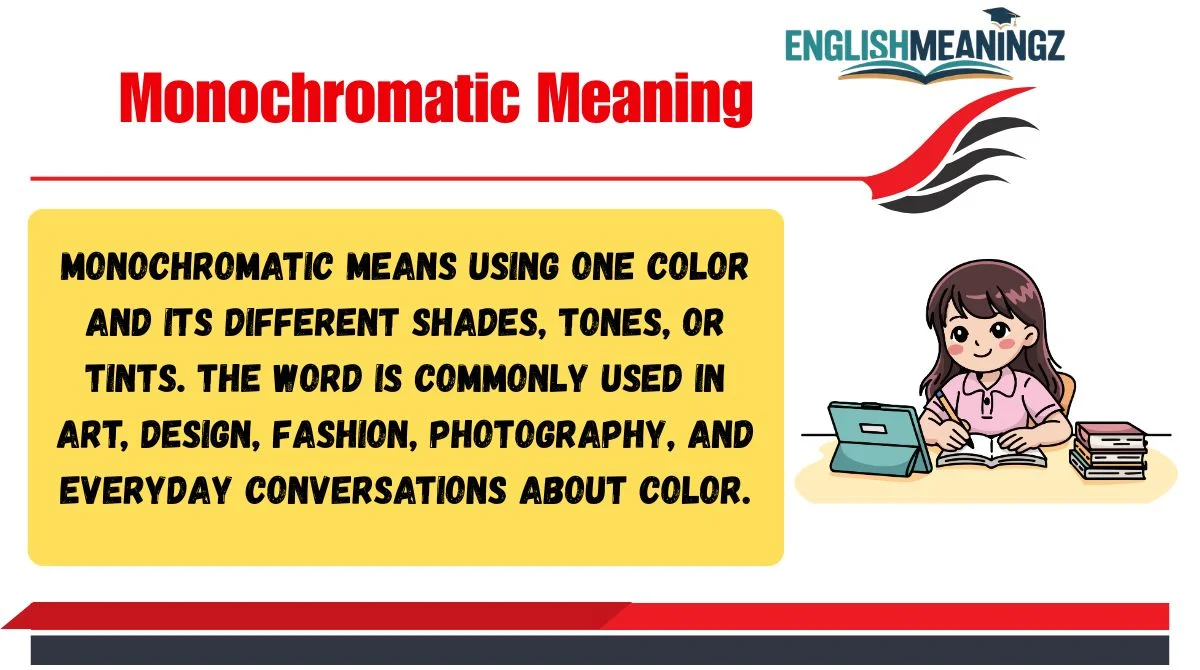
Monochromatic means using one color and its different shades, tones, or tints. The word is commonly used in art, design, fashion, photography, and everyday conversations about color.
Common interpretations include:
- A design based on a single color family
- An outfit made from different shades of one color
- Artwork that focuses on one dominant color
- A visual style that looks clean, simple, and unified
In most cases, monochromatic does not mean using only one exact color. Instead, it means using variations of the same color.
The Most Common Meanings of “Monochromatic”
Monochromatic in Color Theory
In color theory, monochromatic refers to a color scheme built from one base color.
For example, a blue monochromatic palette might include:
- Light blue
- Sky blue
- Royal blue
- Navy blue
All these colors belong to the same blue family.
Example:
“The website uses a monochromatic blue design.”
This means different shades of blue are used throughout the website.
Monochromatic in Fashion
Fashion experts often use the term to describe clothing that stays within one color family.
Examples:
- Light gray shirt with dark gray pants
- Beige jacket with cream trousers
- Various shades of green worn together
Example:
“She wore a monochromatic black outfit.”
This means her clothing mainly consisted of black and closely related shades.
Monochromatic in Interior Design
Interior designers use monochromatic color schemes to create a calm and balanced space.
Examples include:
- A bedroom decorated with various shades of blue
- A living room built around soft gray tones
- A workspace featuring different shades of beige
Example:
“The room has a monochromatic aesthetic.”
This means one color family dominates the space.
Monochromatic in Photography
Photography uses the term when an image is dominated by one color or tonal range.
Example:
“A monochromatic photograph can create a dramatic mood.”
The image may emphasize one color to create a stronger visual effect.
Monochromatic in Art
Artists often create monochromatic works using one primary color and its variations.
Example:
“The painting is monochromatic and uses only shades of red.”
This creates visual unity and focus.
How “Monochromatic” Is Used in Real Conversations
Friends & Casual Texting
People sometimes use the word casually when discussing clothing, room decor, or personal style.
Examples:
- “I’m going for a monochromatic look today.”
- “Your room is so monochromatic.”
- “Everything matches because it’s monochromatic.”
In casual conversations, the word usually refers to a coordinated color theme.
Instagram & Snapchat
Social media users frequently discuss monochromatic aesthetics.
Examples:
- “Love your monochromatic feed.”
- “This monochromatic edit looks amazing.”
- “The monochromatic theme makes everything look clean.”
Influencers often use monochromatic styles to create visually consistent content.
Dating Apps
While less common, the term may appear when discussing personal style.
Examples:
- “I like monochromatic outfits.”
- “My wardrobe is mostly monochromatic.”
Here, it often suggests a modern, minimalist fashion sense.
Gaming & Online Communities
Gamers and designers may use the term when discussing user interfaces, character designs, or visual themes.
Examples:
- “The menu uses a monochromatic color scheme.”
- “I prefer monochromatic UI designs.”
The term usually refers to visual consistency and simplicity.
Work or Professional Chat
Professionals often use monochromatic in design, branding, marketing, architecture, and creative projects.
Examples:
- “Let’s test a monochromatic palette.”
- “The presentation should have a monochromatic theme.”
- “The brand identity uses monochromatic colors.”
In business settings, the term is widely accepted and commonly understood.
Is “Monochromatic” Rude, Flirty, or Offensive?
The word monochromatic is generally neutral.
It is not considered rude, offensive, or flirtatious. Instead, it is a descriptive term related to color, design, and visual style.
Positive Contexts
Monochromatic often carries positive associations such as:
- Elegant
- Modern
- Sophisticated
- Organized
- Minimalist
Examples:
- “Your monochromatic outfit looks great.”
- “The monochromatic design feels professional.”
Neutral Contexts
The word is frequently used as a simple description.
Examples:
- “The logo is monochromatic.”
- “The artwork is monochromatic.”
No emotional meaning is implied.
Negative Contexts
Occasionally, someone may use the term critically.
Examples:
- “The room feels too monochromatic.”
- “The design looks monochromatic and boring.”
In these situations, the criticism is aimed at the design, not the person.
Context Matters
Like many descriptive words, the meaning depends on how it is used.
For example:
- “Elegant and monochromatic” sounds positive.
- “Plain and monochromatic” may sound negative.
The surrounding words determine the overall tone.
How to Respond When Someone Says “Monochromatic”
Casual Replies
- “Yeah, I like keeping colors consistent.”
- “It makes everything look cleaner.”
- “That’s the style I was going for.”
- “I love simple color schemes.”
Funny Replies
- “One color is enough stress for me.”
- “I picked a favorite color and committed.”
- “Matching everything seemed easier.”
- “My wardrobe signed a color contract.”
Neutral Replies
- “That’s true.”
- “I prefer a unified look.”
- “Good observation.”
- “I like that style.”
Professional Replies
- “The monochromatic palette supports brand consistency.”
- “We chose it for visual harmony.”
- “The design aims for a cohesive appearance.”
- “It helps maintain a clean visual identity.”
Common Misunderstandings About “Monochromatic”
Thinking It Means Only One Exact Color
This is the most common misunderstanding.
Monochromatic does not necessarily mean using one single shade.
Instead, it usually includes:
- Tints
- Shades
- Tones
All based on the same color family.
Confusing It With Black and White
Many people assume monochromatic automatically means black and white.
That is not always true.
A monochromatic design can be:
- Blue
- Green
- Red
- Purple
- Brown
Or virtually any color family.
Assuming It Is Boring
Some people believe monochromatic designs lack creativity.
In reality, many designers use monochromatic palettes because they create:
- Visual balance
- Sophistication
- Clarity
- Strong branding
Confusing It With Minimalism
Monochromatic and minimalist are related but not identical.
A design can be:
- Monochromatic but detailed
- Minimalist but colorful
- Both monochromatic and minimalist
The terms describe different design characteristics.
Misreading the Tone
When someone calls a design monochromatic, they are usually describing it rather than criticizing it.
The surrounding context determines whether the comment is praise, criticism, or simple observation.
Similar Slang Terms You Should Know
Although monochromatic is not slang, several related terms are often used in conversations about style, design, and aesthetics.
Minimalist
A clean style focused on simplicity and fewer elements.
Aesthetic
A specific visual style or overall look.
Muted
Colors that appear soft and less vibrant.
Neutral Palette
A color scheme based on beige, gray, white, or similar tones.
Tonal
Using different tones of the same color.
Cohesive
Elements that work well together visually.
Color Palette
A selected group of colors used in a design.
Modern
A current and clean design approach.
Sleek
Smooth, polished, and stylish in appearance.
Balanced
A design that feels visually stable.
Harmonious
Colors and elements that blend naturally together.
Unified
A look where all parts feel connected.
When You Should Avoid Using “Monochromatic”
Professional Settings With Non-Design Audiences
Not everyone understands design terminology.
If your audience is unfamiliar with color theory, simpler language may be clearer.
Instead of saying:
“The presentation is monochromatic.”
You might say:
“The presentation uses different shades of blue.”
Cross-Cultural Chats
While monochromatic is widely understood in creative industries, it may not be familiar to everyone around the world.
Consider using simpler explanations when communicating with international audiences.
Educational Situations
When teaching beginners, defining the term first can prevent confusion.
For example:
“Monochromatic means using different shades of the same color.”
This explanation is often easier to understand.
Sensitive Design Feedback
If you are giving feedback on someone’s work, simply calling it monochromatic may be unclear.
Instead, explain what you mean.
For example:
- “The monochromatic style looks elegant.”
- “The monochromatic palette feels too limited for this project.”
Specific feedback is usually more helpful.
Final Thoughts.
Understanding the monochromatic meaning is actually quite simple once you break it down. The term refers to using one color family along with its various shades, tones, and tints. It appears frequently in fashion, art, photography, branding, interior design, and social media discussions.
Most of the time, monochromatic is used positively to describe a clean, coordinated, and visually appealing style. It does not automatically mean black and white, nor does it mean using only one exact shade.
When you see the word in conversation, think of a unified color theme built around a single color family. That simple idea will help you understand the term in almost every situation.
FAQs
What is the simple meaning of monochromatic?
Monochromatic means using one color and its different shades, tones, or tints.
Does monochromatic mean black and white?
No. Black and white can be monochromatic, but monochromatic can also involve blue, red, green, or any other color family.
What is a monochromatic outfit?
A monochromatic outfit uses different shades of the same color to create a coordinated appearance.
Why do designers use monochromatic color schemes?
Designers use them to create harmony, consistency, simplicity, and visual balance.
Is monochromatic a positive word?
Usually yes. It often describes a stylish, organized, and cohesive visual look.
Can monochromatic designs use multiple shades?
Yes. Most monochromatic designs include lighter and darker versions of the same base color.
What is the difference between monochromatic and colorful?
Monochromatic focuses on one color family, while colorful designs use multiple distinct color families.
Conclusion
The monochromatic meaning centers on a simple but powerful idea: using one color family and its variations to create a unified visual effect.
Whether you encounter the term in fashion, photography, interior design, art, branding, or everyday conversation, it generally describes a clean and coordinated approach to color.
Understanding this concept makes it easier to recognize design styles, communicate creative ideas, and appreciate why monochromatic palettes remain popular across many industries.
Once you know that monochromatic is about one color expressed in different ways, the term becomes easy to understand and use correctly.