If you have ever received a message saying “I’m engaged,” “She’s engaged,” or “The audience was really engaged,” you may have stopped for a second and wondered what the writer actually meant. The word has several meanings, and the right one depends completely on the situation.
That is exactly why so many people search for engaged meaning online. In one conversation, it can describe a couple planning to get married. In another, it can refer to someone being busy with work.
On social media, it often means people are actively liking, commenting, and sharing content. Because the same word works in different ways, confusion is common.
This guide explains every major meaning in simple language. You will learn how people use “engaged” in texting, dating, work chats, gaming, and social media.
You will also discover when the word sounds positive, when it may be misunderstood, and how to respond naturally. By the end, you will know exactly what “engaged” means in almost any conversation.
What Does “Engaged Meaning” Mean in Text?
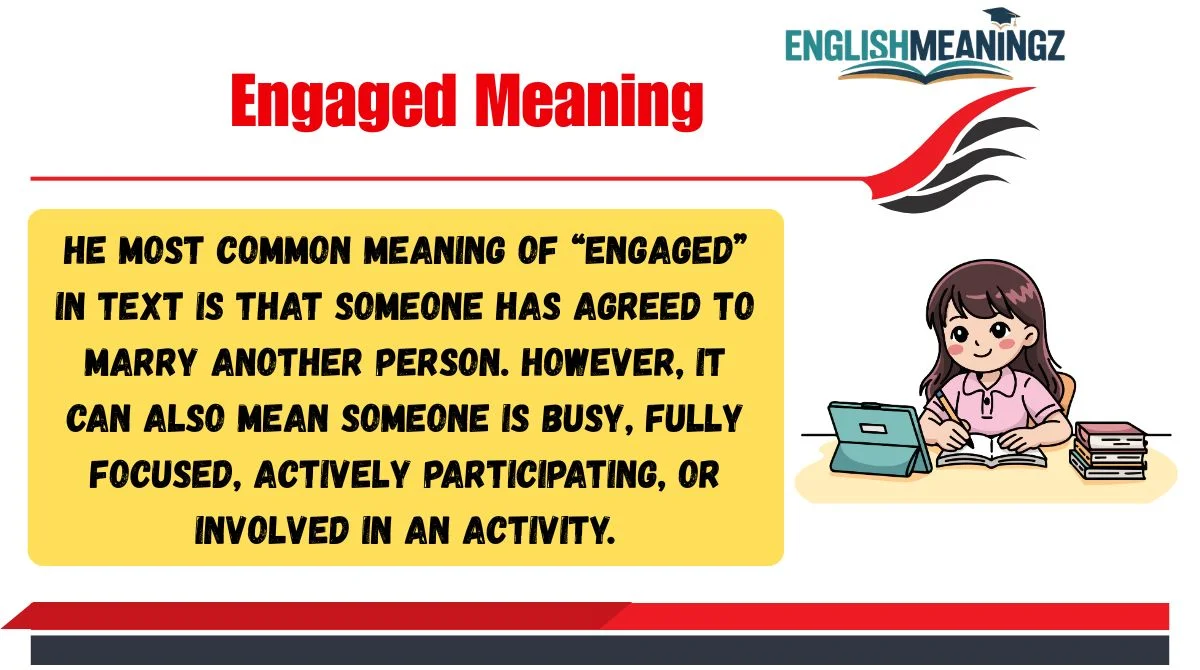
The most common meaning of “engaged” in text is that someone has agreed to marry another person. However, it can also mean someone is busy, fully focused, actively participating, or involved in an activity. The exact meaning depends on the conversation and surrounding words.
The Most Common Meanings of “Engaged”
1. Engaged = Planning to Get Married
This is the meaning most people think of first.
When someone says they are engaged, it means they accepted a marriage proposal and intend to get married in the future.
Example:
- “We got engaged last weekend.”
- “She’s engaged to her college friend.”
In this case, the person is not married yet but has officially committed to marriage.
2. Engaged = Busy or Occupied
Sometimes “engaged” simply means someone is unavailable because they are doing something else.
Example:
- “Sorry, I’m engaged with another meeting.”
- “The phone line is engaged.”
It suggests the person or resource cannot respond right now.
3. Engaged = Paying Full Attention
Teachers, managers, and speakers often use the word when people are interested and actively involved.
Example:
- “The students stayed engaged during class.”
- “Everyone was engaged in the discussion.”
This meaning highlights attention and participation.
4. Engaged = Active on Social Media
Content creators often talk about audience engagement.
If followers comment, like, save, or share posts, they are considered engaged users.
Example:
- “Her audience is highly engaged.”
- “The post reached thousands of engaged followers.”
5. Engaged = Involved in an Activity
The word can also describe taking part in something.
Example:
- “He was engaged in writing.”
- “They were engaged in negotiations.”
It simply means participating actively.
How “Engaged” Is Used in Real Conversations
Friends & Casual Texting
Among friends, “engaged” almost always refers to marriage unless another context is obvious.
Examples:
- “Did you hear? Jake is engaged.”
- “My cousin got engaged yesterday.”
- “She’s finally engaged after five years together.”
If someone says they are engaged, congratulations are usually expected.
Instagram & Snapchat
On social platforms, the word often has two meanings.
First, users may announce engagement news.
Examples:
- “Officially engaged!”
- “Can’t wait to marry my best friend.”
Second, creators discuss engagement rates.
Examples:
- “Our followers are really engaged.”
- “This reel got amazing engagement.”
Marketing professionals use the term daily when measuring audience interaction.
Dating Apps
On dating apps, “engaged” normally means someone is already committed and should not be using the platform.
Sometimes users joke by saying:
- “If I disappear, I probably got engaged.”
If someone actually writes “engaged” in their profile, they are usually unavailable romantically.
Gaming & Online Communities
Gamers may use engaged differently.
Examples:
- “We’re engaged with the enemy.”
- “Stay engaged until backup arrives.”
Here it means actively involved in combat or action.
Community managers may also say:
- “Our members stay engaged every day.”
This refers to active participation.
Work or Professional Chat
Business conversations often use “engaged” to describe involvement or availability.
Examples:
- “The team stayed engaged throughout training.”
- “I’m engaged with another client.”
- “Employees should remain engaged during meetings.”
The meaning is professional rather than romantic.
Is “Engaged” Rude, Flirty, or Offensive?
In most situations, “engaged” is completely neutral.
When It Feels Positive
The word usually carries positive emotions when talking about marriage.
Examples include:
- Excitement
- Celebration
- Commitment
- Happiness
It can also praise someone’s attention.
“The audience was very engaged.”
This sounds complimentary.
When It Feels Negative
Sometimes “engaged” can politely say someone is unavailable.
“I’m engaged with another task.”
While not rude, it may signal distance or limited availability.
Can It Be Flirty?
Not by itself.
If someone says they are engaged, it actually suggests they are already committed to another person.
However, joking comments about engagement between close friends may be playful.
Is It Offensive?
No.
The word is generally respectful and widely accepted across cultures and age groups.
Problems only arise if someone misunderstands which meaning is intended.
How to Respond When Someone Says “Engaged”
Casual Replies
- “That’s awesome!”
- “Congratulations!”
- “I’m so happy for you.”
- “When’s the wedding?”
- “Tell me everything.”
Funny Replies
- “Looks like I need to buy a fancy outfit.”
- “So when’s the free cake?”
- “I’m already practicing my dance moves.”
- “Guess I’m invited, right?”
- “Time to start planning the party.”
Neutral Replies
- “That’s nice to hear.”
- “Congratulations on the news.”
- “Hope everything goes well.”
- “Wishing you both happiness.”
Professional Replies
- “Congratulations on your engagement.”
- “Wishing you both the very best.”
- “Thank you for sharing your wonderful news.”
- “Best wishes for your future together.”
If the conversation is about work rather than marriage, simply respond to the topic instead.
Example:
“I’m engaged with another meeting.”
You could reply:
“No problem. Let me know when you’re available.”
Common Misunderstandings About “Engaged”
Assuming It Always Means Marriage
This is the biggest mistake.
Someone saying “employees are engaged” does not mean they are getting married.
It means they are motivated and involved.
Confusing It With Being Busy
When someone says they are engaged with work, they simply mean occupied.
It has nothing to do with relationships.
Misreading Social Media Engagement
Marketing experts talk about engagement every day.
High engagement means users interact with content.
It does not refer to romantic relationships.
Confusing “Engaged” With “Married”
Being engaged means a couple plans to marry.
Marriage happens later.
The two stages are different.
Tone Misinterpretation
Some readers assume “I’m engaged” is meant to end flirting.
Sometimes it is.
Other times it is simply sharing happy news.
Context matters.
Similar Slang Terms You Should Know
Taken
Already in a relationship.
Single
Not dating anyone seriously.
Hitched
An informal way to say married.
Boo
A romantic partner or crush.
Bae
A term of affection for someone special.
Wifey Material
Someone considered ideal for marriage.
Hubby
A casual nickname for husband.
Locked In
Committed or fully focused on something.
Official
Used online when a relationship becomes public.
Soft Launch
Hinting at a relationship without revealing details.
Hard Launch
Publicly announcing a relationship with full details.
Situationship
A romantic connection without clear commitment.
When You Should Avoid Using “Engaged”
Professional Settings
If writing formal business documents, use more specific language when possible.
Instead of:
“The customer is engaged.”
You might write:
“The customer is actively participating.”
Clarity reduces confusion.
Cross-Cultural Chats
Some cultures immediately associate “engaged” with marriage.
If discussing attention or involvement, consider using words like “active” or “participating.”
Sensitive Situations
If talking with someone experiencing relationship problems, mentioning engagement casually may create awkwardness.
Choose words carefully based on the situation.
When Precision Matters
Academic writing, legal documents, and technical reports often benefit from more exact wording.
Replace “engaged” with:
- occupied
- involved
- participating
- committed
- focused
depending on the intended meaning.
Final Thoughts
The meaning of “engaged” changes with context, but it is not difficult once you know the possibilities. Most people use it to describe a couple planning to marry, yet businesses use it for active participation, teachers use it for attention, marketers use it for audience interaction, and professionals use it to describe involvement or being busy.
Whenever you see the word, look at the surrounding conversation before deciding what it means. That simple habit prevents misunderstandings and helps you communicate more naturally. Whether you are texting friends, reading social media posts, or chatting at work, understanding “engaged” makes conversations clearer and more confident.
FAQs
What does engaged mean in texting?
In texting, it usually means someone has agreed to marry, although it can also mean busy or actively involved depending on the conversation.
Can engaged mean busy?
Yes. In many situations, “engaged” simply means occupied or unavailable because someone is working on another task.
Does engaged always mean getting married?
No. It can also describe attention, participation, involvement, or audience interaction.
What does engaged mean on social media?
It often refers to users who like, comment, share, save, or interact with content regularly.
Is engaged the same as married?
No. An engaged couple plans to marry in the future, while married couples have already completed the marriage ceremony.
How should I reply if someone says they are engaged?
A simple “Congratulations!” or “I’m so happy for you” is a natural and appropriate response.
Is engaged a positive word?
Most of the time, yes. It usually suggests commitment, participation, attention, or exciting personal news.
Conclusion
Understanding the engaged meaning is easier once you know that context changes everything. In one sentence, it may describe a future bride or groom.
In another, it may refer to a focused student, an active employee, a busy schedule, or loyal social media followers. Instead of assuming only one definition, always look at the conversation around the word.
Doing so helps you avoid confusion and communicate more effectively in texts, online posts, workplace discussions, and everyday life. The more familiar you become with these different uses, the more naturally you will understand and use “engaged” in modern English.