If someone tells you, “I got furloughed,” would you know exactly what they mean? Many people confuse it with being fired, laid off, or quitting a job. Others see the word online and wonder whether it has a special meaning in texting or social media.
The truth is that furloughed meaning is much simpler than most people think. It is mainly a workplace term, but it also appears in casual conversations, news stories, and online discussions.
Understanding it can help you avoid confusion during job searches, workplace changes, or chats with friends.
This guide explains what furloughed means in plain English, shows how people use it in real conversations, clears up common myths, and helps you know the right way to respond.
By the end, you will know exactly when the word fits and when another term is more accurate.
What Does “Furloughed Meaning” Mean in Text?
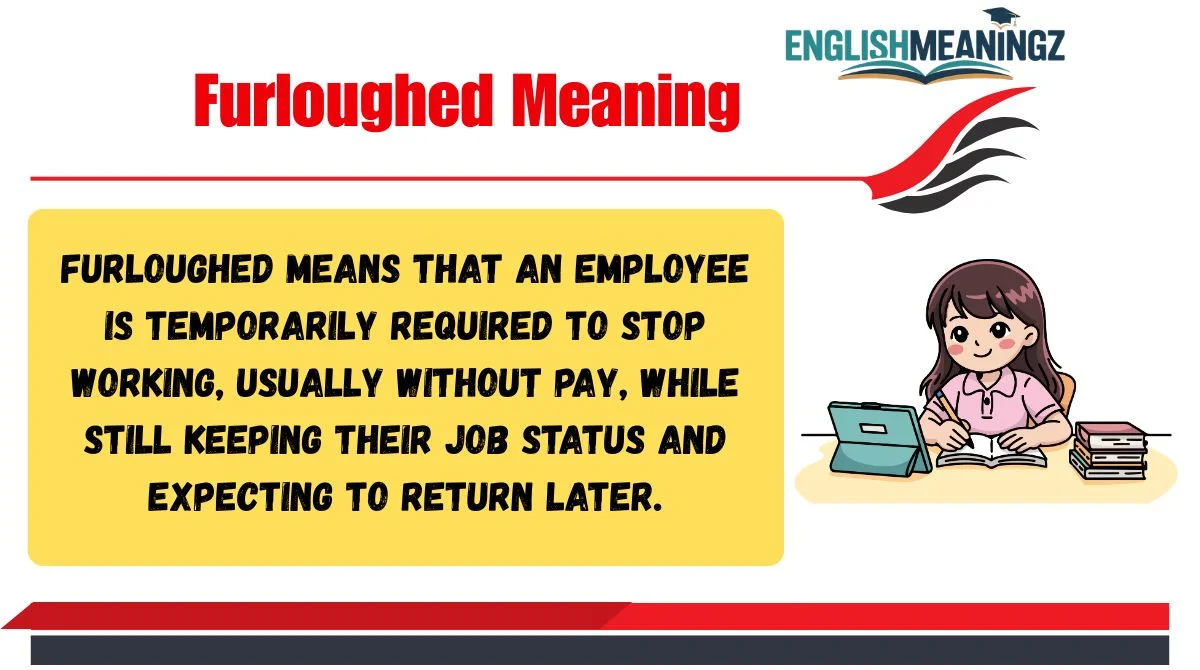
Furloughed means that an employee is temporarily required to stop working, usually without pay, while still keeping their job status and expecting to return later. In text messages or online chats, it almost always refers to work situations rather than slang. Some people may confuse it with being laid off, unemployed, or on unpaid leave, but those meanings are not exactly the same.
The Most Common Meanings of “Furloughed”
Temporary Leave From Work
The most common meaning is that a company tells employees not to work for a period while planning to bring them back later.
Example:
- “I’m furloughed until next month.”
- “The business hopes everyone returns soon.”
This situation often happens during financial problems, seasonal slowdowns, or unexpected events.
Reduced Work Schedule
Sometimes employees are technically furloughed for only certain days instead of leaving work completely.
Example:
- “We only work three days a week because of the furlough.”
The employee remains part of the company but works fewer hours.
Government or Public Sector Shutdowns
Government workers sometimes use the word when funding stops temporarily.
Example:
- “Thousands of workers were furloughed during the shutdown.”
The expectation is often that employees will return once operations resume.
Informal Online Use
People occasionally joke about being “furloughed” from hobbies or responsibilities.
Example:
- “My wallet furloughed me from shopping this month.”
This playful use is not official but appears in memes and social posts.
How “Furloughed Meaning” Is Used in Real Conversations
Friends & Casual Texting
Friends often use the term when explaining why they suddenly have free time.
Examples:
- “I got furloughed, so I’m home all week.”
- “The company paused work for now.”
The conversation usually focuses on temporary job changes rather than permanent unemployment.
Instagram & Snapchat
On social media, users may post updates like:
- “Officially furloughed today.”
- “Trying to stay positive until work starts again.”
Followers often respond with encouragement or questions about returning to work.
Dating Apps
Someone might explain their schedule by saying:
- “I’m furloughed right now, so I have extra time.”
This helps provide context without suggesting they permanently lost their career.
Gaming & Online Communities
Gamers sometimes mention being furloughed to explain increased activity.
Examples:
- “Been furloughed, so I’ve finished three games.”
- “More free time means more online matches.”
The word still keeps its employment meaning.
Work or Professional Chat
In workplace conversations, accuracy matters.
Examples:
- “Several employees have been furloughed until business improves.”
- “The furlough is expected to end next quarter.”
Professional communication should clearly distinguish furloughs from layoffs.
Is “Furloughed” Rude, Flirty, or Offensive?
The word itself is not rude, flirty, or offensive. It is a neutral employment term.
However, emotions around it can vary. Someone who has been furloughed may feel worried about income or job security. Joking about it without understanding the situation may come across as insensitive.
When It Feels Positive
- When discussing a temporary break.
- When the employee expects to return soon.
- When used factually without judgment.
When It Feels Negative
- When someone fears losing long-term income.
- When listeners mistake it for being fired.
- When people make jokes about financial hardship.
Tone matters more than the word itself.
How to Respond When Someone Says “Furloughed”
Casual Replies
- “I hope things get back to normal soon.”
- “At least it sounds temporary.”
- “Hope you’re doing okay.”
Funny Replies
- “Looks like your alarm clock got furloughed too.”
- “Guess the couch has a new best friend.”
- “Time to master every streaming series.”
Keep humor light and avoid making fun of financial stress.
Neutral Replies
- “Thanks for explaining.”
- “When do you expect to return?”
- “Hopefully it won’t last long.”
Professional Replies
- “I wish you the best during this temporary period.”
- “Please let me know if I can support you.”
- “I hope operations resume soon.”
Professional responses should show empathy without making assumptions.
Common Misunderstandings About “Furloughed”
Assuming It Means Fired
Many people believe furloughed employees lose their jobs permanently.
That is incorrect.
A furlough usually means the employer expects workers to return.
Confusing It With Being Laid Off
A layoff often ends employment, while a furlough generally pauses work temporarily.
The difference affects benefits, expectations, and future planning.
Thinking It Means Vacation
Being furloughed is not the same as taking holiday leave.
Employees usually do not choose the situation voluntarily.
Believing Everyone Keeps Full Pay
Many furloughs involve reduced or suspended wages.
Policies vary by employer and local law.
Misreading the Tone
Someone saying they are furloughed is usually sharing information, not asking for sympathy.
Respond respectfully rather than making assumptions.
Similar Slang Terms You Should Know
Although “furloughed” is not really slang, these related terms often appear nearby.
- Laid off – Employment ended because of business reasons.
- Pink-slipped – Informal way to say someone lost their job.
- Downsized – Company reduced its workforce.
- Benched – Temporarily inactive or not assigned work.
- On leave – Away from work for approved reasons.
- Unpaid leave – Time off without salary.
- Sabbatical – Extended planned break from work.
- Remote – Working from another location instead of the office.
- Hybrid – Combination of home and office work.
- Contract ended – Temporary employment finished.
- Reduced hours – Working fewer scheduled hours.
- On pause – Informal phrase meaning temporarily stopped.
Understanding these terms helps prevent confusion in workplace conversations.
When You Should Avoid Using “Furloughed”
Professional Settings Without Accuracy
Do not call someone furloughed unless that is officially their employment status.
Using the wrong word may create legal or workplace confusion.
Cross-Cultural Chats
Some countries rarely use the term.
People may better understand “temporary unpaid leave” or “temporarily not working.”
Sensitive Situations
Avoid joking about furloughs when someone is struggling financially.
Even harmless humor may feel disrespectful.
Social Media Rumors
Do not assume a company furloughed staff unless confirmed.
Incorrect claims can spread misinformation quickly.
When You Mean “Fired”
If employment has permanently ended, use the correct term instead of furloughed.
Precision matters.
Final Thoughts
The phrase furloughed meaning refers to a temporary pause in employment where workers remain connected to their employer but stop working for a period, often without pay. It is different from being fired or laid off because the expectation is usually that employees will return when conditions improve.
Most people use the word in workplace discussions, news reports, or personal updates rather than as internet slang. Knowing the difference helps you understand conversations, respond appropriately, and avoid common misunderstandings.
When someone says they are furloughed, the best response is usually supportive, respectful, and free from assumptions. A little understanding goes a long way in making communication clearer and kinder.
FAQs
What does furloughed mean in simple words?
It means a worker is temporarily told not to work but still remains employed and may return later.
Is furloughed the same as fired?
No. Being fired usually ends employment, while a furlough is generally temporary.
Do furloughed workers get paid?
Sometimes they do, but many furloughs involve reduced or unpaid time away from work depending on company rules.
Can someone collect benefits while furloughed?
In many places, they may qualify for certain benefits, but eligibility depends on local laws and regulations.
Is furloughed a slang word?
No. It is an official employment term, although people may use it casually online.
How do you use furloughed in a sentence?
Example: “The company furloughed employees until business improved.”
Why do companies furlough workers?
Businesses may use furloughs during financial hardship, seasonal slowdowns, emergencies, or temporary closures to reduce costs while planning to keep employees.
Conclusion
Understanding furloughed meaning is important because it prevents one of the most common workplace misunderstandings.
A furlough is not the same as being fired or laid off. Instead, it is usually a temporary pause in work with the hope that employees will return once conditions improve.
Whether you see the term in the news, hear it from a coworker, or read it in a text message, knowing its true meaning helps you respond with confidence and empathy.
As workplaces continue to change in 2026, learning the correct use of employment terms like “furloughed” makes communication clearer and more accurate for everyone.