Have you ever seen someone type “gospel” in a message and wondered what they actually meant? Maybe a friend replied, “That’s gospel,” or someone on social media wrote, “Take it as gospel.” At first, it can sound confusing because the word has both a religious meaning and a popular everyday meaning.
Many people search for gospel meaning because they hear it in conversations, online posts, videos, or text messages and want to know whether it is being used literally or figuratively.
The answer depends on the situation, the speaker, and the context.
This guide explains everything in simple language. You’ll learn what “gospel” means in texting, how people use it on social media, when it sounds serious or casual, and how to reply naturally.
By the end, you’ll understand the different meanings and know exactly when and how to use the word yourself.
What Does “Gospel Meaning” Mean in Text?
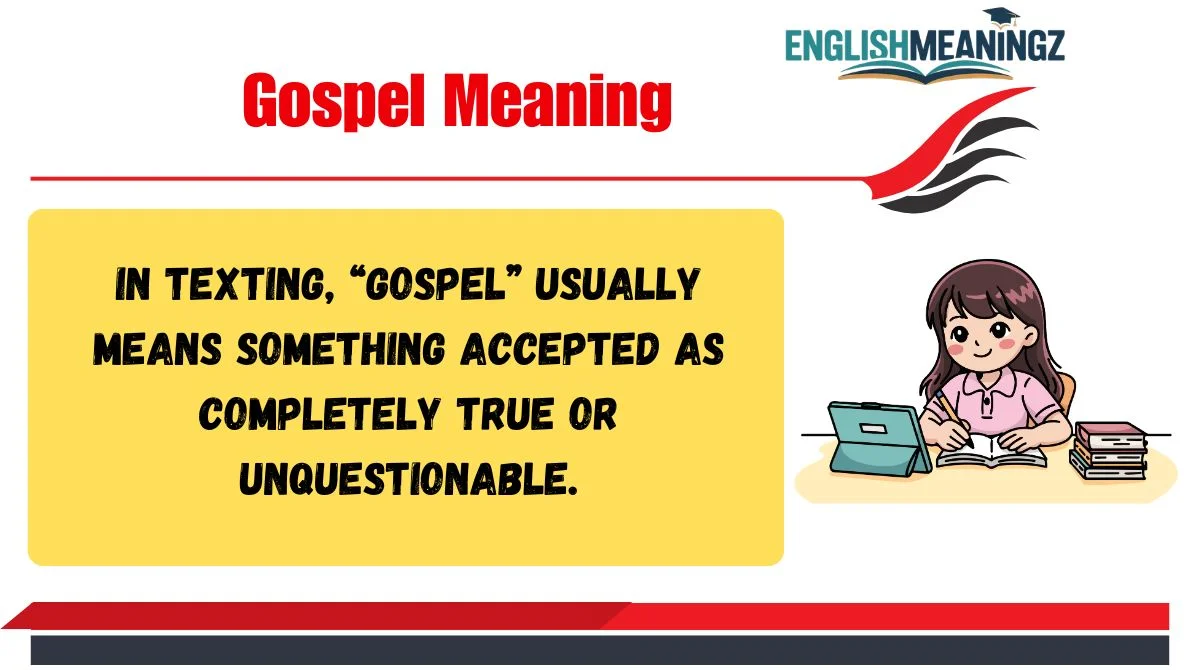
In texting, “gospel” usually means something accepted as completely true or unquestionable. It can also refer to religious teachings, trusted advice, or a statement that someone believes without doubt. Depending on the conversation, it may be serious, playful, or even sarcastic.
The Most Common Meanings of “Gospel”
1. Something Considered Absolutely True
The most common modern use of “gospel” is to describe information that someone treats as fact.
Example:
- “Everything she says is gospel to him.”
- “Don’t take that rumor as gospel.”
In these cases, the word means unquestioned truth.
2. Religious Teaching or Message
Traditionally, “gospel” refers to the teachings about Jesus Christ or the message of Christianity.
Example:
- “The pastor shared the gospel during church.”
- “She enjoys reading the gospel every morning.”
Here, the word has its original religious meaning.
3. Trusted Advice
Sometimes people use “gospel” to describe advice they strongly believe works.
Example:
- “His study tips are gospel for exam season.”
- “That workout plan is basically gospel.”
This shows confidence rather than religious meaning.
4. A Joke or Sarcastic Statement
Friends may use “gospel” humorously to exaggerate.
Example:
- “Pizza should be breakfast. That’s gospel.”
- “Cats rule the world. It’s gospel.”
The speaker knows the claim is opinion but presents it as undeniable.
How “Gospel” Is Used in Real Conversations
Friends & Casual Texting
Among friends, “gospel” often means “completely true” or “I strongly agree.”
Examples:
- “That movie is the best. Gospel.”
- “His advice is gospel.”
- “Take my words as gospel.”
It adds emphasis to personal opinions.
Instagram & Snapchat
On social media, captions often use “gospel” to show confidence.
Examples:
- “Self-care is gospel.”
- “Good coffee fixes everything. Gospel.”
- “This playlist is gospel.”
Influencers may use it to make statements sound stronger.
Dating Apps
In dating conversations, people sometimes use “gospel” jokingly.
Example:
- “Communication is gospel in relationships.”
- “Chocolate is the secret to happiness. Gospel.”
It creates a playful tone without sounding too serious.
Gaming & Online Communities
Gamers may say strategies are “gospel” if everyone believes they work.
Examples:
- “That build is gospel.”
- “The guide is basically gospel.”
It suggests reliability within the community.
Work or Professional Chat
Professional use is less common but still appears.
Examples:
- “Don’t treat early numbers as gospel.”
- “The report isn’t gospel until reviewed.”
Here, it reminds people not to assume information is final.
Is “Gospel” Rude, Flirty, or Offensive?
Generally, “gospel” is not rude.
It usually sounds respectful or confident. However, because the word has religious roots, some people may prefer that it not be used casually. Context matters.
Positive Situations
- Showing strong agreement
- Praising trusted advice
- Expressing certainty
- Encouraging confidence
Negative Situations
- Mocking religious beliefs
- Overusing it sarcastically
- Using it to dismiss other opinions
Flirty Use
“Gospel” is rarely flirty by itself. Any flirtation comes from the surrounding message rather than the word.
For example:
- “Your smile is gospel.”
- “Your cooking should be treated as gospel.”
These sound complimentary but not directly romantic.
How to Respond When Someone Says “Gospel”
Casual Replies
- “Facts.”
- “I agree.”
- “Exactly.”
- “Couldn’t have said it better.”
- “You’re right.”
Funny Replies
- “Should I write it in stone?”
- “I’ll spread the word.”
- “Guess we have a new rule.”
- “I’m convinced.”
- “No arguments from me.”
Neutral Replies
- “Interesting point.”
- “That makes sense.”
- “I see what you mean.”
- “I’ll think about it.”
- “Good perspective.”
Professional Replies
- “Let’s verify the information first.”
- “That’s helpful, but we should confirm.”
- “I appreciate the suggestion.”
- “We’ll review the evidence.”
- “It’s worth considering.”
Common Misunderstandings About “Gospel”
Assuming It Always Refers to Religion
Many people think every use of “gospel” is religious. In reality, modern conversations often use it figuratively.
Believing It Means Proven Fact
Someone saying “That’s gospel” may simply be expressing confidence, not scientific certainty.
Confusing It with Official Truth
People often mistake personal opinion presented as “gospel” for verified information.
Missing Sarcasm
Friends sometimes exaggerate for humor.
Example:
“French fries solve every problem. Gospel.”
No one expects the statement to be taken literally.
Thinking It Is Offensive Everywhere
Most people understand casual usage, but some audiences may prefer keeping religious words in religious contexts.
Similar Slang Terms You Should Know
Facts
Used to show complete agreement.
No Cap
Means someone is telling the truth.
Bet
Shows agreement or acceptance.
Real
Means authentic or genuine.
Legit
Describes something as trustworthy.
For Real
Emphasizes honesty.
Dead Serious
Shows absolute sincerity.
Truth
A simple way to express agreement.
Valid
Means an opinion or feeling is reasonable.
On Point
Describes something as accurate or correct.
Certified
Internet slang for being officially good or impressive.
Solid
Means dependable or reliable.
When You Should Avoid Using “Gospel”
Professional Settings
Business meetings and formal emails usually benefit from clearer language like “confirmed” or “verified.”
Cross-Cultural Conversations
Some people may interpret “gospel” only in its religious sense and misunderstand your meaning.
Sensitive Discussions
Avoid using it during debates about religion or personal beliefs unless you truly mean the religious definition.
Academic Writing
Scholarly work should use precise language instead of figurative expressions.
Legal or Scientific Contexts
Evidence should be described with factual terms rather than expressions like “gospel.”
Final Thoughts
The word “gospel” has grown beyond its original religious meaning and now appears in texting, social media, gaming, workplaces, and everyday conversations. Most commonly, it means something that someone believes completely or accepts as true without question.
The key is context. A church discussion uses the traditional meaning, while a group chat may simply use it to emphasize confidence or agreement. Understanding the situation helps you interpret the word correctly and respond naturally.
By recognizing these different uses, you can communicate more clearly, avoid misunderstandings, and understand modern conversations with greater confidence.
FAQs
What does gospel mean in texting?
In texting, “gospel” usually means something treated as completely true or highly trustworthy.
Does gospel always refer to religion?
No. It can refer to religious teachings or simply describe something people strongly believe.
Is saying “take it as gospel” common?
Yes. It means someone wants you to believe or trust what they are saying completely.
Can gospel be used sarcastically?
Yes. Friends often use it humorously to exaggerate opinions or jokes.
Is gospel offensive to use casually?
Usually not, but some people may prefer it only in religious contexts.
What is another way to say gospel in slang?
Words like “facts,” “no cap,” “legit,” and “truth” can express similar ideas depending on the context.
Should I use gospel in professional communication?
It is better to use words like “confirmed,” “verified,” or “accurate” in formal settings.
Conclusion
Understanding the gospel meaning is easier once you know that the word has both traditional and modern uses.
In religious contexts, it refers to the teachings of Christianity and the message of faith. In everyday conversations, it often means something accepted as absolutely true or strongly believed.
Whether you see it in a text message, social media post, or workplace discussion, paying attention to context will help you interpret it correctly. Use the term thoughtfully, avoid assumptions, and choose clearer alternatives in formal situations.
With that knowledge, you can navigate conversations confidently and understand exactly what people mean when they call something “gospel.”