You may have seen the word “indemnification” in a contract, business email, insurance paper, or online discussion and thought, “What does this even mean?”
Most people search for indemnification meaning because the word sounds complex and legal-heavy. But the actual idea is much simpler than it looks.
In basic terms, indemnification is about protection. One person or company agrees to cover losses, damages, or legal trouble for another person.
This word shows up a lot in business deals, freelance contracts, apps, insurance forms, and work agreements.
Still, many people misunderstand it. Some think it means insurance only. Others believe it is always dangerous or unfair. The truth depends on the situation and wording.
This guide breaks everything down in plain English. You’ll learn the real indemnification meaning, how people use it in conversations, when it sounds serious, and how to respond if someone mentions it in a chat or agreement. By the end, the term will feel much easier to understand.
What Does “Indemnification Meaning” Mean in Text?
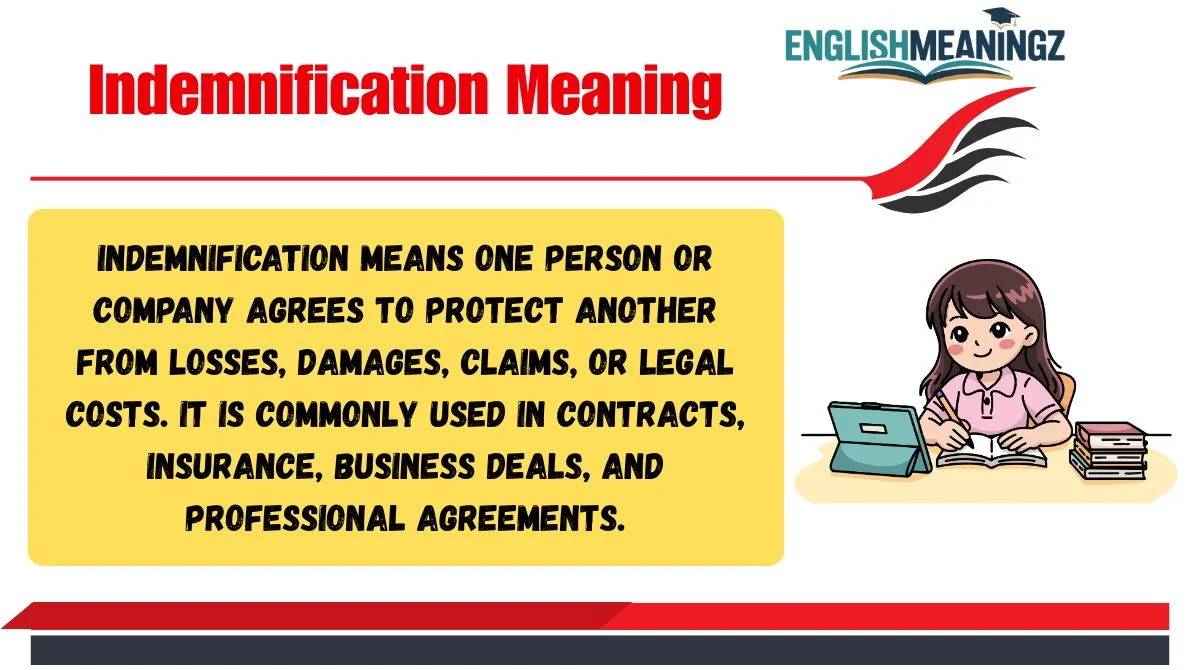
Indemnification means one person or company agrees to protect another from losses, damages, claims, or legal costs. It is commonly used in contracts, insurance, business deals, and professional agreements.
Common interpretations include:
Legal protection
Financial coverage
Liability transfer
Risk-sharing agreement
In normal conversations, people often shorten it to “covering damages” or “taking responsibility.”
The Most Common Meanings of “Indemnification”
Legal Protection
This is the most common meaning.
Indemnification means someone agrees to protect another party from legal claims or financial loss.
Example:
“The company added an indemnification clause to the contract.”
This means the contract explains who pays if something goes wrong.
Financial Compensation
Sometimes indemnification means paying someone back for losses.
Example:
“The client offered indemnification for damages during shipping.”
This means the client will cover the cost if products get damaged.
Insurance-Related Coverage
Insurance companies use the term often.
Example:
“The policy includes indemnification for workplace injuries.”
This means the insurance helps pay costs linked to injuries.
Business Risk Management
Businesses use indemnification to reduce risk.
Example:
“The freelancer accepted indemnification terms before starting work.”
This usually means the freelancer agreed to certain legal responsibilities.
Contract Liability Transfer
Sometimes one party transfers legal responsibility to another.
Example:
“The vendor requested full indemnification.”
That may mean the vendor does not want to be blamed for certain problems.
How “Indemnification” Is Used in Real Conversations
Friends & Casual Texting
People rarely use “indemnification” in casual texting because it sounds formal and legal.
Still, someone joking about contracts or business may say:
“Bro, I need indemnification before lending you my car.”
Meaning:
“I want protection if something happens.”
The tone is usually playful or sarcastic.
Instagram & Snapchat
On social platforms, the word appears mostly in business content, finance pages, or legal memes.
Example:
“Read the indemnification section before signing brand deals.”
Influencers and creators may discuss it when talking about sponsorship contracts.
Dating Apps
This word almost never appears seriously on dating apps. If someone uses it there, they are usually joking.
Example:
“I need emotional indemnification before dating again.”
This means they want emotional safety or protection.
Gaming & Online Communities
Gamers sometimes use legal words humorously.
Example:
“No indemnification if you rage quit.”
This means nobody is responsible for frustration or losses.
Gaming groups may also discuss indemnification in tournament rules or sponsorship agreements.
Work or Professional Chat
This is where the word appears most often.
Examples:
“Please review the indemnification clause.”
“Our legal team updated the indemnification terms.”
In work settings, the word is serious and important.
Is “Indemnification” Rude, Flirty, or Offensive?
Usually Neutral and Professional
Indemnification is normally a neutral legal or business term. It is not rude by default.
Most people use it in:
Contracts
Legal documents
Insurance discussions
Work emails
Business negotiations
Can Sound Cold or Formal
Because the word is legal-heavy, it may feel distant in casual chats.
Example:
“I require indemnification.”
This can sound robotic or overly serious among friends.
Sometimes Used Humorously
Online users sometimes turn formal legal words into jokes.
Example:
“I need indemnification before eating your cooking.”
This creates playful exaggeration.
Rarely Offensive
The word itself is not offensive. But arguments about indemnification can become tense if money or legal blame is involved.
Tone matters more than the word itself.
How to Respond When Someone Says “Indemnification”
Casual Replies
“So basically protection?”
“Got it, you want coverage.”
“Makes sense now.”
Funny Replies
“I’ll call my imaginary lawyer.”
“Do I also need a 40-page contract?”
“That sounds expensive already.”
Neutral Replies
“Can you explain the terms?”
“Who is responsible under the agreement?”
“I’d like to review that section first.”
Professional Replies
“Please send the indemnification details.”
“Our legal team will review the clause.”
“We may need revisions before approval.”
Common Misunderstandings About “Indemnification”
Thinking It Means Insurance Only
Many people believe indemnification only relates to insurance.
That is incorrect.
It also appears in:
Freelance contracts
Employment agreements
Vendor deals
Partnership contracts
Software terms
Assuming It Always Protects Everyone
Some contracts protect only one side.
Always read carefully.
One-sided indemnification can create major legal risk.
Confusing It With Guarantees
Indemnification is not the same as a guarantee.
A guarantee promises something will happen.
Indemnification covers losses if problems happen.
Misreading the Tone
People sometimes think using legal words means someone is angry or threatening.
Often, it is just standard business language.
Believing Small Businesses Don’t Need It
Even freelancers and creators use indemnification clauses today.
It is common in:
Brand deals
Affiliate partnerships
Online services
Content licensing
Similar Slang Terms You Should Know
Liability
Legal responsibility for damage or loss.
Coverage
Protection from financial loss.
Hold Harmless
A legal phrase meaning one side will not blame the other.
Legal Shield
Informal phrase for legal protection.
Waiver
A document giving up certain rights.
Fine Print
Important hidden contract details.
Risk Transfer
Moving responsibility from one party to another.
Compensation
Payment for damage or loss.
Disclaimer
Statement limiting responsibility.
Contract Clause
A specific rule inside a contract.
Protection Policy
Rules designed to reduce risk.
Legal Coverage
General protection from claims or lawsuits.
When You Should Avoid Using “Indemnification”
Professional Settings With Non-Legal Audiences
Some people may not understand the word.
Use simpler phrases like:
“legal protection”
“coverage”
“financial responsibility”
Cross-Cultural Conversations
Not everyone knows legal English terms.
Using simpler language avoids confusion.
Sensitive Situations
Avoid sounding overly legal during emotional conversations.
Example:
Family disputes
Friendship arguments
Relationship issues
Legal-style wording may feel cold.
Informal Social Chats
Using “indemnification” casually can sound overly dramatic or fake-smart.
Simple wording works better in normal conversation.
Without Reading the Contract
Never agree to indemnification terms without understanding them.
Some clauses can make you responsible for major costs.
Final Thoughts
The real indemnification meaning is much simpler than the word itself sounds. It usually means one person or company agrees to protect another from losses, damages, or legal problems.
You will mostly see the term in contracts, insurance documents, freelance agreements, and business conversations. While it sounds formal, the core idea is about responsibility and protection.
Understanding this word helps you avoid confusion when reading agreements online or at work. It also helps you spot risky contract terms before signing anything important.
In casual conversations, the word may appear jokingly, but in professional settings it carries real legal weight. Always pay attention to context and wording.
The smarter you understand modern legal language, the safer and more confident you become in business, freelancing, and online communication.
FAQs
What is the simple meaning of indemnification?
Indemnification means protection against financial loss, damage, or legal responsibility.
Is indemnification the same as insurance?
No. Insurance is one form of protection, but indemnification can also exist in contracts and agreements.
Why is indemnification important in contracts?
It explains who pays if legal problems, damages, or losses happen.
Can indemnification clauses be risky?
Yes. Some clauses place heavy legal responsibility on one party.
Do freelancers need to understand indemnification?
Absolutely. Freelancers often sign contracts containing indemnification terms.
Is indemnification a legal term only?
Mostly yes, but people sometimes use it humorously online or in casual jokes.
Should I read indemnification clauses carefully?
Yes. They can affect your financial and legal responsibilities significantly.
Conclusion
Indemnification may sound confusing at first, but its meaning is really about protection and responsibility.
Whether you see it in a freelance contract, insurance policy, business agreement, or online discussion, understanding the term helps you make smarter decisions.
Instead of ignoring complicated legal wording, learning simple concepts like indemnification can protect your money, work, and reputation.
In 2026, where digital contracts and online business deals are everywhere, knowing this term is more useful than ever.