Understanding opposites is one of the fastest ways to sharpen your writing and expand your expressive range. When you know not only what a word means—but also what it does not mean—you gain control over tone, clarity, and emotional depth.
In both academic and professional communication, precision matters. The ability to replace an intense word like agony with its exact opposite allows you to shift mood, clarify intent, and avoid exaggeration.
Whether you’re writing essays, reports, or creative content, mastering antonyms improves vocabulary flexibility and strengthens overall communication.
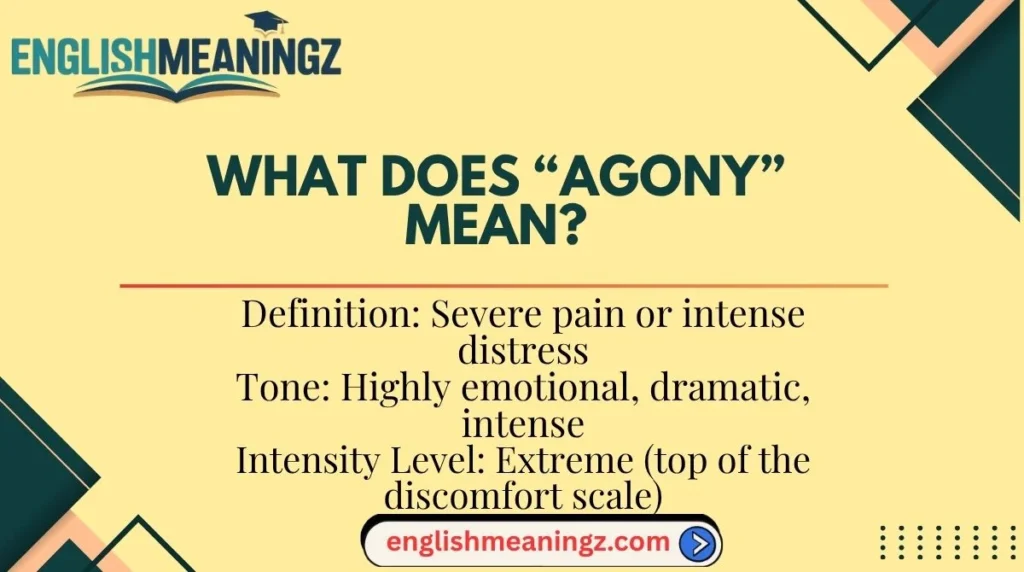
What Does “Agony” Mean?
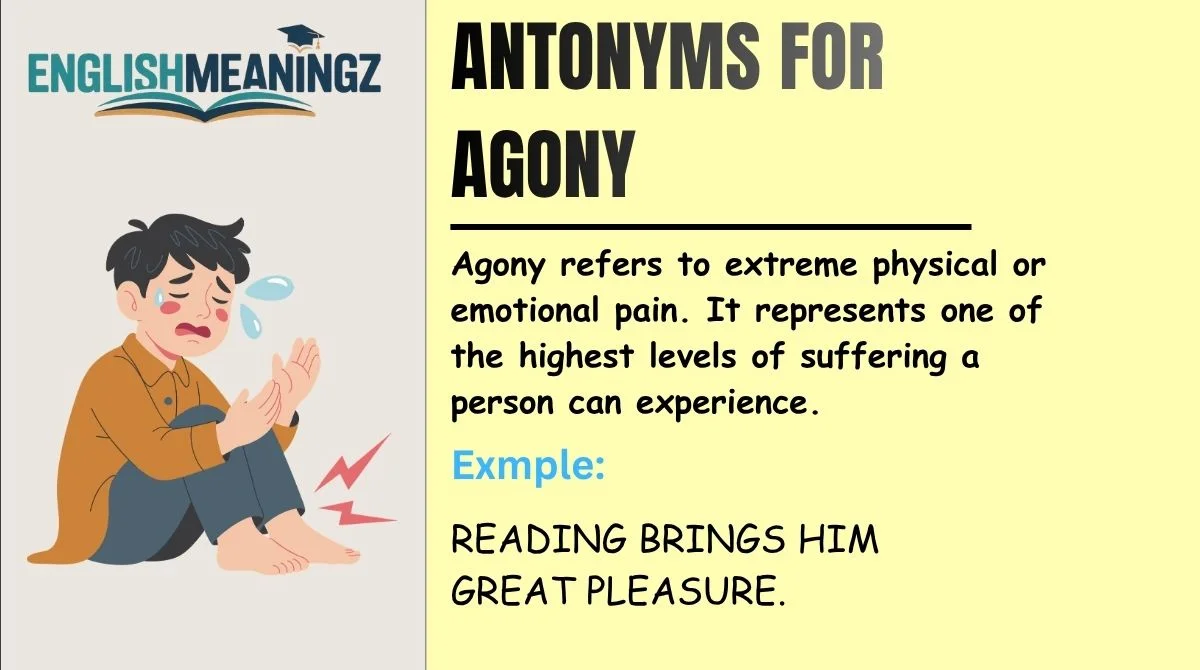
Agony refers to extreme physical or emotional pain. It represents one of the highest levels of suffering a person can experience.
- Definition: Severe pain or intense distress
- Tone: Highly emotional, dramatic, intense
- Intensity Level: Extreme (top of the discomfort scale)
Agony can be physical (injury, illness) or emotional (grief, heartbreak). Because of its intensity, its antonyms typically fall into categories like comfort, joy, relief, or peace—states that directly counter suffering.
22 Best Antonyms for “Agony”
1. Comfort
- Meaning: A state of physical ease and freedom from pain
- Tone: Neutral / Emotional
- Example: After the treatment, she finally felt comfort.
- Why Opposite: Comfort removes the distress that defines agony
2. Pleasure
- Meaning: A feeling of enjoyment or satisfaction
- Tone: Emotional
- Example: Reading brings him great pleasure.
- Why Opposite: Pleasure replaces pain with enjoyment
3. Joy
- Meaning: Intense happiness or delight
- Tone: Emotional
- Example: The news filled her with joy.
- Why Opposite: Joy is an emotional high, opposite of emotional suffering
4. Happiness
- Meaning: A general state of well-being and contentment
- Tone: Neutral
- Example: True happiness comes from within.
- Why Opposite: Happiness eliminates emotional distress
5. Relief
- Meaning: Removal or reduction of pain or distress
- Tone: Neutral / Formal
- Example: He sighed in relief after the pain stopped.
- Why Opposite: Relief directly cancels agony
6. Ease
- Meaning: Absence of difficulty or discomfort
- Tone: Neutral
- Example: She completed the task with ease.
- Why Opposite: Ease contrasts with the struggle of agony
7. Peace
- Meaning: A state of calm and tranquility
- Tone: Emotional / Academic
- Example: Meditation brought him peace.
- Why Opposite: Peace eliminates internal turmoil
8. Bliss
- Meaning: Perfect happiness or contentment
- Tone: Emotional
- Example: They lived in bliss after the wedding.
- Why Opposite: Bliss is the highest positive state, opposing extreme pain
9. Delight
- Meaning: Great pleasure or satisfaction
- Tone: Emotional
- Example: The children screamed in delight.
- Why Opposite: Delight replaces suffering with excitement
10. Satisfaction
- Meaning: Fulfillment of needs or expectations
- Tone: Formal / Neutral
- Example: He felt satisfaction after finishing his work.
- Why Opposite: Satisfaction removes dissatisfaction and distress
11. Serenity
- Meaning: Calm, peaceful, and untroubled state
- Tone: Academic / Emotional
- Example: The lake reflected pure serenity.
- Why Opposite: Serenity is the absence of emotional chaos
12. Contentment
- Meaning: Quiet happiness and acceptance
- Tone: Emotional
- Example: She lived with contentment.
- Why Opposite: Contentment lacks the intensity of suffering
13. Well-being
- Meaning: State of health, comfort, and happiness
- Tone: Formal / Academic
- Example: Exercise improves overall well-being.
- Why Opposite: Well-being represents holistic comfort
14. Cheerfulness
- Meaning: Noticeable happiness and optimism
- Tone: Informal / Emotional
- Example: His cheerfulness was contagious.
- Why Opposite: Cheerfulness opposes sadness and distress
15. Ecstasy
- Meaning: Overwhelming happiness or joy
- Tone: Emotional
- Example: She was in ecstasy after hearing the news.
- Why Opposite: Ecstasy is an extreme positive emotion
16. Calmness
- Meaning: Absence of agitation or stress
- Tone: Neutral
- Example: He maintained calmness under pressure.
- Why Opposite: Calmness contrasts emotional turmoil
17. Comfortableness
- Meaning: A relaxed and pain-free condition
- Tone: Informal
- Example: The chair provided complete comfortableness.
- Why Opposite: Direct contrast to discomfort
18. Gladness
- Meaning: Feeling of pleasure or happiness
- Tone: Informal
- Example: She expressed gladness at the outcome.
- Why Opposite: Gladness replaces emotional suffering
19. Enjoyment
- Meaning: Taking pleasure in something
- Tone: Neutral
- Example: He found enjoyment in music.
- Why Opposite: Enjoyment negates pain
20. Harmony
- Meaning: Peaceful coexistence and balance
- Tone: Academic
- Example: The team worked in harmony.
- Why Opposite: Harmony eliminates conflict and distress
21. Comfortability
- Meaning: State of being comfortable
- Tone: Informal
- Example: The design ensures comfortability.
- Why Opposite: Removes discomfort and strain
22. Reassurance
- Meaning: Removal of fear or anxiety
- Tone: Formal
- Example: His words gave reassurance.
- Why Opposite: Reassurance reduces emotional pain
Strong vs Mild Opposites
Not all antonyms carry the same intensity. Understanding this helps you choose the right word.
- Strong Opposites: Bliss, Ecstasy, Joy
- These represent extreme positive emotions
- Best for dramatic or expressive writing
- Moderate Opposites: Happiness, Pleasure, Delight
- Balanced emotional tone
- Suitable for general writing
- Mild Opposites: Ease, Calmness, Contentment
- Subtle and controlled
- Ideal for academic or professional tone
Think of it as a scale:
Agony (extreme negative) → Neutral → Mild positive → Extreme positive
Context-Based Opposites
The best antonym depends on the situation.
- Physical pain context:
Agony → Relief / Comfort - Emotional distress context:
Agony → Happiness / Peace - Mental stress context:
Agony → Calmness / Serenity - Dramatic storytelling:
Agony → Bliss / Ecstasy
Choosing the wrong antonym can weaken your message, so always match context with tone.
Common Mistakes When Using Opposites
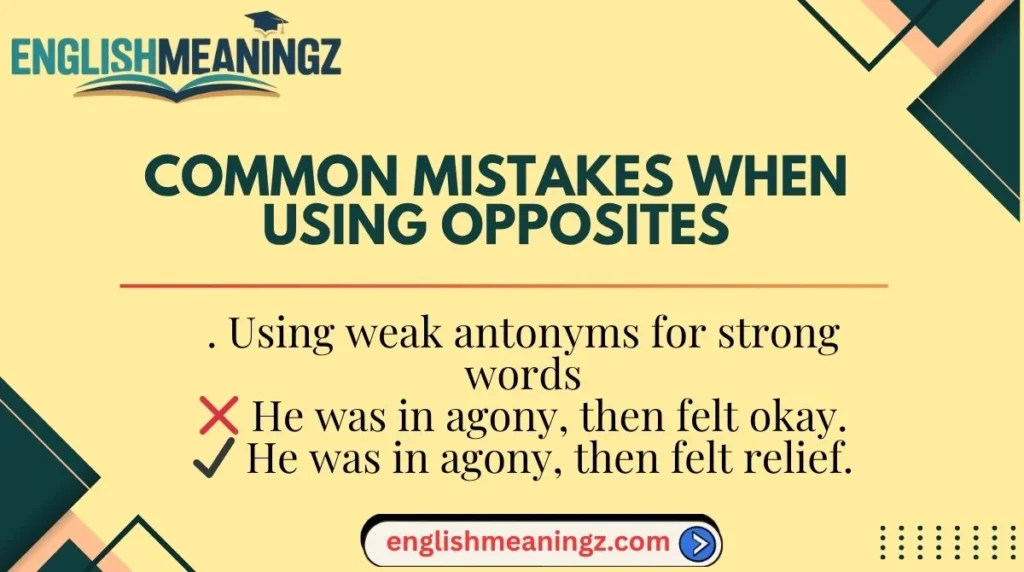
1. Using weak antonyms for strong words
❌ He was in agony, then felt okay.
✔ He was in agony, then felt relief.
2. Ignoring tone mismatch
❌ Academic writing: “He moved from agony to awesome vibes.”
✔ Use “relief” or “well-being” instead
3. Overusing extreme opposites
❌ Every situation becomes “ecstasy”
✔ Use moderate terms like “happiness” when appropriate
4. Confusing neutral words with opposites
❌ Agony → Normal
✔ Better: Comfort or Ease
Sentence Transformation Examples
- Original: She was in agony after the injury.
Rewritten: She felt relief after the treatment. - Original: His heart was filled with agony.
Rewritten: His heart was filled with joy. - Original: The patient remained in agony.
Rewritten: The patient experienced comfort. - Original: He lived in emotional agony.
Rewritten: He lived in peace and contentment. - Original: The loss caused deep agony.
Rewritten: The outcome eventually brought acceptance and calmness.
FAQs
What is the exact opposite of agony?
The closest direct opposite is relief, as it specifically means the removal of pain.
Are joy and agony true opposites?
Yes, emotionally they are opposites—joy represents extreme happiness, while agony represents extreme suffering.
Which antonym is best for academic writing?
Well-being, relief, and serenity are ideal due to their formal tone.
Can calmness replace agony in all contexts?
No, calmness works best for mental or emotional situations, not intense physical pain.
Is bliss stronger than happiness?
Yes, bliss represents a more intense and complete form of happiness.
Why are there multiple antonyms for one word?
Because words like agony have different contexts—physical, emotional, and psychological.
How do I choose the right antonym?
Focus on context, tone, and intensity to select the most accurate word.
Conclusion
Mastering antonyms for a powerful word like agony transforms your writing from basic to precise and impactful.
Instead of relying on vague opposites, you can now choose from a spectrum—ranging from subtle calmness to intense bliss—depending on your context and tone.
This level of control is essential for academic clarity, professional communication, and creative expression. By understanding intensity, context, and nuance, you ensure that every word you use contributes meaningfully to your message.