Strong vocabulary is one of the most important factors that improves the quality of writing. Whether someone is writing an academic essay, a professional report, a blog article, or preparing for language exams, using a variety of words helps the writing appear more polished and intelligent.
One common mistake many writers make is repeating the same word multiple times. This repetition reduces clarity and weakens the overall impression of the content.
Using synonyms correctly allows writers to express subtle differences in emotion, tone, and intensity. For example, the word anxious can describe worry, nervous anticipation, or deep unease depending on the situation. Replacing it with the right alternative can make writing more precise and engaging.
Students preparing for exams such as IELTS or university assignments benefit greatly from expanding their vocabulary. Bloggers and content creators also rely on varied language to keep readers engaged.
Professionals writing emails, research papers, or reports must use vocabulary carefully to convey the correct tone.
This article explores 25 powerful synonyms for “anxious”, explains their meanings, shows how they differ in tone, and provides practical examples for academic and everyday writing.
Definition and Core Meaning of “Anxious”
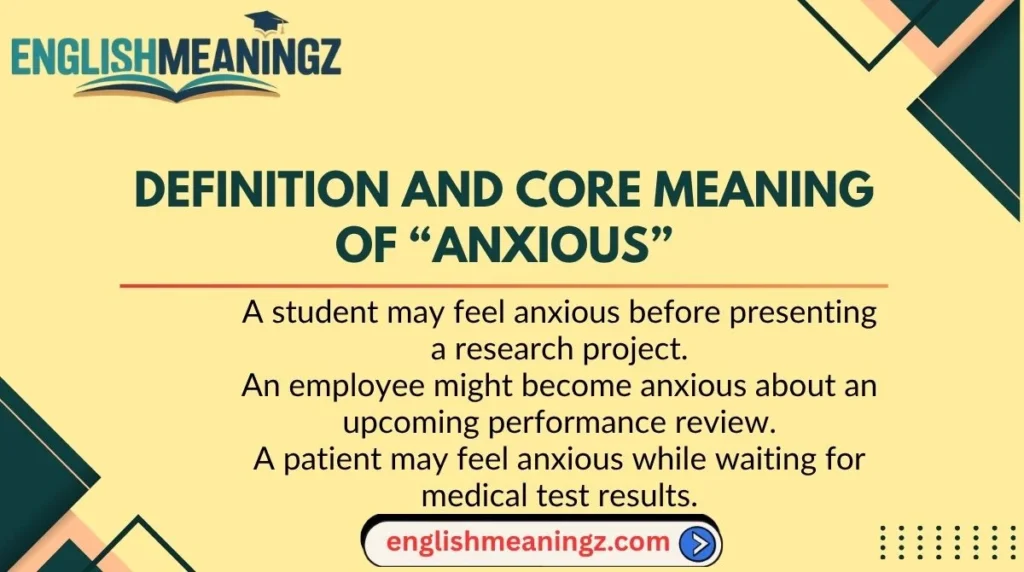
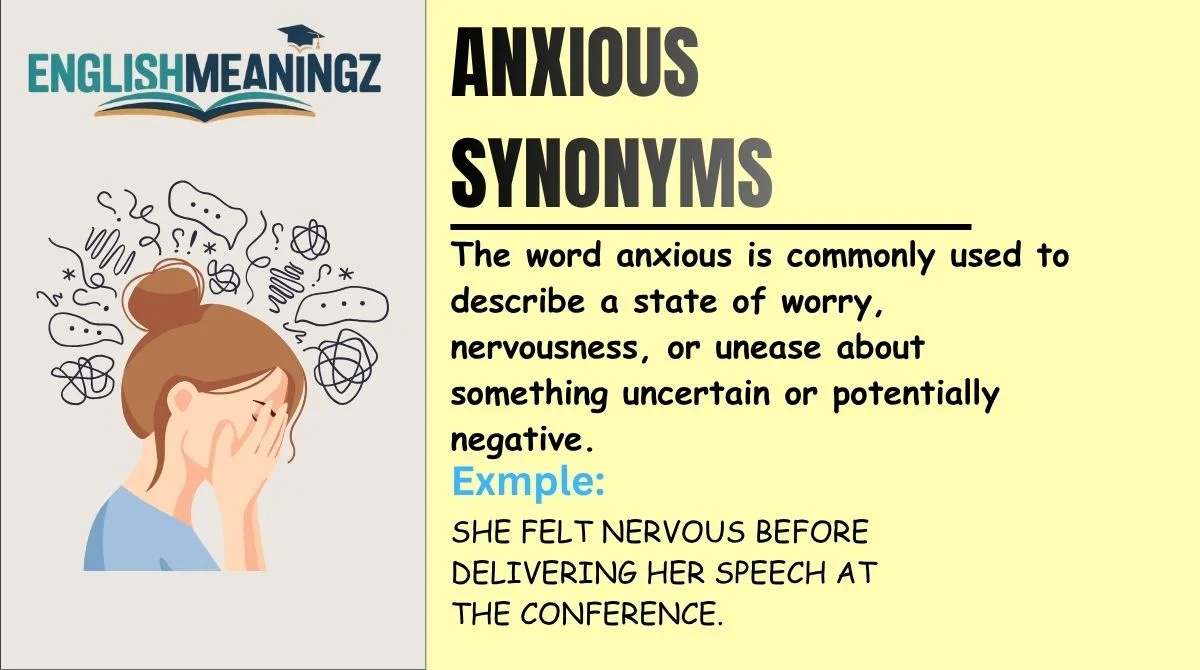
The word anxious is commonly used to describe a state of worry, nervousness, or unease about something uncertain or potentially negative. It may also refer to a strong feeling of eagerness or anticipation.
In psychology and everyday communication, anxious feelings are often connected with uncertainty about the future. For example, someone waiting for exam results may feel anxious because the outcome is unknown.
In academic writing, anxious is usually associated with emotional or psychological states involving stress, concern, or tension. It can also describe behavior that reflects inner worry or nervous anticipation.
For instance:
- A student may feel anxious before presenting a research project.
- An employee might become anxious about an upcoming performance review.
- A patient may feel anxious while waiting for medical test results.
Because this word covers several emotional shades—from mild concern to intense nervousness—writers often benefit from choosing more precise synonyms that match the specific context.
24 Synonyms Grouped by Context
General Use Synonyms
These words are commonly used in everyday conversation and general writing.
Nervous
Meaning: Feeling uneasy or worried about something that may happen.
Context Explanation: Often used when someone is preparing for an event such as an exam, interview, or presentation.
Example Sentence:
She felt nervous before delivering her speech at the conference.
Worried
Meaning: Feeling troubled or concerned about possible problems.
Context Explanation: One of the most common alternatives to anxious in daily communication.
Example Sentence:
Parents were worried about their children’s safety during the storm.
Uneasy
Meaning: Experiencing discomfort or mild anxiety.
Context Explanation: Used when someone feels slightly disturbed or uncertain.
Example Sentence:
He felt uneasy about signing the contract without reading the details carefully.
Concerned
Meaning: Showing care or worry about a particular issue.
Context Explanation: Frequently used in professional or formal situations.
Example Sentence:
The manager was concerned about the decline in productivity.
Tense
Meaning: Experiencing physical or emotional strain due to stress.
Context Explanation: Often describes body language or atmosphere.
Example Sentence:
The atmosphere in the meeting room became tense during the discussion.
Formal and Academic Writing Synonyms
These alternatives are particularly useful in essays, reports, and research writing.
Apprehensive
Meaning: Feeling fearful or worried about something in the future.
Context Explanation: Common in academic writing when describing emotional responses.
Example Sentence:
Many students feel apprehensive before their first university examination.
Perturbed
Meaning: Feeling disturbed or mentally unsettled.
Context Explanation: Often used to describe emotional discomfort caused by unexpected events.
Example Sentence:
The sudden change in policy left many employees perturbed.
Distressed
Meaning: Experiencing deep emotional pain or anxiety.
Context Explanation: Often used in psychological or social research.
Example Sentence:
The study revealed that prolonged uncertainty can leave individuals emotionally distressed.
Alarmed
Meaning: Feeling sudden fear or concern about danger.
Context Explanation: Usually connected with unexpected threats or serious problems.
Example Sentence:
Researchers were alarmed by the rapid increase in environmental pollution.
Troubled
Meaning: Experiencing emotional worry or concern.
Context Explanation: Common in discussions related to social or psychological issues.
Example Sentence:
The counselor spoke with troubled students to help them manage stress.
Informal Usage Synonyms
These words are more common in casual conversation and less formal writing.
Jittery
Meaning: Extremely nervous or unable to relax.
Context Explanation: Often describes physical restlessness.
Example Sentence:
He felt jittery before stepping onto the stage.
On Edge
Meaning: Feeling tense or easily irritated due to stress.
Context Explanation: Often used to describe emotional tension.
Example Sentence:
Everyone seemed on edge while waiting for the final announcement.
Freaked Out
Meaning: Extremely worried or frightened.
Context Explanation: Very informal expression used in casual conversation.
Example Sentence:
She was completely freaked out before the driving test.
Stressed
Meaning: Experiencing mental pressure due to responsibilities or challenges.
Context Explanation: Widely used in everyday language.
Example Sentence:
Many employees feel stressed during busy project deadlines.
Technical or Subject-Specific Synonyms
These words are frequently used in psychology, research, or clinical discussions.
Agitated
Meaning: Feeling disturbed or emotionally upset.
Context Explanation: Often used in psychological descriptions of behavior.
Example Sentence:
The patient appeared increasingly agitated during the examination.
Overwhelmed
Meaning: Feeling unable to cope due to excessive pressure.
Context Explanation: Common in mental health discussions.
Example Sentence:
Students may feel overwhelmed when managing multiple assignments.
Panicked
Meaning: Experiencing sudden intense fear or anxiety.
Context Explanation: Often describes immediate emotional reactions.
Example Sentence:
He panicked when he realized he had forgotten his passport.
Restless
Meaning: Unable to remain calm or still due to anxiety.
Context Explanation: Often connected with physical movement.
Example Sentence:
The child became restless while waiting for the results.
Pressured
Meaning: Feeling forced or stressed due to expectations.
Context Explanation: Common in professional environments.
Example Sentence:
Employees often feel pressured to meet strict deadlines.
Additional Useful Synonyms
Antsy
Meaning: Impatient or unable to relax.
Example Sentence:
The audience grew antsy as the event started late.
Edgy
Meaning: Irritable or nervous due to tension.
Example Sentence:
He seemed edgy before the important interview.
Fearful
Meaning: Experiencing strong worry about danger or harm.
Example Sentence:
Residents were fearful after hearing about the recent incident.
Suspenseful
Meaning: Feeling tense due to uncertainty.
Example Sentence:
The waiting period before the announcement was suspenseful.
Unsettled
Meaning: Emotionally disturbed or uncomfortable.
Example Sentence:
The unexpected news left her feeling unsettled.
Word Intensity and Tone Comparison
| Word | Formal Level | Emotional Strength |
|---|---|---|
| Worried | Informal | Low |
| Nervous | Neutral | Low–Moderate |
| Uneasy | Neutral | Moderate |
| Concerned | Formal | Moderate |
| Apprehensive | Formal | Moderate |
| Tense | Neutral | Moderate |
| Agitated | Formal | Strong |
| Distressed | Formal | Strong |
| Panicked | Informal | Very Strong |
| Alarmed | Formal | Strong |
This comparison helps writers choose the most suitable word depending on context and emotional intensity.
Common Mistakes When Using These Synonyms
Mistake 1: Using Informal Words in Academic Writing
Incorrect:
The researcher was freaked out by the results.
Correct:
The researcher was alarmed by the results.
Mistake 2: Confusing Intensity Levels
Incorrect:
She felt panicked before sending an email.
Correct:
She felt nervous before sending the email.
Mistake 3: Replacing Words Without Considering Context
Incorrect:
The manager looked restless about the financial report.
Correct:
The manager looked concerned about the financial report.
Choosing synonyms requires understanding both meaning and tone.
Synonyms in Academic Writing
Example Paragraph 1
University students frequently experience academic pressure during examination periods. Many become apprehensive about their performance, particularly when results influence scholarships or career opportunities. Researchers have found that moderate anxiety may improve concentration, but excessive worry can leave students distressed and reduce academic efficiency.
Example Paragraph 2
In professional environments, employees often feel concerned about job stability during economic uncertainty. Continuous pressure may cause workers to become agitated or emotionally exhausted. Organizations that provide psychological support and clear communication can reduce workplace anxiety and improve overall productivity.
IELTS and Exam Writing Tips
Students preparing for exams such as IELTS or academic writing tests must demonstrate vocabulary diversity.
Tip 1: Avoid Repetition
Instead of repeating anxious multiple times, use alternatives like apprehensive, concerned, or uneasy.
Tip 2: Match the Tone
Formal writing requires formal vocabulary. Words such as freaked out or antsy should not appear in essays.
Tip 3: Do Not Replace Every Instance
Sometimes the original word is the most accurate. Replacing it unnecessarily can confuse readers.
For example, psychological studies may specifically use the term anxiety, making substitution inappropriate.
Similar Words vs True Synonyms
Not all related words carry identical meanings. Some express slightly different emotional states.
Anxious vs Nervous
- Anxious often involves worry about the future.
- Nervous usually refers to temporary tension before an event.
Anxious vs Concerned
- Concerned implies thoughtful care.
- Anxious emphasizes emotional unease.
Anxious vs Panicked
- Anxious represents moderate worry.
- Panicked indicates extreme fear and loss of control.
Understanding these differences helps writers choose vocabulary more accurately.
Practice Sentences
Fill in the blanks using an appropriate synonym of anxious.
- The students felt ______ before receiving their exam results.
- She became ______ when the meeting started late.
- Researchers were ______ about the sudden decline in data quality.
- He looked ______ while waiting for the interview panel.
- Many employees feel ______ when facing tight deadlines.
Possible answers include: nervous, uneasy, concerned, apprehensive, or stressed.
Frequently Asked Questions
What is the best synonym for anxious?
The best synonym depends on context. Nervous, apprehensive, and concerned are among the most commonly used alternatives.
Is nervous the same as anxious?
Not exactly. Nervous usually describes short-term tension, while anxious often refers to deeper worry about uncertain outcomes.
Which anxious synonyms are suitable for academic writing?
Formal options include apprehensive, concerned, distressed, perturbed, and alarmed.
Can anxious mean excited?
Yes. In some contexts, anxious can mean eager or strongly anticipating something positive.
Example:
She was anxious to start her new job.
How can I improve vocabulary for writing?
Reading academic texts, practicing synonyms, and regularly writing essays help expand vocabulary and improve language precision.
Conclusion
Expanding vocabulary is one of the most effective ways to strengthen writing skills. Instead of repeatedly using the word anxious, writers can choose from many alternatives that convey different emotional levels and tones.
Words such as nervous, apprehensive, concerned, and distressed allow more precise communication.
Students preparing for exams, bloggers developing engaging content, and professionals writing reports all benefit from mastering synonyms.
Understanding when and how to use each word helps avoid repetition and improves clarity.
Regular practice with vocabulary, reading diverse texts, and applying new words in writing will gradually build stronger language skills and make communication more effective.