Have you ever heard someone say, “She’s very farsighted,” and wondered what they actually meant? Were they talking about eyesight, intelligence, planning skills, or something else entirely?
Many people search for the term farsighted meaning because it can be used in different ways depending on the situation. In one conversation, it may refer to a vision condition. In another, it may describe a person who thinks carefully about the future and makes smart long-term decisions.
The confusion becomes even greater online, where words often carry multiple meanings. Whether you saw the term in a text message, social media post, workplace discussion, school assignment, or casual conversation, understanding the correct meaning depends on the context.
This guide explains everything you need to know about the phrase “farsighted.” You’ll learn its most common meanings, how people use it in real conversations, when it sounds positive or negative, and how to respond when someone uses it.
By the end, you’ll have a clear understanding of the term and know exactly what people mean when they say someone is farsighted.
What Does “Farsighted” Mean in Text?
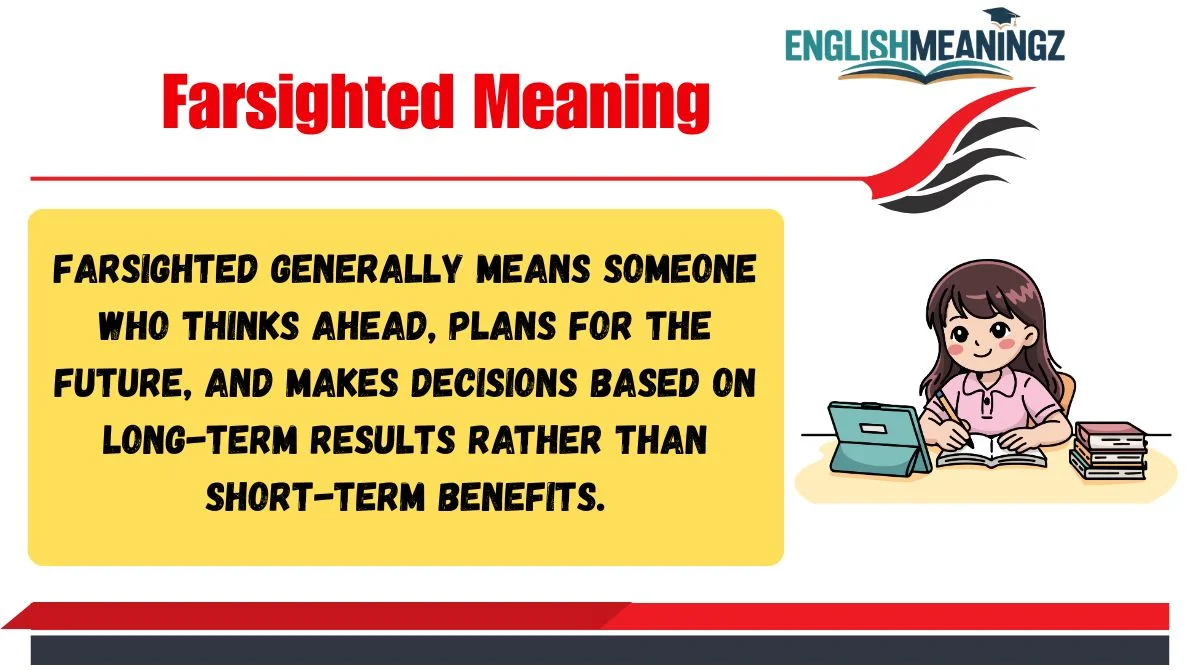
Farsighted generally means someone who thinks ahead, plans for the future, and makes decisions based on long-term results rather than short-term benefits.
Depending on the context, it can also mean:
- Having difficulty seeing nearby objects clearly
- Being wise about future consequences
- Thinking strategically
- Making long-term plans
Most modern conversations use the word in a positive way to describe good judgment and future-focused thinking.
The Most Common Meanings of “Farsighted”
Farsighted as Future Thinking
This is the most common meaning in everyday conversations.
A farsighted person considers future outcomes before making decisions. They think several steps ahead instead of focusing only on immediate rewards.
Example:
“Maria invested her savings early because she was farsighted.”
In this example, Maria planned for her future instead of spending all her money immediately.
Farsighted as Strategic Planning
Sometimes the word describes people who create smart long-term strategies.
Businesses, leaders, and organizations are often called farsighted when they prepare for future opportunities or challenges.
Example:
“The company made a farsighted decision to invest in new technology.”
The company planned for future growth rather than only current profits.
Farsighted as Wisdom
The word can also suggest maturity and good judgment.
People may use it to praise someone who avoids short-term mistakes by thinking about future consequences.
Example:
“His farsighted advice helped the team avoid problems later.”
Here, the person recognized risks before they appeared.
Farsighted as an Eye Condition
In medical discussions, farsighted refers to a vision condition called hyperopia.
People with farsightedness can often see distant objects clearly but may struggle to focus on nearby objects.
Example:
“She needs reading glasses because she is farsighted.”
In this case, the word has nothing to do with planning or intelligence.
How “Farsighted” Is Used in Real Conversations
Friends & Casual Texting
Friends often use farsighted as a compliment.
It suggests that someone makes smart choices and thinks about the future.
Example:
“You started saving money in college? That’s pretty farsighted.”
Example:
“You always think ahead. You’re way more farsighted than me.”
Instagram & Snapchat
On social media, people use the word when discussing goals, careers, fitness, investing, or personal growth.
Example:
“A farsighted mindset can change your life.”
Example:
“Be farsighted today so your future self can thank you.”
The term usually carries a motivational tone.
Dating Apps
In dating conversations, farsighted often describes someone looking for a serious relationship.
Example:
“I’m pretty farsighted when it comes to relationships.”
This suggests they are thinking about long-term compatibility rather than short-term attraction.
Gaming & Online Communities
Gamers may use the term when discussing strategy.
Example:
“That was a farsighted move.”
The player planned ahead and gained an advantage later.
Example:
“A farsighted strategy wins more games than rushing.”
Here the focus is on long-term planning.
Work or Professional Chat
Workplaces frequently use the term to describe leadership and decision-making.
Example:
“Our manager was farsighted enough to prepare for market changes.”
Example:
“The leadership team made a farsighted investment.”
In professional settings, the word is usually considered highly positive.
Is “Farsighted” Rude, Flirty, or Offensive?
Generally, no.
The word is usually positive and respectful.
When It Feels Positive
People often use farsighted to praise someone.
Examples include:
- Smart planning
- Good judgment
- Strategic thinking
- Responsible behavior
- Leadership skills
Most recipients view the term as a compliment.
When It Feels Neutral
Medical discussions are usually neutral.
For example:
“He is farsighted and wears glasses.”
No emotional meaning exists here.
When It Feels Negative
Rarely, the term can sound critical if someone appears too focused on the future.
Example:
“You’re so farsighted that you never enjoy the present.”
In this case, the speaker suggests excessive planning.
Can It Be Flirty?
Not directly.
However, it can become flattering in romantic conversations.
Example:
“I like how farsighted you are about your future.”
The compliment focuses on maturity and ambition.
Is It Offensive?
Almost never.
Unless used sarcastically, farsighted is generally considered respectful and professional.
How to Respond When Someone Says “Farsighted”
Your response depends on the situation and tone.
Casual Replies
- “I try my best.”
- “Thanks, I like planning ahead.”
- “Maybe a little.”
- “I appreciate that.”
Funny Replies
- “I checked the future schedule.”
- “My crystal ball helped.”
- “I have tomorrow’s weather already.”
- “I’m just friends with the future.”
Neutral Replies
- “That’s kind of you to say.”
- “I hadn’t thought about it that way.”
- “Interesting perspective.”
- “Thank you.”
Professional Replies
- “Thank you. Long-term planning is important.”
- “I appreciate the feedback.”
- “We try to focus on sustainable results.”
- “That’s encouraging to hear.”
Common Misunderstandings About “Farsighted”
Many people misunderstand this term.
Assuming It Only Refers to Eyesight
One of the biggest mistakes is believing farsighted always refers to vision.
In many conversations, the word actually means future-focused thinking.
Confusing It with Being Smart
A farsighted person is not necessarily more intelligent.
The term specifically refers to planning ahead and considering future outcomes.
Thinking It Means Predicting the Future
Being farsighted does not mean someone can predict what will happen.
It simply means they prepare carefully for different possibilities.
Misreading the Tone
Some readers assume the word sounds formal or old-fashioned.
In reality, it remains common in business, education, leadership, and self-improvement discussions.
Mixing It Up with Similar Terms
Words like visionary, strategic, wise, and thoughtful overlap with farsighted but do not always mean exactly the same thing.
Similar Slang Terms You Should Know
Here are related words and phrases often used alongside farsighted.
- Visionary — Someone who sees future possibilities.
- Strategic — Focused on long-term success.
- Forward-thinking — Open to future ideas and innovation.
- Planner — Someone who organizes ahead of time.
- Big-picture thinker — Focuses on overall goals.
- Goal-oriented — Driven by future achievements.
- Wise — Makes sound decisions.
- Calculated — Thinks carefully before acting.
- Prepared — Ready for future situations.
- Proactive — Acts before problems occur.
- Long-term minded — Focused on future results.
- Future-focused — Prioritizes future outcomes.
These terms share similarities but may carry slightly different meanings depending on context.
When You Should Avoid Using “Farsighted”
Although the word is generally useful, there are situations where caution helps.
Professional Settings
Some audiences may prefer simpler language.
Instead of farsighted, you might say:
- Strategic
- Forward-thinking
- Long-term focused
These alternatives are often clearer.
Cross-Cultural Chats
Not everyone is familiar with the word.
International audiences may understand phrases like “thinking ahead” more easily.
Sensitive Situations
Avoid using farsighted when discussing serious personal struggles if it may sound judgmental.
For example, telling someone they should have been more farsighted during a difficult situation may feel insensitive.
Medical and Non-Medical Confusion
Because farsighted has both medical and figurative meanings, context matters.
Be specific if there’s a chance of misunderstanding.
Final Thoughts
The phrase farsighted meaning is actually simpler than many people expect.
In most conversations, farsighted describes a person who thinks ahead, plans wisely, and considers future consequences before making decisions. It is usually a positive term associated with maturity, responsibility, and strategic thinking.
In medical contexts, however, it refers to a vision condition where distant objects are easier to see than nearby ones.
Understanding the context is the key to interpreting the word correctly. Whether you encounter it in a text message, social media post, workplace discussion, or everyday conversation, you’ll now be able to recognize which meaning applies and respond with confidence.
FAQs
What does farsighted mean in simple words?
Farsighted usually means thinking ahead and planning for the future. In medical contexts, it refers to difficulty seeing nearby objects clearly.
Is being farsighted a compliment?
Yes. In most conversations, it is considered a compliment because it suggests wisdom and good planning.
What is the opposite of farsighted?
Common opposites include short-sighted, impulsive, and short-term focused.
Does farsighted mean intelligent?
Not necessarily. It mainly refers to thinking ahead and considering future consequences.
Can farsighted be used in business?
Yes. Businesses often use the term to describe strategic planning and long-term decision-making.
Is farsighted the same as visionary?
Not exactly. Visionary usually refers to seeing future possibilities, while farsighted focuses on planning and preparation.
Why do people search for farsighted meaning?
People often encounter the word in conversations, articles, workplaces, social media posts, or medical discussions and want to understand the correct meaning.
Conclusion
Understanding the farsighted meaning can help you communicate more effectively in both personal and professional situations. Most often, the word describes someone who plans ahead, thinks strategically, and makes decisions with the future in mind.
While it can also refer to a vision condition, context usually makes the intended meaning clear.
By recognizing how the term is used in conversations, social media, dating, gaming, and work environments, you can avoid misunderstandings and respond confidently.
Whether someone calls you farsighted or you encounter the word online, you’ll now know exactly what it means and how it fits into modern communication.