Have you ever seen someone call themselves an “empath” and wondered what they actually meant?
Maybe a friend wrote, “I’m such an empath,” on Instagram. Perhaps someone on a dating app said they are an empath who can feel other people’s emotions.
Or maybe you saw the term in a text message and weren’t sure whether it was a personality trait, internet slang, or something else entirely.
You’re not alone.
The term empath has become increasingly popular online, especially on social media platforms, dating profiles, wellness communities, and casual conversations. While many people use it correctly, others use it in different ways, which can create confusion.
Understanding the real empath meaning helps you interpret conversations more accurately and avoid misunderstandings. Whether you’re seeing the word in a text, hearing it in real life, or spotting it on social media, knowing its context matters.
This guide explains exactly what empath means, how people use it, when it can be misunderstood, and how to respond when someone describes themselves as an empath.
What Does “Empath” Mean in Text?
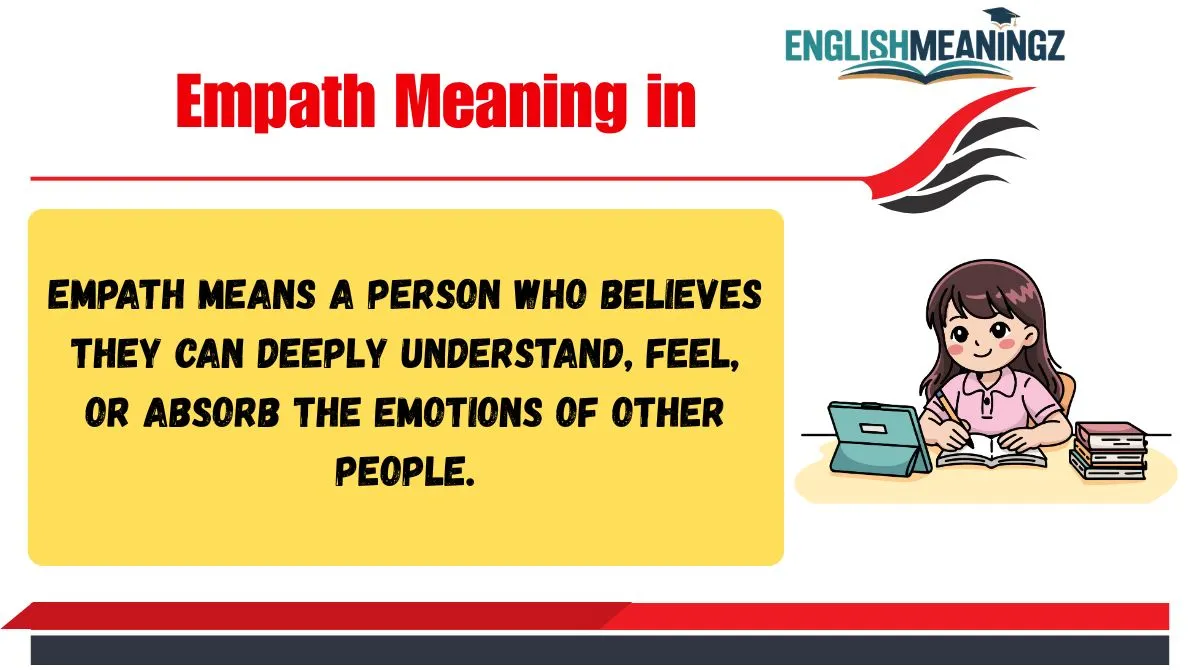
Empath means a person who believes they can deeply understand, feel, or absorb the emotions of other people.
In texting and online conversations, the word usually refers to someone who is highly sensitive to emotional situations and can easily recognize how others feel.
Common interpretations include:
- Highly empathetic person
- Emotionally sensitive individual
- Someone who feels others’ emotions strongly
- Person who is deeply aware of emotional energy
The exact meaning depends on the conversation and the person using the term.
The Most Common Meanings of “Empath”
Someone Who Feels Other People’s Emotions Deeply
This is the most common meaning.
An empath often describes themselves as someone who naturally picks up on emotions around them. They may notice sadness, stress, excitement, or anxiety quickly.
Example:
“Seeing my friend upset ruined my whole day. I’m such an empath.”
In this case, the person means they strongly feel emotional reactions to others.
A Highly Compassionate Person
Sometimes empath simply means someone who cares deeply about others.
The person isn’t claiming anything unusual. They are just emphasizing their strong emotional awareness.
Example:
“She’s an empath. She always checks on everyone.”
Here, empath means caring and considerate.
A Personality Identity
Many people use empath as part of their identity.
Similar to how someone might describe themselves as introverted or creative, they may identify as an empath.
Example:
“I’m an empath, so crowded places can be overwhelming.”
The term becomes a personal characteristic rather than just a temporary feeling.
A Spiritual or Wellness Community Term
In some online communities, empath refers to someone who believes they can sense emotional energy beyond normal empathy.
These discussions often appear in wellness, self-growth, or spiritual spaces.
Example:
“Empaths absorb the energy of people around them.”
The meaning here goes beyond traditional empathy and enters a more spiritual interpretation.
A Social Media Self-Description
Many users place “empath” in their bios.
Sometimes it genuinely reflects emotional sensitivity. Other times it is used as a personality label.
Example:
“Coffee lover | Empath | Dog mom”
In this context, empath functions like a personal trait.
How “Empath” Is Used in Real Conversations
Friends & Casual Texting
Friends often use empath when discussing emotions, relationships, or personal experiences.
Examples:
- “You’re such an empath.”
- “I cried because everyone else was crying.”
- “Being an empath is exhausting sometimes.”
The tone is usually supportive and positive.
Instagram & Snapchat
On social media, empath commonly appears in captions, stories, and profile descriptions.
Examples:
- “Empath life.”
- “Protect your energy.”
- “Empath problems.”
- “Being an empath isn’t easy.”
Many users connect the term with emotional awareness and self-care.
Dating Apps
Dating profiles frequently include empath as a personality trait.
Examples:
- “Empath looking for genuine connection.”
- “Big-hearted empath.”
- “Empath who values honesty.”
People often use it to communicate emotional intelligence and kindness.
However, some users view the term skeptically because it is sometimes overused.
Gaming & Online Communities
Although less common, empath appears in gaming discussions and online communities.
Examples:
- “I’m the empath of the group.”
- “I always worry about everyone.”
Here, it often means the emotional supporter of the team.
Work or Professional Chat
The term appears less frequently in professional environments.
Examples:
- “She’s an empathic leader.”
- “He understands team emotions well.”
In workplace communication, people usually choose words like empathetic, compassionate, or emotionally intelligent instead of empath.
Is “Empath” Rude, Flirty, or Offensive?
The word empath is generally not rude.
Most people use it positively.
When It Feels Positive
The term is often viewed as a compliment when it suggests:
- Kindness
- Emotional intelligence
- Compassion
- Understanding
- Supportiveness
Example:
“You’re such an empath. You always know when something’s wrong.”
This feels warm and appreciative.
When It Feels Neutral
Sometimes empath is simply descriptive.
Example:
“She’s an empath and prefers quiet environments.”
No strong emotion is attached to the statement.
When It Can Feel Negative
Not everyone likes the term.
Some people believe it is overused or used for attention.
Example:
“I’m an empath, so everyone else’s problems affect me.”
Depending on context, listeners may view this as genuine or exaggerated.
Is It Flirty?
Usually no.
However, it can become attractive in dating conversations because emotional awareness is often considered appealing.
Example:
“I like that you’re an empath.”
The compliment focuses on emotional understanding rather than flirting directly.
Is It Offensive?
Generally not.
It only becomes negative when used sarcastically.
Example:
“Oh sure, you’re such an empath.”
The sarcasm changes the tone completely.
How to Respond When Someone Says “Empath”
Casual Replies
These responses work with friends and family.
- “That makes sense.”
- “You’re really good at reading people.”
- “I can see that.”
- “You’ve always been caring.”
Funny Replies
Humor can keep the conversation light.
- “So you’re basically an emotional detective?”
- “Can you read my mind too?”
- “Use your empath powers wisely.”
- “That’s your superhero origin story.”
Neutral Replies
These work when you’re unsure of the person’s meaning.
- “Interesting.”
- “What makes you say that?”
- “Can you explain more?”
- “How does that affect your daily life?”
Professional Replies
For workplace conversations, keep responses respectful.
- “You seem very emotionally aware.”
- “That’s a valuable skill.”
- “Understanding people is important.”
- “Strong empathy can help teams succeed.”
Common Misunderstandings About “Empath”
Assuming It Means Psychic
One of the biggest misconceptions is that empath means psychic.
While some communities connect the two concepts, many people simply use empath to mean emotionally aware.
Not every empath claims supernatural abilities.
Thinking Empath and Empathy Mean the Same Thing
They are related but different.
Empathy is the ability to understand another person’s feelings.
Empath is a label people use to describe themselves as highly empathetic.
The words are connected but not identical.
Assuming Every Sensitive Person Is an Empath
A person can be sensitive without identifying as an empath.
Likewise, someone may identify as an empath while expressing emotions differently.
Believing It Is a Medical Term
Empath is not a formal medical diagnosis.
It is primarily a descriptive word used in everyday conversation.
Misreading the Tone
Sometimes people use empath sincerely.
Other times they use it jokingly.
The surrounding conversation usually reveals the intended meaning.
Similar Slang Terms You Should Know
Here are related words often seen alongside empath online:
- Empathetic – Understanding other people’s feelings.
- Sensitive Soul – Someone emotionally aware and caring.
- People Person – Enjoys connecting with others.
- Emotionally Intelligent – Skilled at understanding emotions.
- Softie – Kind-hearted and gentle person.
- Vibe Checker – Someone who reads social situations well.
- Energy Reader – Person who notices emotional atmospheres.
- Good Listener – Someone who listens with care and attention.
- Heart-Centered – Focused on compassion and kindness.
- Compassionate – Deeply caring toward others.
- Supportive Friend – Person who helps emotionally.
- Caregiver Personality – Naturally nurturing individual.
These terms often appear in similar conversations and communities.
When You Should Avoid Using “Empath”
Professional Settings
Business environments usually favor more precise language.
Instead of empath, consider:
- Empathetic
- Compassionate
- Emotionally intelligent
- Understanding
These terms sound more professional.
Cross-Cultural Chats
Not everyone is familiar with internet personality labels.
Using empath with international audiences may cause confusion.
Clear language often works better.
Sensitive Situations
When discussing grief, trauma, or serious emotional struggles, focusing on support may be more helpful than labeling yourself as an empath.
For example:
Instead of saying:
“I’m an empath.”
Consider saying:
“I care about what you’re going through.”
Formal Writing
Academic papers, business reports, and official communications generally benefit from more precise wording.
Choose clear descriptions rather than internet personality labels.
When It May Sound Self-Focused
In conversations about another person’s hardship, repeatedly emphasizing your empath status can shift attention away from the person needing support.
Context matters.
Final Thoughts
The modern empath meaning is surprisingly simple: a person who believes they deeply understand, feel, or absorb the emotions of others.
In texts, social media posts, dating profiles, and everyday conversations, the word usually carries a positive meaning connected to compassion, emotional awareness, and sensitivity.
Still, context matters. Some people use empath as a personality label, while others use it casually to describe caring behavior. A few communities even give it a spiritual meaning.
The best approach is to pay attention to the conversation rather than assuming a single definition. Once you understand the context, the meaning becomes much clearer.
FAQs
What does empath mean in slang?
In slang, empath usually refers to a person who feels other people’s emotions very strongly and is highly emotionally aware.
Is being an empath a real thing?
Many people identify as empaths because they feel emotionally sensitive and compassionate. The term is commonly used as a personal description rather than a medical diagnosis.
What does empath mean in a text message?
In texting, empath usually means someone who easily understands or feels the emotions of others.
Is empath a compliment?
Most of the time, yes. Calling someone an empath often suggests they are caring, understanding, and emotionally intelligent.
Why do people put empath in their bio?
People often use empath in bios to highlight emotional awareness, kindness, compassion, or a caring personality.
Is empath the same as empathy?
No. Empathy is the ability to understand feelings, while empath is a label used for someone who considers themselves highly empathetic.
Can empath be used negatively?
Yes, but usually only in sarcastic or mocking situations. Most uses are neutral or positive.
Conclusion
The term empath has become one of the most recognized personality-related words online.
Whether you encounter it in a text message, Instagram bio, dating profile, or everyday conversation, it generally describes someone who feels deeply connected to the emotions of others.
While meanings can vary slightly based on context, the core idea remains the same: emotional awareness and compassion.
By understanding how empath is used, when it fits, and how people interpret it, you can communicate more clearly and navigate modern conversations with greater confidence.