Vocabulary variety is one of the most important elements of strong writing. Whether you are writing academic essays, blog articles, research papers, or professional reports, repeating the same word too often can weaken the clarity and impact of your message. One simple way to improve writing quality is by using appropriate synonyms.
For students preparing for exams such as IELTS or university assignments, synonym usage can significantly increase lexical resource scores. Bloggers and content creators benefit as well because varied vocabulary improves readability and keeps audiences engaged. Professionals in business, journalism, and communication also rely on precise word choices to convey credibility and authority.
The word “reputation” is commonly used to describe how a person, company, or institution is perceived by others. However, using the same term repeatedly can make writing sound repetitive. Learning accurate alternatives allows writers to express subtle differences in tone, formality, and context.
This guide explores 16 powerful reputation synonyms, explains their meanings, and shows how they can be used effectively in academic and professional writing.
Definition and Core Meaning of “Reputation”
The word reputation refers to the collective opinion or judgment that people hold about a person, organization, brand, or institution based on past behavior, achievements, or public perception.
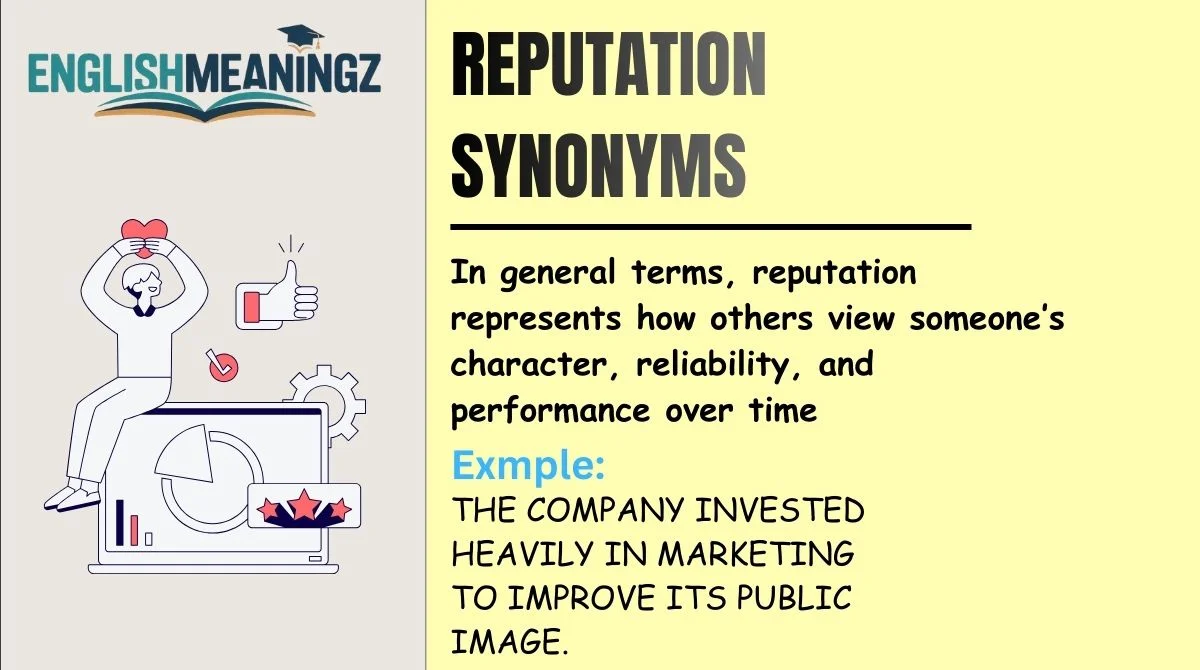
In general terms, reputation represents how others view someone’s character, reliability, and performance over time. It is formed gradually through experiences, communication, and public information.
In academic or professional contexts, reputation often relates to credibility, authority, and trustworthiness. For example, universities build reputations through research quality and educational standards. Businesses develop reputations through customer satisfaction and ethical practices.
Reputation can be positive, negative, or neutral. A strong reputation often brings advantages such as trust, opportunities, and influence, while a poor reputation can damage credibility and limit success.
Because reputation is connected to perception and social evaluation, writers frequently use synonyms to convey different shades of meaning, such as prestige, credibility, or public image.
16 Synonyms Grouped by Context
General Use
These synonyms can be used in everyday writing and general communication.
Standing
Meaning:
A person or organization’s status or position within a community or group.
Context Explanation:
Standing usually refers to respect or acceptance within a social or professional environment.
Example Sentence:
The professor has a respected standing within the international research community.
Image
Meaning:
The impression or perception people have about someone or something.
Context Explanation:
Image is often used when discussing public perception, branding, or media influence.
Example Sentence:
The company invested heavily in marketing to improve its public image.
Character
Meaning:
The moral qualities and ethical traits attributed to a person.
Context Explanation:
Character focuses more on integrity and moral behavior rather than public perception alone.
Example Sentence:
Her reputation for honesty reflects the strong character she demonstrated throughout her career.
Name
Meaning:
A person’s recognized identity associated with achievements or actions.
Context Explanation:
When used figuratively, “name” suggests recognition or influence.
Example Sentence:
The scientist made a respected name for himself in environmental research.
Formal & Academic Writing
These synonyms are commonly used in scholarly or professional contexts.
Prestige
Meaning:
High respect and admiration gained through achievement or status.
Context Explanation:
Prestige is often associated with institutions, universities, or awards.
Example Sentence:
The university gained international prestige for its groundbreaking medical research.
Credibility
Meaning:
The quality of being trusted and believed.
Context Explanation:
Credibility is especially important in academic writing, journalism, and scientific communication.
Example Sentence:
Accurate data collection strengthens the credibility of the research study.
Authority
Meaning:
Expert power or influence based on knowledge or reputation.
Context Explanation:
Authority suggests recognized expertise within a field.
Example Sentence:
She is widely considered an authority in the field of climate science.
Distinction
Meaning:
Excellence that sets someone apart from others.
Context Explanation:
Distinction is frequently used to describe exceptional achievement or academic recognition.
Example Sentence:
The scholar graduated with distinction after completing an innovative research project.
Esteem
Meaning:
Deep respect and admiration from others.
Context Explanation:
Esteem often appears in formal or ceremonial contexts.
Example Sentence:
The organization holds its founding members in high esteem.
Informal Usage
These synonyms are more common in conversational or casual contexts.
Fame
Meaning:
Widespread recognition by many people.
Context Explanation:
Fame focuses more on popularity than respect.
Example Sentence:
The actor achieved international fame after starring in the award-winning film.
Notoriety
Meaning:
Being widely known for negative reasons.
Context Explanation:
Unlike reputation, notoriety almost always implies criticism or controversy.
Example Sentence:
The company gained notoriety after the financial scandal became public.
Popularity
Meaning:
Being liked or admired by many people.
Context Explanation:
Popularity is common in media, entertainment, and social trends.
Example Sentence:
The author’s popularity increased rapidly after the release of her bestselling novel.
Public Image
Meaning:
The overall perception the public has about a person or organization.
Context Explanation:
This phrase is widely used in politics and corporate communication.
Example Sentence:
Maintaining a positive public image is essential for political leaders.
Technical or Subject-Specific Use
These synonyms often appear in professional, business, or marketing contexts.
Brand Equity
Meaning:
The commercial value derived from consumer perception of a brand.
Context Explanation:
In marketing, reputation often influences brand equity and customer loyalty.
Example Sentence:
Strong customer trust significantly increases brand equity.
Track Record
Meaning:
A documented history of performance or achievements.
Context Explanation:
Track record is frequently used in business, research, and career evaluations.
Example Sentence:
The organization has an impressive track record of successful humanitarian projects.
Credence
Meaning:
Belief or acceptance that something is true or reliable.
Context Explanation:
Credence emphasizes trust based on evidence or authority.
Example Sentence:
The new evidence gives credence to the original scientific theory.
Goodwill
Meaning:
Positive reputation that encourages trust and cooperation.
Context Explanation:
In business, goodwill represents intangible value linked to reputation and relationships.
Example Sentence:
Customer satisfaction contributes greatly to a company’s goodwill.
Word Intensity & Tone Comparison Table
| Word | Formal Level | Emotional Strength | Typical Context |
|---|---|---|---|
| Reputation | Neutral | Medium | General writing |
| Prestige | Very formal | High | Universities, institutions |
| Credibility | Formal | Medium | Academic writing |
| Authority | Formal | Strong | Expertise fields |
| Fame | Informal | High | Entertainment |
| Notoriety | Neutral | Negative | Controversy |
| Popularity | Informal | Medium | Social trends |
| Standing | Formal | Medium | Professional status |
| Esteem | Formal | Strong | Respectful contexts |
| Public Image | Neutral | Medium | Media and politics |
This comparison helps writers choose the most accurate synonym based on tone and audience.
Common Mistakes When Using These Synonyms
Many writers assume all synonyms have identical meanings. However, subtle differences can create unintended meanings.
Mistake 1: Using “fame” instead of “reputation”
Incorrect:
The professor gained fame for his academic integrity.
Correct:
The professor gained a strong reputation for academic integrity.
Fame suggests popularity rather than professional respect.
Mistake 2: Confusing “notoriety” with “recognition”
Incorrect:
The scientist gained notoriety for her innovative research.
Correct:
The scientist gained recognition for her innovative research.
Notoriety usually indicates negative publicity.
Mistake 3: Using “authority” incorrectly
Incorrect:
The restaurant has great authority among customers.
Correct:
The restaurant has an excellent reputation among customers.
Authority typically refers to expertise rather than general opinion.
Synonyms in Academic Writing

Example Paragraph 1
A university’s prestige often depends on the quality of its research output and faculty achievements. Institutions that consistently produce innovative studies tend to gain international recognition and academic credibility. Over time, this reputation attracts talented students and researchers from around the world.
Example Paragraph 2
Corporate credibility plays a crucial role in consumer trust. Companies that maintain ethical standards and transparent communication often build strong goodwill with their customers. This positive reputation enhances brand loyalty and long-term financial success.
IELTS & Exam Writing Tips
Students preparing for language exams should learn how to use synonyms strategically.
1. Avoid repetition
If the word “reputation” appears multiple times in an essay, replace some occurrences with alternatives such as prestige, credibility, or standing.
Example:
Original:
The university has a strong reputation. This reputation attracts international students.
Improved:
The university has a strong reputation. This prestige attracts international students.
2. Maintain accuracy
Do not replace a word if the synonym changes the meaning.
Example:
Incorrect replacement:
The company gained notoriety for its excellent customer service.
Correct usage:
The company gained recognition for its excellent customer service.
3. Use formal vocabulary in academic tasks
Words such as credibility, prestige, and authority are generally more suitable for academic essays than informal alternatives like fame.
Similar Words vs True Synonyms
Not all similar words are true synonyms. Some share partial meaning but differ in nuance.
Reputation vs Prestige
Prestige implies admiration based on status or success, while reputation can be positive or negative.
Reputation vs Fame
Fame relates to widespread recognition, often through media or popularity, rather than respect.
Reputation vs Credibility
Credibility focuses specifically on trustworthiness and reliability.
Understanding these subtle distinctions allows writers to communicate ideas more precisely.
Practice Sentences
Choose the most appropriate synonym for each sentence.
- The scientist’s long history of successful research strengthened her ______.
- The company’s positive customer reviews improved its public ______.
- The university gained international ______ for its medical program.
- The actor achieved worldwide ______ after the film’s release.
- Ethical leadership helps organizations build long-term ______ with stakeholders.
Possible answers: reputation, prestige, fame, credibility, image.
These exercises help writers practice using synonyms naturally.
FAQs
What is the best synonym for reputation?
The best synonym depends on context. In academic writing, credibility, prestige, or standing are often suitable alternatives.
Is fame the same as reputation?
No. Fame refers to widespread recognition, while reputation focuses on how people evaluate someone’s behavior or character.
Can reputation be negative?
Yes. A reputation can be positive or negative depending on public perception and past actions.
Which synonym is best for academic essays?
Words such as credibility, prestige, authority, and standing are commonly used in formal writing.
Why is using synonyms important in writing?
Using synonyms reduces repetition, improves readability, and demonstrates a stronger vocabulary, which is particularly useful in exams like IELTS.
Conclusion
Developing a strong vocabulary is essential for effective writing. The word reputation is widely used across academic, professional, and everyday communication, but relying on it repeatedly can limit the richness of your writing.
Learning synonyms such as prestige, credibility, standing, authority, and goodwill allows writers to communicate ideas more precisely while maintaining variety and clarity.
Each synonym carries its own tone and nuance, making it important to choose the most appropriate word for the context.
Students, bloggers, and professionals who regularly expand their vocabulary will produce more engaging and persuasive writing.
By practicing these alternatives and understanding their subtle differences, writers can improve both their communication skills and overall writing quality.