Understanding opposites is one of the fastest ways to sharpen your writing and communication skills. When you learn antonyms, you don’t just expand your vocabulary—you gain precision, control, and clarity in expression. Instead of repeating the same words, you can adapt your tone based on context, audience, and purpose.
In both academic and professional communication, choosing the right opposite word can completely change the meaning of a sentence.
It allows you to present balanced arguments, avoid ambiguity, and communicate emotions or logic more effectively. Whether you’re writing essays, emails, or content, mastering antonyms like those for sensitive helps you sound more confident and articulate.
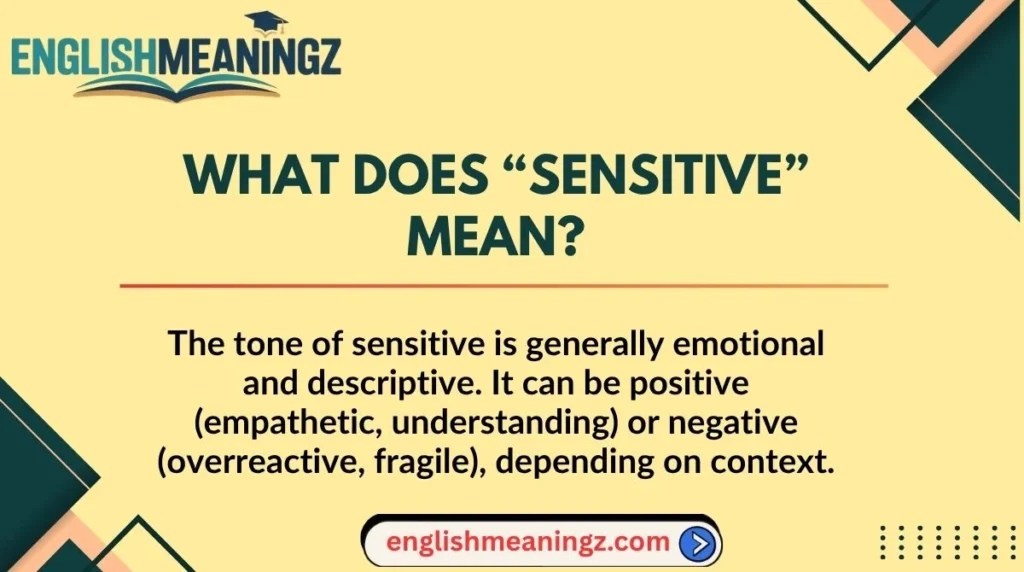
What Does “Sensitive” Mean?
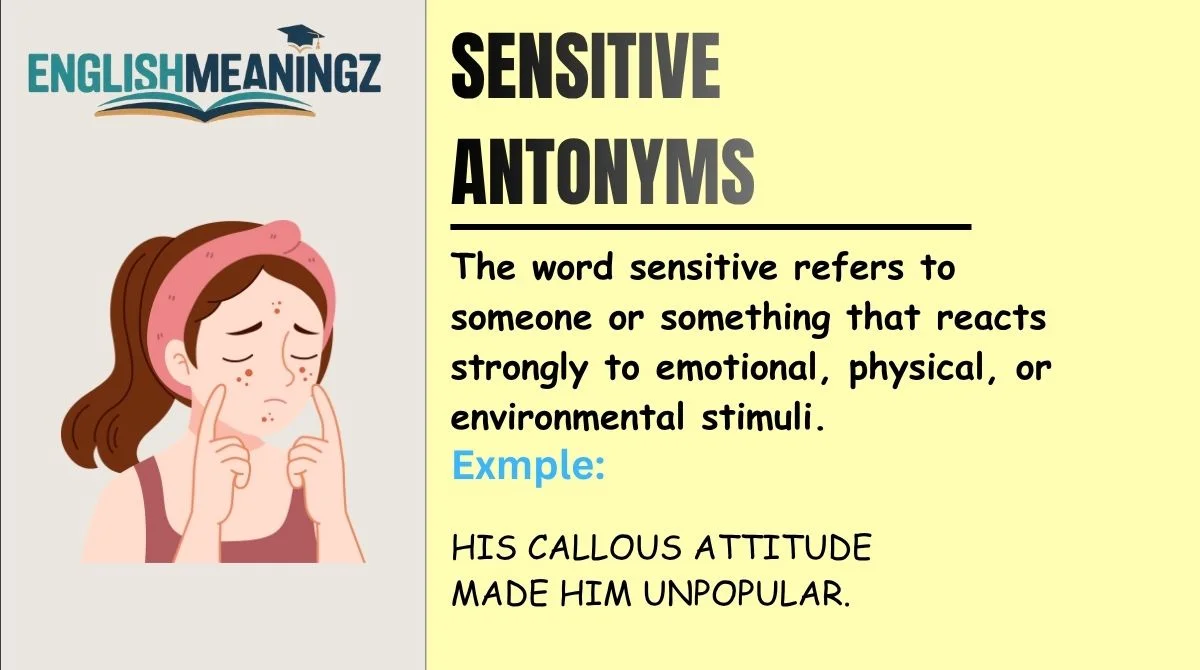
The word sensitive refers to someone or something that reacts strongly to emotional, physical, or environmental stimuli.
Definition:
A person or object that is easily affected, responsive, or delicate in reaction.
Tone Explanation:
The tone of sensitive is generally emotional and descriptive. It can be positive (empathetic, understanding) or negative (overreactive, fragile), depending on context.
Intensity Explanation:
Sensitivity exists on a spectrum. It may indicate deep emotional awareness or, in contrast, a lack of resilience. This makes finding the correct opposite important, as not all antonyms carry the same strength or tone.
17 Best Antonyms for “Sensitive”
1. Insensitive
Meaning: Lacking awareness or concern for others’ feelings
Tone: Emotional / Negative
Example: He made an insensitive remark during the meeting.
Why It’s Opposite: Directly contrasts emotional awareness and empathy.
2. Unfeeling
Meaning: Showing no emotion or compassion
Tone: Formal / Emotional
Example: Her unfeeling response shocked everyone.
Why It’s Opposite: Removes emotional responsiveness entirely.
3. Callous
Meaning: Emotionally hardened and indifferent
Tone: Formal / Negative
Example: His callous attitude made him unpopular.
Why It’s Opposite: Suggests a complete lack of emotional sensitivity.
4. Thick-skinned
Meaning: Not easily hurt by criticism
Tone: Informal
Example: You need to be thick-skinned in this profession.
Why It’s Opposite: Opposes emotional vulnerability.
5. Tough
Meaning: Strong and not easily affected
Tone: Informal / Neutral
Example: She is tough enough to handle criticism.
Why It’s Opposite: Implies resistance to emotional or physical impact.
6. Indifferent
Meaning: Showing no interest or concern
Tone: Academic / Neutral
Example: He remained indifferent to the outcome.
Why It’s Opposite: Removes emotional engagement.
7. Detached
Meaning: Emotionally uninvolved
Tone: Formal
Example: The judge remained detached throughout the case.
Why It’s Opposite: Opposes emotional involvement.
8. Cold
Meaning: Lacking warmth or emotion
Tone: Emotional / Negative
Example: Her cold reply ended the conversation.
Why It’s Opposite: Indicates absence of emotional warmth.
9. Unresponsive
Meaning: Not reacting or showing emotion
Tone: Formal
Example: The audience was unresponsive to the speech.
Why It’s Opposite: Opposes reactivity.
10. Hard
Meaning: Emotionally firm or unyielding
Tone: Informal
Example: He has become hard after years of struggle.
Why It’s Opposite: Suggests emotional resistance.
11. Stoic
Meaning: Enduring without showing feelings
Tone: Academic / Formal
Example: She remained stoic despite the pain.
Why It’s Opposite: Implies controlled or hidden emotions.
12. Unemotional
Meaning: Not expressing feelings
Tone: Neutral
Example: His unemotional tone confused listeners.
Why It’s Opposite: Contrasts expressive sensitivity.
13. Tough-minded
Meaning: Practical and not easily influenced by emotion
Tone: Formal
Example: A tough-minded approach is needed here.
Why It’s Opposite: Focuses on logic over emotion.
14. Hardened
Meaning: Made less sensitive over time
Tone: Emotional / Negative
Example: He became hardened by experience.
Why It’s Opposite: Indicates reduced emotional responsiveness.
15. Unaffected
Meaning: Not influenced or moved emotionally
Tone: Formal
Example: She appeared unaffected by the criticism.
Why It’s Opposite: Shows lack of emotional impact.
16. Firm
Meaning: Stable and not easily shaken
Tone: Neutral
Example: He remained firm in his beliefs.
Why It’s Opposite: Suggests emotional stability rather than sensitivity.
17. Resilient
Meaning: Able to recover quickly from difficulties
Tone: Positive / Academic
Example: Children are often more resilient than adults.
Why It’s Opposite: Opposes fragility and emotional vulnerability.
Strong vs Mild Opposites
Not all antonyms carry the same intensity. Some are direct and harsh, while others are subtle and context-based.
Strong Opposites:
Insensitive, callous, unfeeling, cold
These words indicate a complete absence of empathy or emotional awareness.
Moderate Opposites:
Indifferent, detached, unemotional
These suggest neutrality rather than cruelty.
Mild Opposites:
Resilient, firm, tough
These focus more on strength than lack of feeling.
Understanding this scale helps you avoid overstatement. For example, calling someone callous is far stronger than calling them tough.
Context-Based Opposites
The best antonym often depends on context.
- Emotional context: Sensitive → insensitive, cold
- Professional context: Sensitive → tough-minded, objective
- Physical context: Sensitive → tough, durable
- Psychological context: Sensitive → resilient, thick-skinned
Using the wrong opposite can distort meaning. For example, in a workplace report, objective may be more appropriate than insensitive.
Common Mistakes When Using Opposites
1. Confusing tone
Wrong: He is insensitive (when you mean strong)
Correct: He is resilient
2. Overusing harsh antonyms
Words like callous can sound too negative in neutral situations.
3. Ignoring context
Wrong: The device is callous
Correct: The device is durable
4. Mixing emotional and logical meanings
Sensitive can be emotional or technical—choose antonyms accordingly.
Sentence Transformation Examples
- Original: She is very sensitive to criticism.
Revised: She is thick-skinned and handles criticism well. - Original: He gave a sensitive response.
Revised: He gave a cold and detached response. - Original: The child is sensitive.
Revised: The child is resilient. - Original: She reacted in a sensitive way.
Revised: She remained stoic and composed. - Original: He is sensitive to pressure.
Revised: He is tough under pressure.
FAQs
What is the most direct antonym of sensitive?
Insensitive is the most direct and commonly used opposite.
Are all antonyms of sensitive negative?
No. Words like resilient and tough are positive alternatives.
Can sensitive have different meanings?
Yes, it can refer to emotional, physical, or technical responsiveness.
What is a formal antonym for sensitive?
Detached or unemotional are suitable in formal writing.
Is “cold” always a good antonym?
Only in emotional contexts—it may sound too harsh otherwise.
Which antonym is best in academic writing?
Indifferent, objective, or unemotional are often preferred.
How do I choose the right antonym?
Consider tone, context, and intensity before selecting a word.
Conclusion
Mastering antonyms of sensitive is more than a vocabulary exercise—it’s a practical skill that enhances clarity, tone control, and communication effectiveness.
From strong opposites like callous to balanced alternatives like resilient, each word carries a unique nuance. Choosing the right one allows you to express ideas precisely, avoid misunderstanding, and adapt your message to any context.
By understanding intensity levels, context usage, and common mistakes, you can confidently replace sensitive with the most appropriate opposite—making your writing sharper, more professional, and more impactful.