Mastering opposites is one of the fastest ways to sharpen your writing and communication skills. When you understand antonyms deeply, you gain the ability to express contrast, clarify intent, and add precision to your language.
Instead of repeating similar words, you can vary tone and meaning effortlessly.
In academic and professional communication, this skill becomes even more valuable. Whether you are writing essays, reports, emails, or content for SEO, choosing the correct opposite word can completely shift meaning. It helps avoid ambiguity and ensures your message is understood exactly as intended.
This article explores the antonyms of the word intercept in depth, providing not just a list but clear explanations, tone insights, and real examples for each.
What Does “Intercept” Mean?
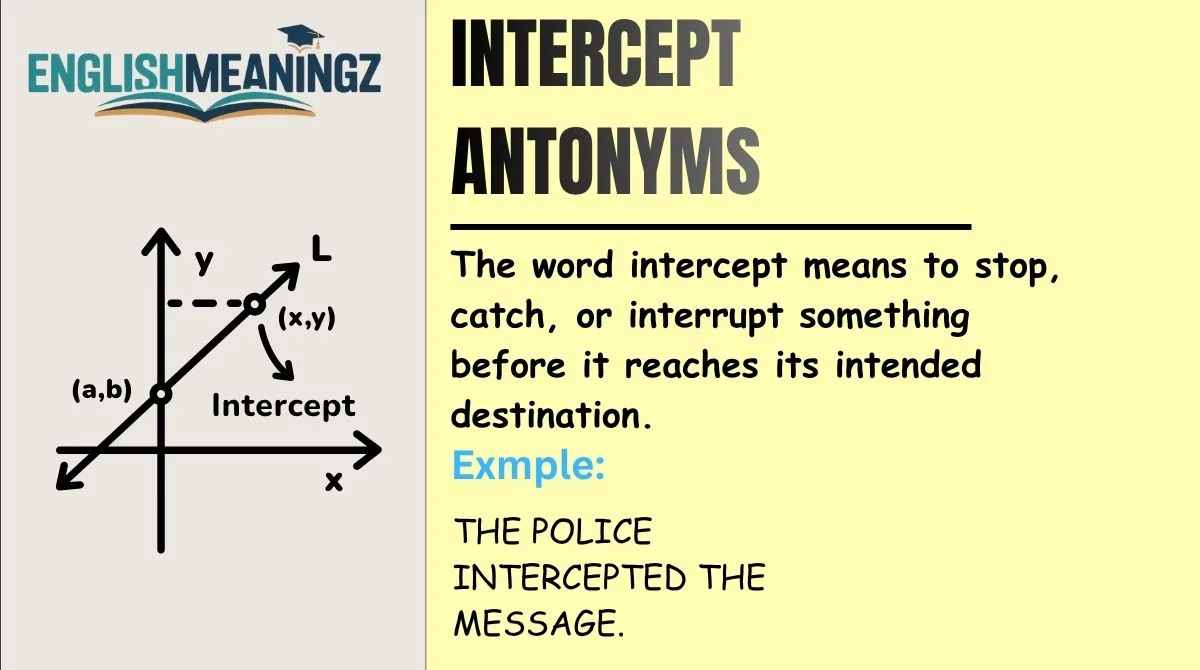
The word intercept means to stop, catch, or interrupt something before it reaches its intended destination. It is commonly used in contexts like communication, movement, or data transfer.
Definition:
To seize, block, or halt something in transit before it completes its path.
Tone Explanation:
The tone of intercept is usually active, forceful, and intentional. It often implies control, prevention, or interference.
Intensity and Action Level:
- Medium to high intensity
- Implies deliberate action
- Often involves interruption or obstruction
For example:
- The police intercepted the message.
- The defender intercepted the ball.
In both cases, something was stopped before reaching its target.
23 Best Antonyms for “Intercept”
Allow
Meaning: To permit something to happen
Tone: Formal / Neutral
Example: She allowed the message to pass without interference.
Why Opposite: Instead of stopping something, it permits continuation.
Release
Meaning: To set free or let go
Tone: Formal
Example: The agency released the data to the public.
Why Opposite: Intercepting blocks; releasing enables movement.
Deliver
Meaning: To successfully bring something to its destination
Tone: Formal / Professional
Example: The courier delivered the package on time.
Why Opposite: Delivery completes a journey, while intercept stops it.
Transmit
Meaning: To send or pass along
Tone: Technical / Academic
Example: The system transmits signals without interruption.
Why Opposite: Transmission ensures flow, unlike interception.
Pass
Meaning: To move or go through
Tone: Neutral
Example: The signal passed through the network freely.
Why Opposite: Passing implies no obstruction.
Continue
Meaning: To keep going without stopping
Tone: Neutral
Example: The process continued without delay.
Why Opposite: Interception halts progress; continuation maintains it.
Forward
Meaning: To send onward
Tone: Professional
Example: Please forward the email to the team.
Why Opposite: Forwarding supports movement instead of blocking.
Permit
Meaning: To give consent
Tone: Formal
Example: The system permits unrestricted access.
Why Opposite: Permitting is the opposite of preventing.
Facilitate
Meaning: To make something easier
Tone: Academic / Professional
Example: Technology facilitates communication.
Why Opposite: Facilitating enhances flow, not stopping it.
Enable
Meaning: To make possible
Tone: Formal
Example: The update enables faster data transfer.
Why Opposite: Enabling supports progress.
Support
Meaning: To assist or back something
Tone: Neutral
Example: The system supports uninterrupted transmission.
Why Opposite: Supporting encourages movement rather than stopping it.
Assist
Meaning: To help
Tone: Neutral
Example: The tool assists in sending messages quickly.
Why Opposite: Assistance promotes success, not interruption.
Approve
Meaning: To accept or authorize
Tone: Formal
Example: The request was approved without delay.
Why Opposite: Approval allows continuation instead of blocking.
Accept
Meaning: To receive willingly
Tone: Neutral
Example: The server accepted incoming data.
Why Opposite: Acceptance contrasts with blocking or stopping.
Receive
Meaning: To get something
Tone: Neutral
Example: She received the message instantly.
Why Opposite: Receiving happens after uninterrupted transmission.
Welcome
Meaning: To greet positively
Tone: Emotional / Informal
Example: The platform welcomes all incoming traffic.
Why Opposite: Welcoming encourages entry, not obstruction.
Let Through
Meaning: To allow passage
Tone: Informal
Example: The guard let the visitors through.
Why Opposite: Direct contrast to stopping entry.
Carry On
Meaning: To proceed
Tone: Informal
Example: The meeting carried on without interruption.
Why Opposite: Continuation opposes interruption.
Proceed
Meaning: To move forward
Tone: Formal
Example: The process proceeded smoothly.
Why Opposite: Progress is the opposite of interruption.
Unblock
Meaning: To remove an obstruction
Tone: Informal / Technical
Example: The technician unblocked the network.
Why Opposite: Removes what interception creates.
Clear
Meaning: To remove barriers
Tone: Neutral
Example: The path was cleared for movement.
Why Opposite: Clearing enables flow.
Open
Meaning: To make accessible
Tone: Neutral
Example: The system opened all channels.
Why Opposite: Openness contrasts with blocking.
Free
Meaning: To release from restriction
Tone: Emotional / Neutral
Example: The data was freed for public use.
Why Opposite: Freedom opposes restriction and interception.
Strong vs Mild Opposites
Not all antonyms carry the same strength. Some completely reverse the meaning of intercept, while others only soften it.
Strong Opposites:
- Deliver
- Transmit
- Let through
- Proceed
These directly oppose interruption by emphasizing successful completion or uninterrupted flow.
Mild Opposites:
- Support
- Assist
- Facilitate
These don’t directly contradict interception but imply helping rather than stopping.
Understanding this intensity scale helps you choose the most precise word for your context.
Context-Based Opposites
Antonyms change depending on usage context.
In communication:
- Intercept → Transmit / Deliver
In physical movement:
- Intercept → Let through / Pass
In authority or permission:
- Intercept → Permit / Approve
In emotional tone:
- Intercept → Welcome / Accept
Choosing the correct opposite depends on the situation, not just dictionary meaning.
Common Mistakes When Using Opposites

Mistake 1: Using unrelated words
Incorrect: Intercept → Ignore
Reason: Ignoring is not the opposite of stopping.
Mistake 2: Choosing weak antonyms
Incorrect: Intercept → Help
Better: Intercept → Allow
Mistake 3: Context mismatch
Incorrect: The system intercepted the file → The system welcomed the file
Better: The system allowed the file
Mistake 4: Tone mismatch
Using informal antonyms in formal writing can weaken clarity.
Sentence Transformation Examples
Original: The system intercepted the signal.
Rewritten: The system transmitted the signal successfully.
Original: Police intercepted the message.
Rewritten: Police allowed the message to reach its destination.
Original: The defender intercepted the ball.
Rewritten: The defender let the ball pass.
Original: The firewall intercepted the data.
Rewritten: The firewall permitted the data to pass through.
Original: The guard intercepted visitors.
Rewritten: The guard allowed visitors to enter.
FAQs
What is the simplest antonym of intercept?
The simplest antonym is allow, as it directly contrasts stopping with permitting.
Are all antonyms interchangeable?
No, context determines the correct antonym.
Is “deliver” always an opposite of intercept?
Yes, especially when referring to messages or packages.
Can “ignore” be an antonym?
No, ignoring does not involve allowing or stopping movement.
Which antonym is best for formal writing?
Permit, transmit, and deliver are ideal for formal contexts.
What is the strongest opposite of intercept?
Let through or deliver, depending on context.
Why is understanding antonyms important?
It improves clarity, vocabulary range, and communication precision.
Conclusion
Understanding antonyms of intercept goes beyond memorizing words—it requires grasping tone, context, and intensity.
Whether you choose allow, deliver, transmit, or proceed, each word carries a specific nuance that can elevate your writing.
By mastering these 23 antonyms, you gain the ability to express contrast with clarity and precision, making your communication more effective in both academic and professional settings.