Strong vocabulary is one of the most powerful tools in effective writing. Whether someone is composing academic essays, writing blog articles, preparing medical reports, or studying for language proficiency exams, the ability to use varied and precise words significantly improves clarity and credibility.
One important strategy for improving writing quality is learning synonyms—words with similar meanings that can replace each other depending on context.
Using synonyms correctly helps writers avoid repetition, maintain reader engagement, and demonstrate language proficiency.
This skill is especially valuable for students preparing for exams such as IELTS, professionals writing formal reports, and bloggers who want their content to appear polished and authoritative.
Medical terminology provides a particularly useful area for vocabulary development. Words related to diseases and health conditions often have multiple synonyms that vary by level of formality, technical accuracy, or historical usage.
The term dysentery is one such example. While commonly used in medical contexts, it can also appear in historical writing, health education materials, or academic discussions about infectious diseases.
0Understanding its synonyms helps writers describe gastrointestinal illnesses more precisely and appropriately depending on the context.
This article presents 16 dysentery synonyms, explains their meanings, discusses how and when they should be used, and provides examples that help students, bloggers, and professionals improve their writing vocabulary.
Definition and Core Meaning of “Dysentery”

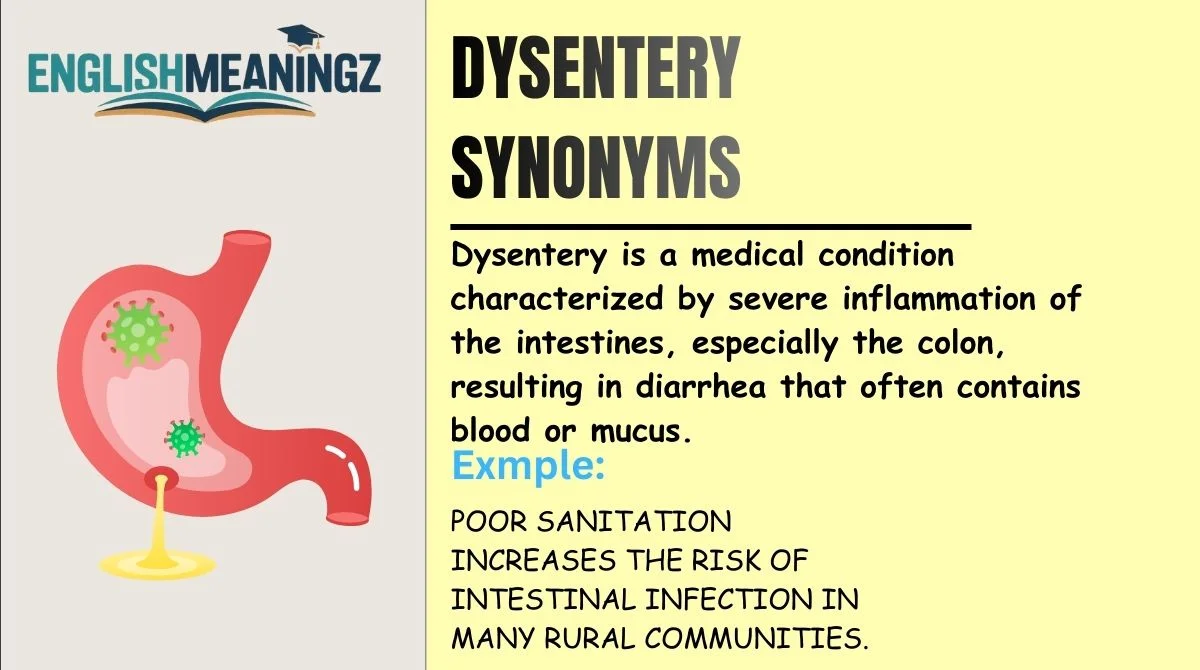
Dysentery is a medical condition characterized by severe inflammation of the intestines, especially the colon, resulting in diarrhea that often contains blood or mucus. It is typically caused by bacterial or parasitic infections, most commonly Shigella bacteria or Entamoeba histolytica parasites.
The condition is associated with several symptoms, including:
- Frequent loose stools
- Abdominal pain or cramps
- Fever
- Dehydration
- Bloody or mucus-filled diarrhea
Dysentery has historically been a major public health issue, particularly in areas with poor sanitation or contaminated water supplies. While modern medicine has reduced its prevalence in many regions, it remains a concern in parts of the world where clean water and sanitation infrastructure are limited.
In writing, the term dysentery is typically used in medical, scientific, and academic contexts, but writers sometimes choose synonyms to match the tone, audience, or level of technical detail required.
Understanding these alternatives can help writers communicate more effectively.
16 Synonyms Grouped by Context
Different synonyms are appropriate in different writing situations. Some are formal medical terms, while others are more general or informal descriptions of intestinal illness.
Below are 16 dysentery synonyms categorized by usage context.
General Use Synonyms
Gastrointestinal Infection
Meaning:
An infection that affects the stomach or intestines, often causing diarrhea and abdominal discomfort.
Context Explanation:
This term is broader than dysentery but can be used when discussing intestinal infections in general health discussions.
Example Sentence:
The traveler developed a gastrointestinal infection after consuming contaminated water during the trip.
Intestinal Infection
Meaning:
An infection affecting the intestines caused by bacteria, viruses, or parasites.
Context Explanation:
Often used in health articles or educational materials describing digestive system diseases.
Example Sentence:
Poor sanitation increases the risk of intestinal infection in many rural communities.
Severe Diarrheal Disease
Meaning:
A serious condition involving intense diarrhea that may lead to dehydration.
Context Explanation:
Public health reports often use this phrase instead of specific disease names when discussing broader categories of illness.
Example Sentence:
Children are particularly vulnerable to severe diarrheal disease in areas lacking clean drinking water.
Infectious Diarrhea
Meaning:
Diarrhea caused by a bacterial, viral, or parasitic infection.
Context Explanation:
Common in medical explanations or patient education materials.
Example Sentence:
Infectious diarrhea can spread quickly in crowded environments without proper hygiene.
Formal & Academic Writing Synonyms
Bacillary Dysentery
Meaning:
A form of dysentery caused by Shigella bacteria.
Context Explanation:
Frequently used in scientific research papers and epidemiological studies.
Example Sentence:
The study examined the transmission patterns of bacillary dysentery in urban populations.
Amoebic Dysentery
Meaning:
A type of dysentery caused by the parasite Entamoeba histolytica.
Context Explanation:
Used primarily in parasitology, infectious disease research, and medical textbooks.
Example Sentence:
Untreated amoebic dysentery may lead to serious complications affecting the liver.
Enteric Infection
Meaning:
An infection that occurs in the intestinal tract.
Context Explanation:
Commonly used in scientific writing when discussing diseases affecting the digestive system.
Example Sentence:
Researchers monitored the spread of enteric infection following the flooding event.
Colitis Infection
Meaning:
Inflammation of the colon caused by infectious agents.
Context Explanation:
Used in medical discussions when focusing specifically on colon inflammation.
Example Sentence:
Laboratory testing confirmed that the patient was suffering from infectious colitis.
Informal Usage Synonyms
Stomach Infection
Meaning:
A general term describing an infection affecting the digestive system.
Context Explanation:
Common in everyday conversation or non-technical writing.
Example Sentence:
He missed several days of work due to a severe stomach infection.
Gut Infection
Meaning:
An informal phrase describing infection in the intestines.
Context Explanation:
Frequently used in casual discussion or simplified health communication.
Example Sentence:
Travelers are often advised to avoid untreated water to prevent gut infection.
Severe Stomach Illness
Meaning:
A non-technical description of a serious digestive disorder.
Context Explanation:
Useful in writing aimed at general audiences.
Example Sentence:
The contaminated food caused a severe stomach illness among several guests.
Digestive Tract Infection
Meaning:
An infection affecting any part of the digestive system.
Context Explanation:
Used in health education materials for clarity.
Example Sentence:
Proper handwashing significantly reduces the risk of digestive tract infection.
Technical or Subject-Specific Synonyms
Shigellosis
Meaning:
An infectious disease caused by Shigella bacteria, often resulting in dysentery.
Context Explanation:
Widely used in epidemiology and infectious disease studies.
Example Sentence:
Shigellosis outbreaks are frequently associated with contaminated water sources.
Amebiasis
Meaning:
A parasitic infection caused by Entamoeba histolytica that can lead to dysentery.
Context Explanation:
Common in parasitology research and medical diagnostics.
Example Sentence:
The laboratory confirmed amebiasis after analyzing the patient’s stool sample.
Inflammatory Diarrhea
Meaning:
Diarrhea caused by inflammation of the intestinal lining.
Context Explanation:
Often used in clinical medicine to distinguish types of diarrhea.
Example Sentence:
Inflammatory diarrhea often indicates a bacterial or parasitic infection.
Intestinal Inflammation Disorder
Meaning:
A condition involving inflammation of intestinal tissues due to infection or disease.
Context Explanation:
Used in broader clinical discussions of digestive disorders.
Example Sentence:
The doctor suspected an intestinal inflammation disorder and recommended further tests.
Word Intensity & Tone Comparison Table
| Word | Formal Level | Emotional Strength | Typical Context |
|---|---|---|---|
| Dysentery | High | Strong | Medical writing |
| Shigellosis | Very High | Neutral | Scientific research |
| Amebiasis | Very High | Neutral | Medical diagnosis |
| Bacillary Dysentery | Very High | Strong | Epidemiology |
| Intestinal Infection | Medium | Neutral | Health education |
| Gastrointestinal Infection | Medium | Neutral | Medical explanation |
| Stomach Infection | Low | Mild | Informal discussion |
| Gut Infection | Low | Mild | Casual speech |
| Severe Diarrheal Disease | High | Strong | Public health reports |
| Infectious Diarrhea | Medium | Moderate | Clinical explanation |
This comparison helps writers choose words that match the tone of their writing.
Common Mistakes When Using These Synonyms
Although synonyms can improve writing, incorrect usage can lead to confusion or inaccurate information.
Mistake 1: Using General Terms as Exact Medical Equivalents
Incorrect:
He was diagnosed with stomach infection caused by Shigella bacteria.
Correct:
He was diagnosed with shigellosis, a bacterial infection that causes dysentery.
Mistake 2: Replacing Dysentery in Scientific Writing With Informal Words
Incorrect:
The research analyzed gut infection outbreaks in rural regions.
Correct:
The research analyzed dysentery outbreaks in rural regions.
Mistake 3: Confusing Diarrhea With Dysentery
Incorrect:
All diarrhea cases are forms of dysentery.
Correct:
Dysentery is a specific type of diarrhea involving blood or mucus.
Synonyms in Academic Writing

Example Paragraph 1
Poor sanitation and limited access to clean water remain major contributors to intestinal infections worldwide. In many developing regions, diseases such as dysentery and other severe diarrheal illnesses continue to affect vulnerable populations, particularly young children. Public health initiatives focusing on improved sanitation infrastructure have significantly reduced the incidence of these conditions.
Example Paragraph 2
Recent epidemiological studies have highlighted the persistent threat of enteric infections in areas experiencing environmental disruption. Bacillary dysentery outbreaks often occur after flooding events when contaminated water sources increase exposure to pathogenic bacteria. Addressing these risks requires coordinated health monitoring and rapid medical response systems.
IELTS & Exam Writing Tips
Vocabulary diversity is an important scoring factor in language exams such as IELTS and TOEFL.
Here are practical tips for using synonyms effectively:
Avoid Repetition
Instead of repeating the same word, rotate appropriate synonyms.
Example:
Poor:
Dysentery is a serious disease. Dysentery spreads quickly in unsanitary environments.
Better:
Dysentery is a serious disease. This intestinal infection spreads quickly in unsanitary environments.
Maintain Accuracy
Some synonyms are broader terms and should not replace dysentery in technical contexts.
Example:
Correct:
The region experienced an outbreak of bacillary dysentery.
Use Formal Vocabulary in Essays
Words such as enteric infection or severe diarrheal disease sound more academic than informal alternatives.
When NOT to Replace the Word
If the text specifically refers to the disease dysentery, replacing it with a broader term may reduce clarity.
Example:
Incorrect:
The patient tested positive for stomach illness.
Correct:
The patient tested positive for dysentery.
Similar Words vs True Synonyms
Not all related words are exact synonyms.
Related But Not Identical
| Word | Difference |
|---|---|
| Diarrhea | A symptom, not necessarily dysentery |
| Gastroenteritis | Inflammation of stomach and intestines |
| Food poisoning | Illness caused by contaminated food |
| Cholera | A different bacterial disease |
Understanding these distinctions ensures accuracy in both academic and professional writing.
Practice Sentences
Choose the correct synonym to complete each sentence.
- The outbreak of ______ spread quickly due to contaminated water supplies.
- Doctors confirmed that the patient had ______ caused by Shigella bacteria.
- Poor sanitation increases the risk of ______ in crowded communities.
- The traveler developed a severe ______ after drinking untreated water.
- Public health campaigns aim to reduce cases of ______ among children.
Possible answers:
- dysentery
- shigellosis
- intestinal infection
- gastrointestinal infection
- severe diarrheal disease
FAQs
What is another word for dysentery?
Common synonyms include shigellosis, amebiasis, intestinal infection, gastrointestinal infection, and infectious diarrhea.
Is dysentery the same as diarrhea?
No. Dysentery is a specific form of diarrhea that includes blood or mucus and is usually caused by infection.
Which synonym is most appropriate in medical writing?
Terms such as bacillary dysentery, shigellosis, and amebiasis are most appropriate in scientific and clinical contexts.
Can dysentery synonyms be used in academic essays?
Yes. Words like enteric infection or severe diarrheal disease can improve vocabulary variety in formal writing.
Why should writers learn disease-related synonyms?
Understanding disease terminology helps writers produce accurate, precise, and professional content, particularly in health, science, and academic writing.
Conclusion
Developing strong vocabulary is essential for effective communication in academic, professional, and online writing.
Learning synonyms allows writers to avoid repetition, improve clarity, and adjust tone depending on their audience.
The word dysentery has many related terms, ranging from highly technical medical terminology to informal descriptions used in everyday conversation.
By understanding when and how to use these alternatives, students, bloggers, and professionals can significantly improve their writing quality.
Expanding vocabulary is not simply about memorizing words—it is about understanding context, tone, and precision.
With practice and careful usage, synonyms such as shigellosis, intestinal infection, and enteric disease can enhance both clarity and authority in writing.
Consistently studying vocabulary in this way will strengthen language skills and help writers communicate complex ideas more effectively.